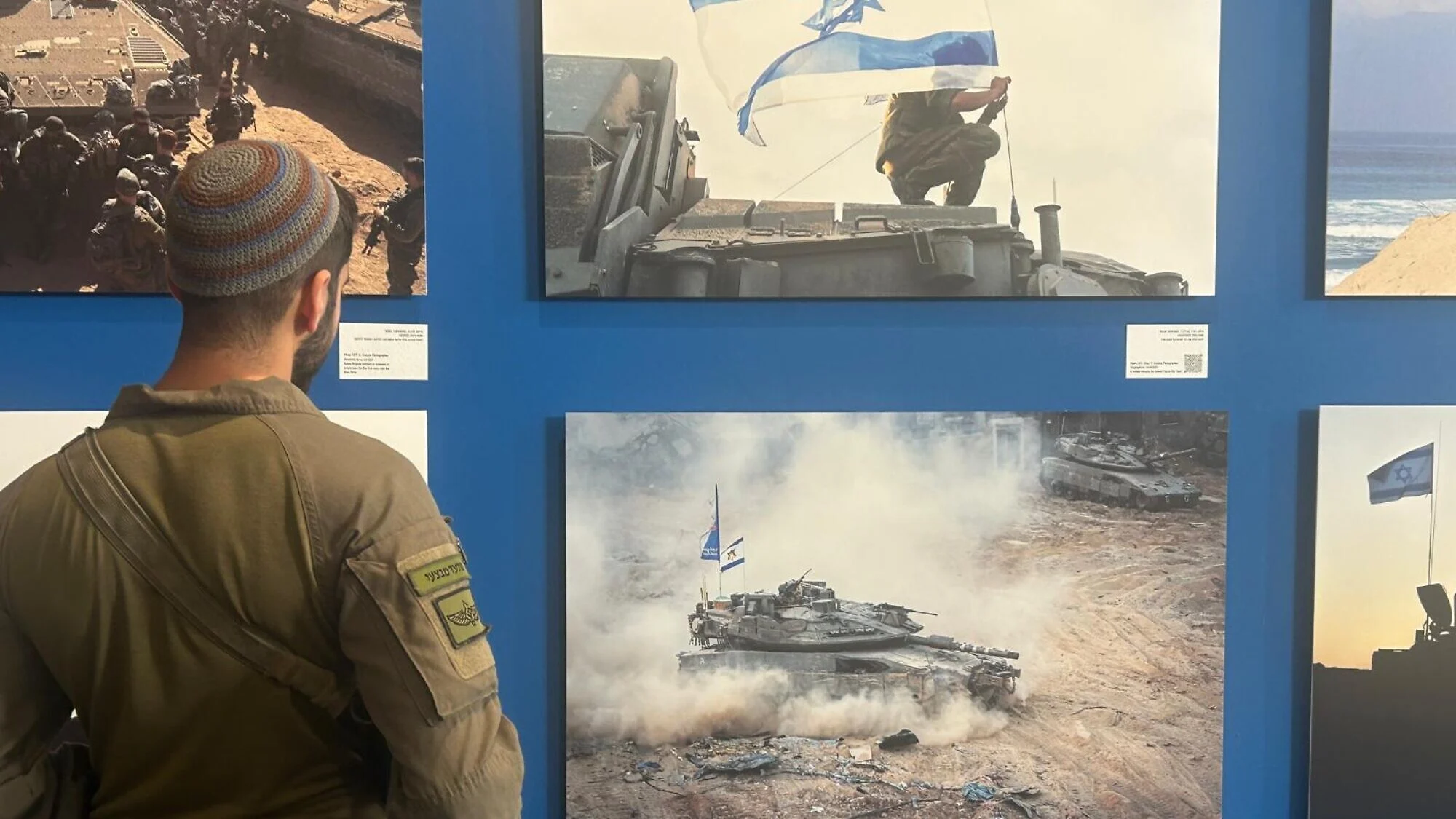
(JNS) “Within all the destruction, you can still find the beauty,” combat photographer Staff Sgt Y. told JNS at the “Moments that Remain” exhibition at the Yitzhak Rabin Center in north Tel Aviv.
Combat photographers accompany frontline units in Gaza, Lebanon and Judea and Samaria, documenting their operations to support the IDF Spokesperson Unit’s goals of establishing legitimacy, strengthening public trust in the army and deterring the enemy.
“Basically, my job is to bring the truth from the battlefield. We get to show how it really is in the field,” he said.
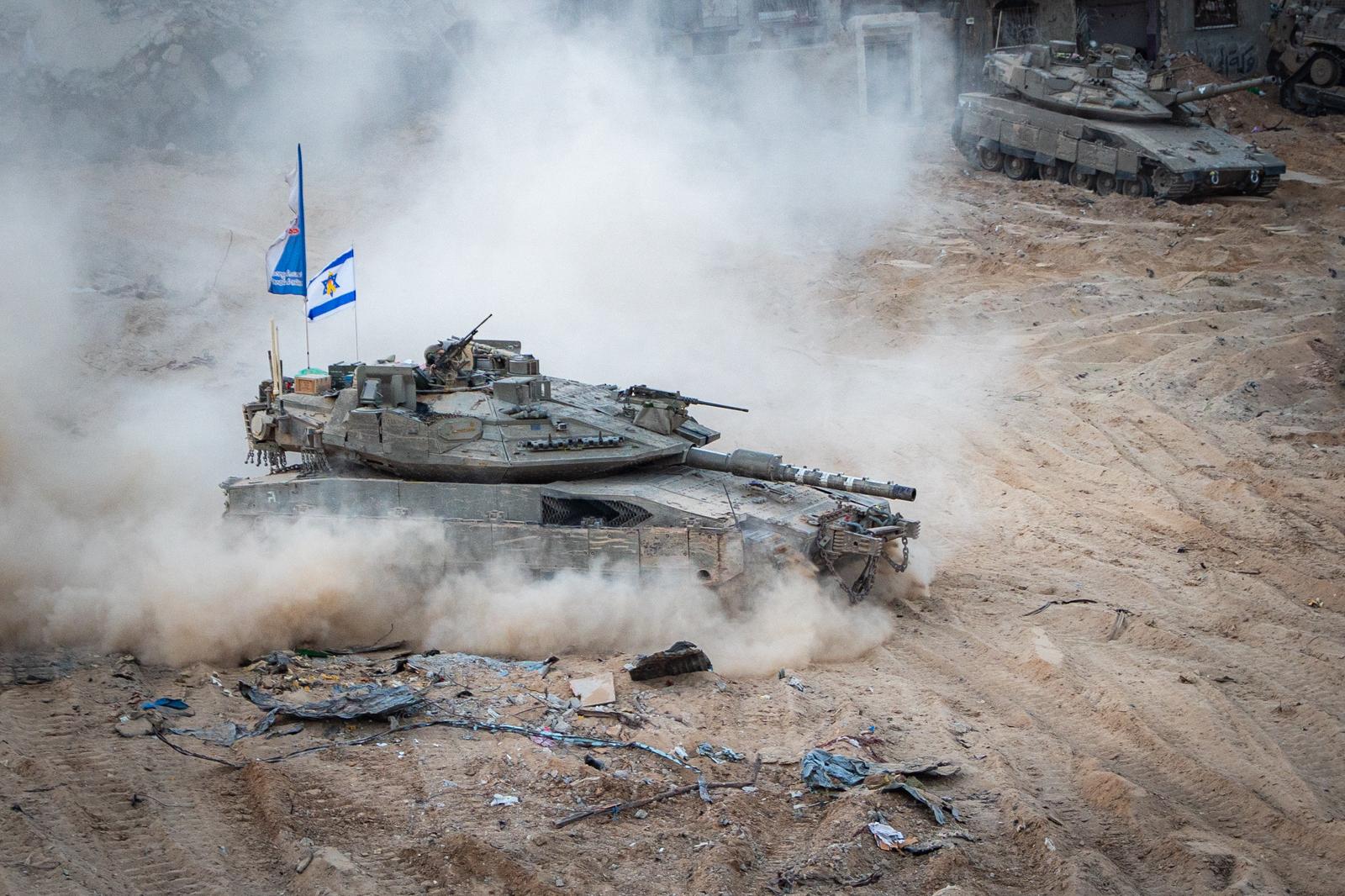
IDF tanks in Jabalia, the northern Gaza Strip. during “Operation Gideon’s Chariot” in May 2025. Photo by Staff Sgt. Y./IDF Spokesperson’s Unit.
The “Moments that Remain” exhibition, organized by the IDF in partnership with Mimi Ziv—whose son Sgt. Lior Ziv, 19, a photographer for the IDF Spokesman’s Unit from Holon, was killed in action during an operation to destroy a Hamas smuggling tunnel in Rafah, the southern Gaza Strip, on April 20, 2003—and in cooperation with the center, features some 300 war photographs.
The images were taken by members of the IDF’s combat photography unit, established after Ziv, who was not trained as a combat soldier, was caught in a firefight while taking pictures. The unit includes 30 to 40 soldiers who cover the north, the south and Judea and Samaria. Soldiers are deployed in pairs.
“We are combat soldiers. We undergo the same training as any combat soldier, but ours also includes photography. They teach us that when you go in, you can’t take pictures at every moment. They teach us how to balance fighting and photographing at the same time,” Staff Sgt. Y. said.
“Just as a Givati soldier might operate a drone, we operate cameras,” he added.
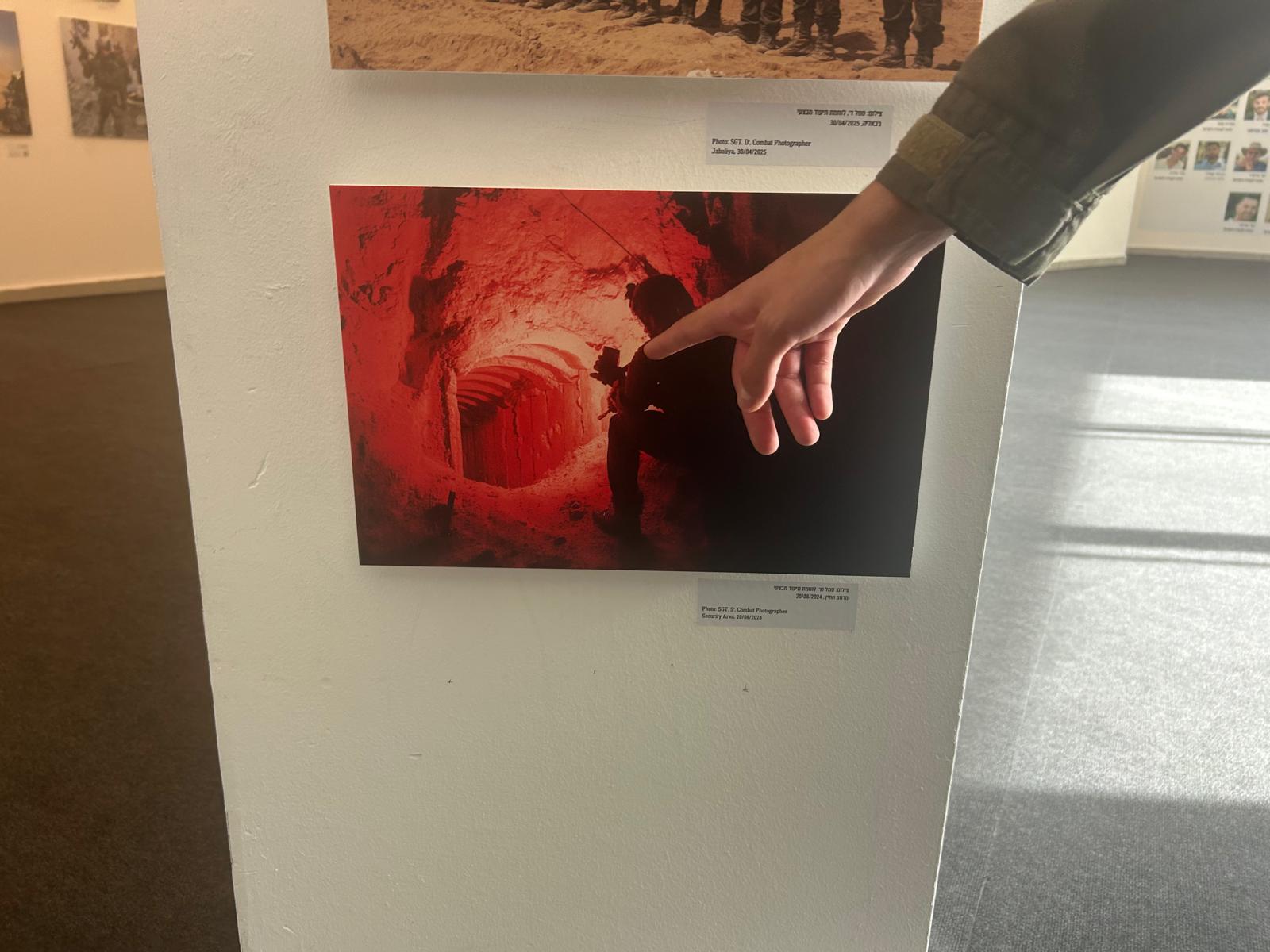
Staff Sgt. Y. points at a picture of a soldier photographing a terror tunnel in 2024, at the “Moments that Remain” exhibition in Tel Aviv, December 2025. Photo by Amelie Botbol.
When he enters the battlefield, Staff Sgt. Y. carries four to five cameras at all times. Every photo he takes is reviewed by the IDF Spokesperson’s Unit and military censors to ensure it does not reveal sensitive information about troop positions or activities. While deployed, he uses a special phone with a network that functions outside Israeli territory to transmit images from the battlefield at the end of each day.
The photos are then distributed through the IDF Spokesperson’s Unit networks and incorporated into its official announcements.
Staff Sgt. Y. began taking photographs at around age 13. Now 22, he moved to Israel at 14 and immediately started working in the field.
“I fell in love with photography not in terms of composition and lighting, but with the documentation aspect. When I would photograph someone’s wedding, these were the pictures they would show their children and grandchildren. I was able to give them that,” he said.
“Pictures capture moments in history. Without us there, no one would know it ever happened,” he continued.
“Being able to show the truth of what happens inside while fighting is the most important thing I could possibly do in the army,” Staff Sgt. Y. said.
Every photo he takes while on duty belongs to the army and is credited to him using only an initial. The faces of combat soldiers are blurred unless they were killed in action.
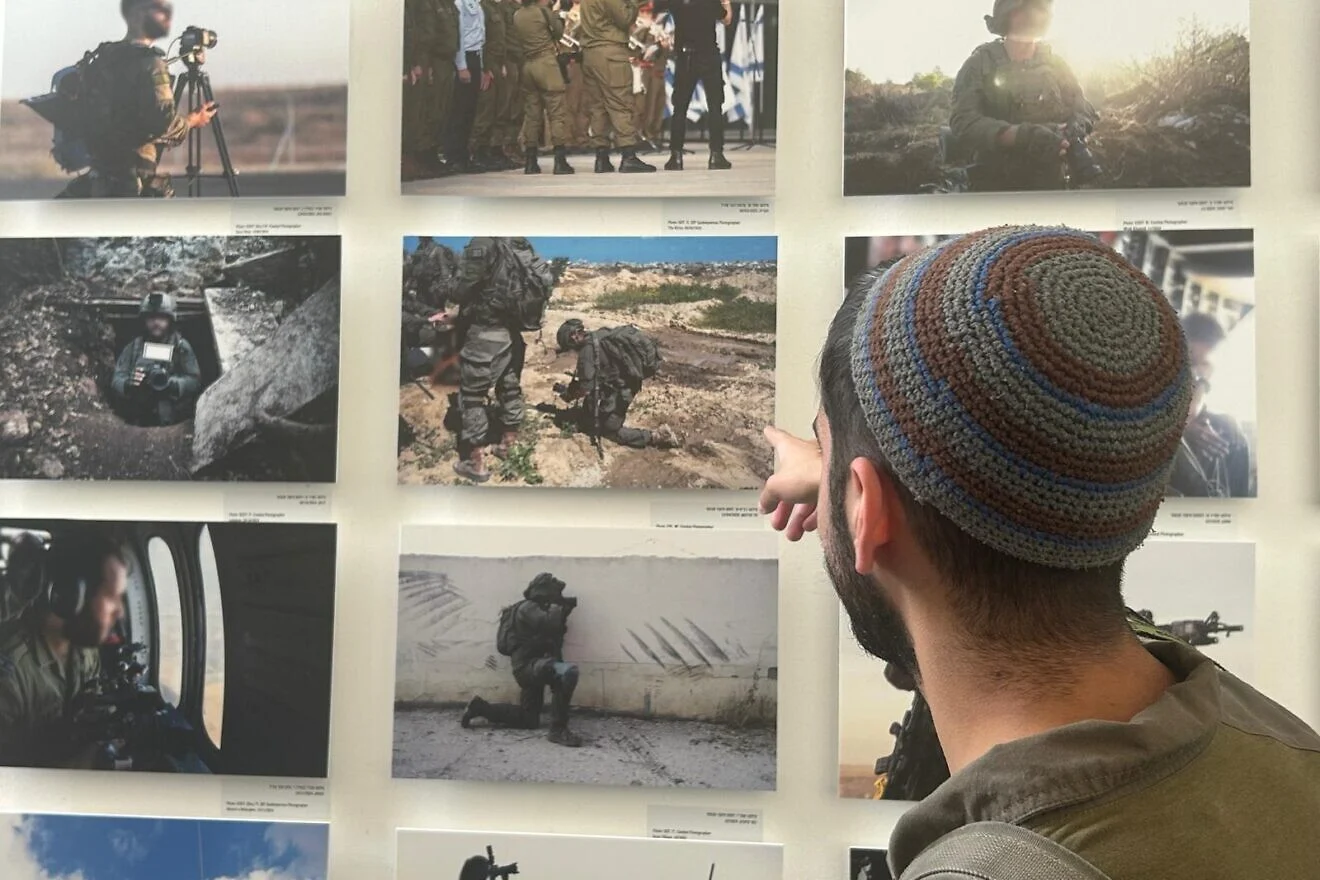
Staff Sgt. Y. points at a picture of him in the field, at the “Moments that Remain” exhibition in Tel Aviv, December 2025. Photo by Amelie Botbol.
Staff Sgt. Y. has seven months left in his army service and isn’t sure where his expertise will take him next.
“In the photography world, I feel like this is the highest level one can get to,” he said.
One of the greatest challenges of combat photography, he said, is capturing the right shot in the heat of the moment.
“I have to be able to take out the camera and take pictures in seconds. I have to think of the angle, the lighting as well as the right settings in the camera, while at war. Both documenting and fighting I need to move on instinct,” he said.
At the exhibition, Staff Sgt. Y. stopped by two pictures he took since Oct. 7, 2023, including one at the start of “Operation Gideon’s Chariot” when he accompanied Givati Infantry Brigade soldiers to Jabalia, north of Gaza City, in May 2025.
“In the first couple of days, we were building our compound and preparing for the operation itself. There was a major entrance where all the forces went in. I was inside an armored personnel carrier for about 20 hours. We waited until it was safe to go out. This picture was taken from a house—I was upstairs, which is how I was able to capture the angle,” he said.
“You can also see tanks parked in the back. This was the first time I took part in a major mission. The photo shows the flag with the yellow ribbon for the hostages. It reminds us why we are there. The mission isn’t over until all the hostages are back,” he added.
The second photo was taken during Israel’s 12-day war (“Operation Rising Lion”) against Iran in June.
“Those are interceptions as they’re falling. I took this picture using a long-exposure format. We set the camera’s shutter speed to four seconds, which allowed me to show the trajectory of the missiles as they were being intercepted. It looks like something from the Star Wars movies. Our country protects us. No matter what, we have the best air defense system in the world,” he said.
Amid the stress of entering the battlefield, Staff Sgt. Y. said it is important to remember why one chose to serve.
“The reason I was there is because of my grandparents and great-grandparents, who were in Ukraine, Europe, Egypt and Iraq. They had to hide in their basements out of fear of being lynched. I owe it to them. We can’t take what we have today for granted. This is our duty,” he said.
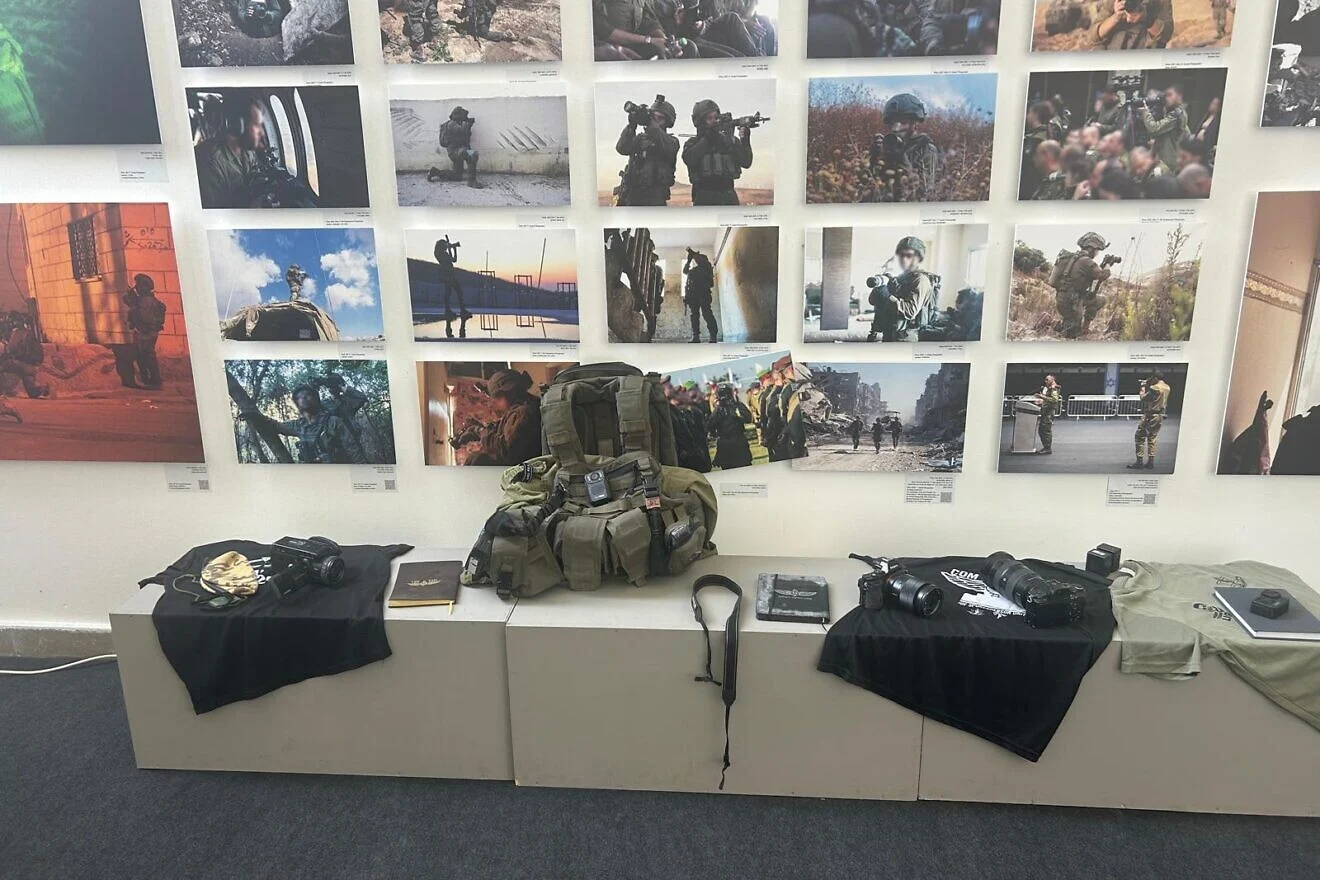
Equipment that IDF combat photographers carry in the field is seen at the “Moments that Remain” exhibition at the Yitzhak Rabin Center in Tel Aviv, December 2025. Photo by Amelie Botbol.
Combat photography is challenging. Of the 11 soldiers drafted into his unit, four did not finish training with the unit, Staff Sgt. Y said. As part of his service, he sometimes accompanies high-ranking officers, including most recently the commander of the Northern Command, Maj. Gen. Rafi Milo.
Two commanders Staff St. Y. was in the field with were later killed in action.
Lt. Ori Gerlic, 20, a platoon commander in the Kfir Infantry Brigade, was killed two days after the two parted ways. After Shabbat, Staff Sgt. Y. checked his phone and saw the news. Maj. Yaniv Kula, 26, was killed in Rafah during a Hamas breach of the current ceasefire.
“There is no real way to prepare yourself mentally for people you are with to be killed in action. It’s very hard. Everyone is there for a reason, and it can happen to anyone. I was mentally prepared for it to happen to me—I put myself in harm’s way for my country, and that’s OK with me. I feared for my family and leaving them behind, though,” he said.
As part of his role, Staff Sgt. Y. provides families like those of Gerlic and Kula with photos and videos of their loved ones from their final days.
“You share their last moments with their families. It’s very important. It’s horrible when people are killed, but it’s very important to share these pictures,” he said.
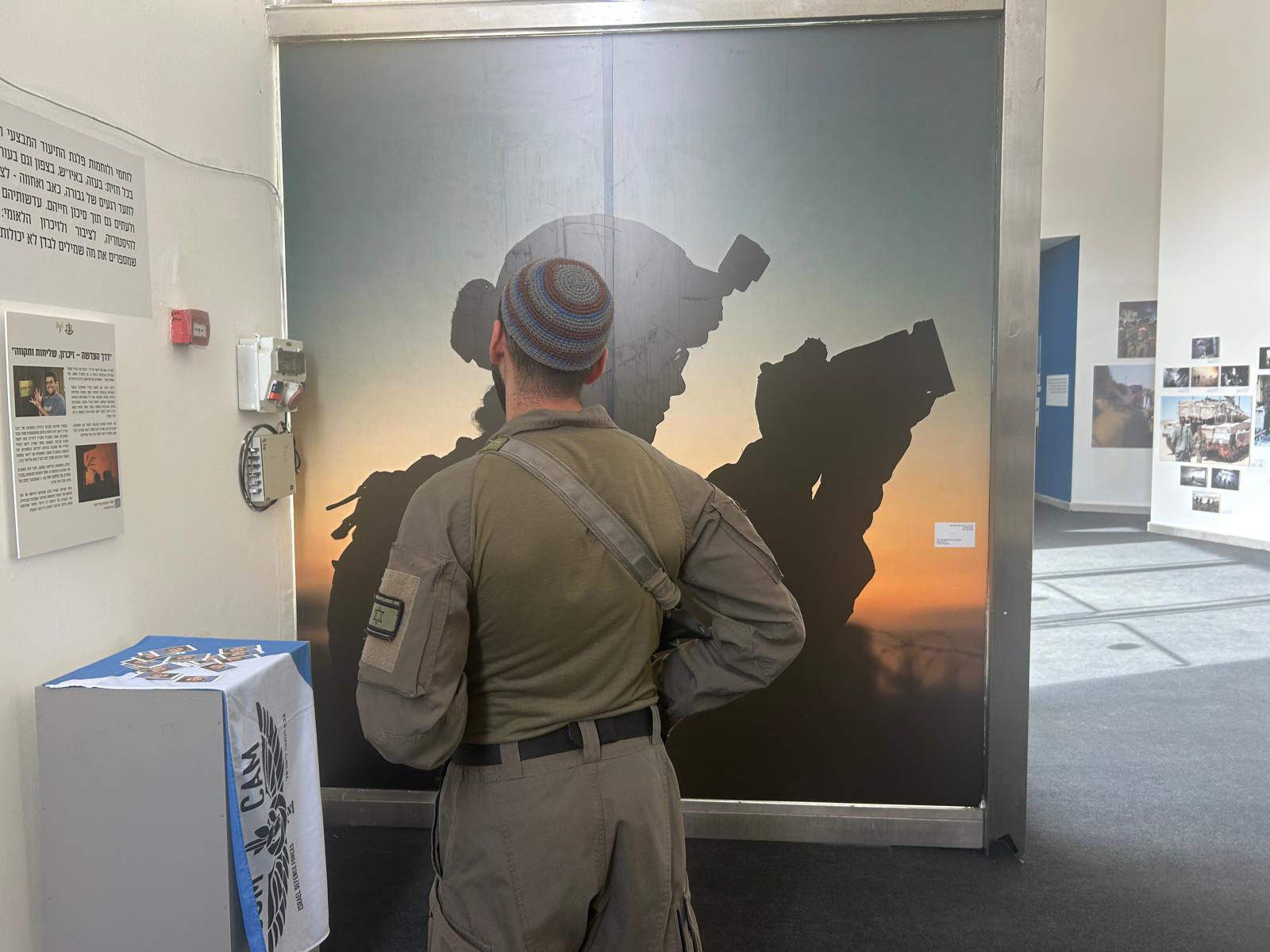
Staff Sgt. Y. stands by a picture of an IDF combat photographer at the “Moments that Remain” exhibition at the Yitzhak Rabin Center in Tel Aviv, December 2025. Photo by Amelie Botbol.
While no soldier from his unit was killed, Staff Sgt. Y. said one of his fellow combat photographers was hit by a rocket-propelled grenade in December 2023 and lost a leg.
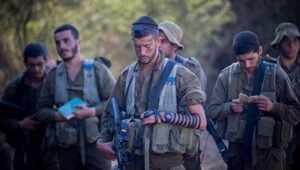
Beyond combat, the exhibition also captures daily life: soldiers donning tefillin, showering with bottled water and spending time together during breaks.
Combat photographers wear bulletproof vests with special pouches and straps that secure their camera so it can be dropped instantly if they need to switch to a weapon. They carry body cameras with infrared lighting and 32 gigabytes of memory, as well as GoPros mounted on their helmets.
“I can turn on the GoPro, pick up my gun and help everyone else while filming,” Staff St. Y. said. At night, soldiers can connect their night-vision goggles to the cameras, and they use special lighting rigs to photograph and film underground.
During hostage-releases, combat photographers carried LiveU video equipment to broadcast in real time to the families of hostages as their loved ones returned from Gaza.
“We show people the sights they didn’t see, and the people who were lost along the way,” Staff St. Y. said.
Want more news from Israel?
Click Here to sign up for our FREE daily email updates