(JNS) Israel responded sharply to the Jan. 16 White House announcement that Turkey, Qatar and Pakistan would take part in the running of the Gaza Strip, leading to a rare breakdown in usually strong communication between America and Israel.
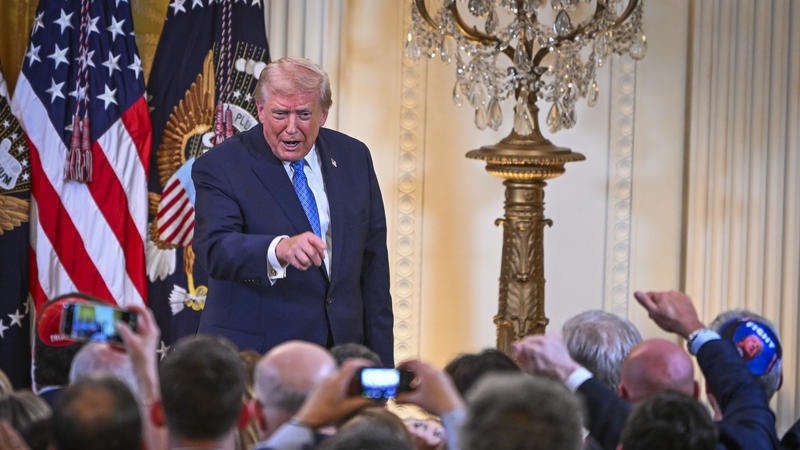
The Israeli Prime Minister’s Office seemed caught off guard by the move, which came as part of a broader announcement about the formation of various bodies to implement Phase Two of President Donald Trump’s 20-point plan to end the Gaza conflict.
On Jan. 17, the PMO said that “the composition of the Gaza Executive Board … was not coordinated with Israel and is contrary to its policy.”
Observers told JNS that Turkey, Qatar and Pakistan being members of a committee was one thing, but having them put troops on the ground was quite another.
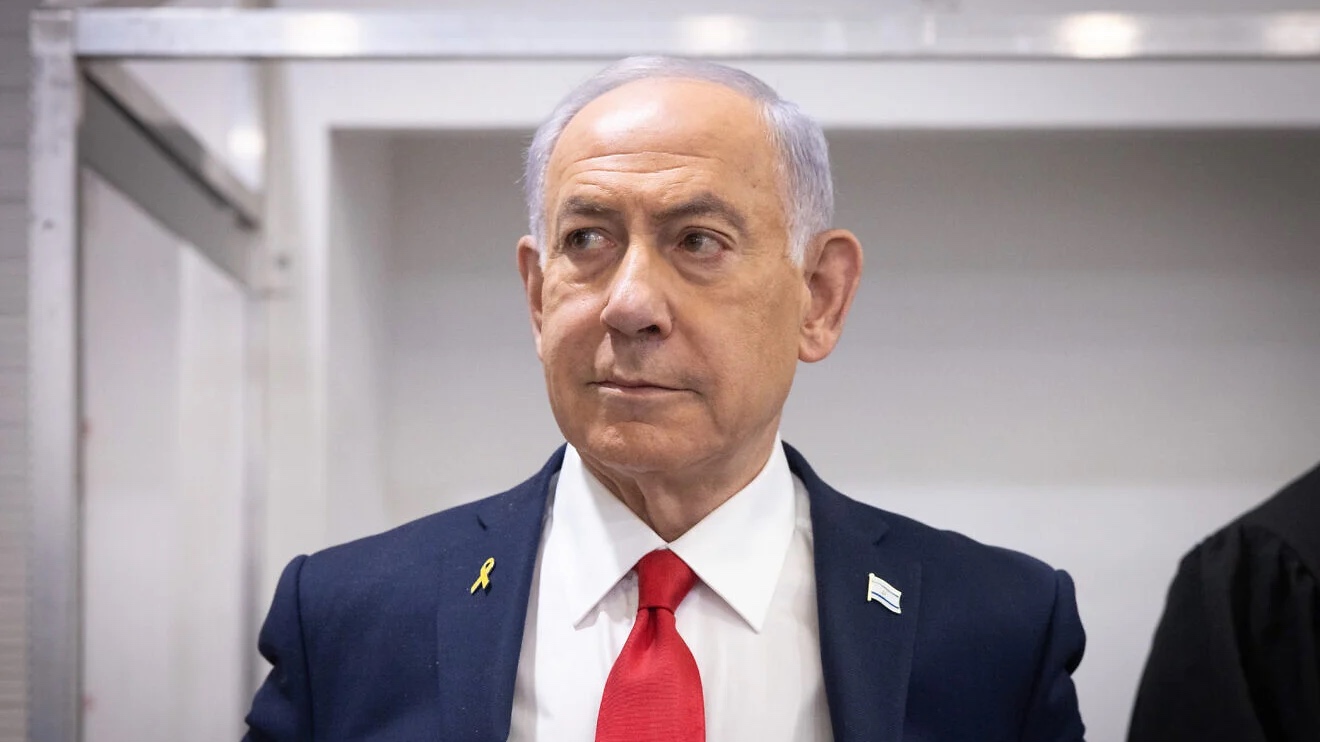
Netanyahu stressed this in a Knesset speech on Monday, saying Israel would not accept Turkish and Qatari soldiers as part of the Gaza International Stabilization Force (ISF), the multinational peacekeeping group outlined in the Trump plan.
“Turkish soldiers and Qatari soldiers will not be in the Strip,” the prime minister said. Israel has ruled out Pakistani troop participation as well.
Yoni Ben-Menachem, Middle East intelligence analyst for the Jerusalem Center for Security and Foreign Affairs (JCFA), told JNS: “The red line is boots on the ground. If there aren’t Turkish and Qatari troops, the committee can decide what it wants. But on the ground, Israel will control the situation.”
“The main question is whether they’re going to have a presence in Gaza itself. That I hope is not going to happen,” said IDF Brig.-Gen. (res.) Yossi Kuperwasser, head of the Jerusalem Institute for Strategy and Security (JISS), and former head of the Research Division at the Israel Defense Forces’ Intelligence Corps.
Israel would have an uphill battle blocking Turkey and Qatar from the post-war process entirely due to their crucial role in convincing Hamas to accept the Oct. 2025 ceasefire, which led to the return of the remaining living Israeli hostages, said Kuperwasser. “You have to pay something. So long as these countries are not involved on the ground, it’s inconvenient. It’s a problem, but it’s not the end of the world,” he added.
Jonathan Schanzer, executive director at the Foundation for Defense of Democracies, agreed that the White House views Qatar and Turkey as having earned their spots for advancing key parts of the first phase of Trump’s plan. The administration may also see broader regional participation as leading to normalization between Saudi Arabia and Israel, he said.
“The problem is that Turkey and Qatar are patrons of Hamas: financial, ideological, military patrons of a terrorist organization. They are, in other words, state sponsors of terrorism,” Schanzer told JNS.
“They are responsible for the war that erupted. They are responsible for not bringing that war to an end sooner. They are responsible for not reining in their terrorist proxy. And as a result, if you ask me, they should never have had a role to play.”
Qatar and Turkey should have been sanctioned and excluded from America’s alliance structures, Schanzer argued. Trump, he said, was following in the footsteps of a failed Biden policy, allowing Turkey and Qatar to take part in a process to end a war they helped start.
“It’s the antithesis of peace. To create a Board of Peace with these two countries makes zero sense,” said Schanzer.
Several other bodies were mentioned in the Jan. 16 White House statement, including the National Committee for the Administration of Gaza (NCAG), the technocratic body that will run daily life in the Strip, and a founding Executive Board (not to be confused with the Gaza Executive Board).
The Board of Peace (BoP), a much larger body which numerous countries have been invited to join, will hold a charter signing ceremony on Thursday at the World Economic Forum in Davos, Switzerland.
The Gaza Executive Board includes 11 members. Among them are Turkish Foreign Minister Hakan Fidan and Qatari diplomat Ali al-Thawadi, whose official title is minister at the prime minister’s office for strategic affairs.
Fidan is a problematic character, according to Schanzer. A former head of Turkish intelligence, Fidan played a key role in establishing Hamas’s presence in Turkey. He spearheaded a money laundering scheme that delivered $20 billion in cash and gold to Iran, and he is responsible for enabling the flow of fighters and funds to Islamic State in Syria.
“Hakan Fidan is responsible for a huge amount of the chaos that we have seen unfold in and around Turkey, and he is probably the figure that I am most worried about when we talk about this board and the impact that it might have on the Middle East,” said Schanzer.
Turkey and Qatar will exploit their membership on the Gaza Executive Board to undermine efforts to truly disarm Hamas, said Ben-Menachem.
“Turkey and Qatar could be helpful, but they are not going to help,” Kuperwasser agreed, though he noted that it was they who gave Trump the idea that Hamas will disarm. “But by and large, it’s against their interest because Hamas is part of their axis and they want it to stay in power,” he said.
Despite the participation of bad actors, Kuperwasser said Israel should try to make the Trump plan work, as the alternative is for Israel to run Gaza itself, a much worse option in his view. It will cost a fortune, require large numbers of troops and put Israel in charge of everything from Gazan sewage to health care. “We don’t want to be in daily friction with the Palestinians,” he said.
According to Schanzer, Israel’s options are somewhat limited. The question, he said, is how willing Jerusalem is to antagonize Trump given its other challenges in the region, in particular Iran.
The appointment of Turkey, Qatar and Pakistan is definitely a case of miscommunication, said Schanzer, but the friendship between Trump and Netanyahu is strong and he wouldn’t characterize the situation as a crisis, but rather a disagreement.
For Ben-Menachem, ultimately all that matters is that Hamas disarms. And in his view, only Israel can accomplish this. “Nobody has the motivation and nobody has the military capabilities, only Israel,” he said.
Want more news from Israel?
Click Here to sign up for our FREE daily email updates