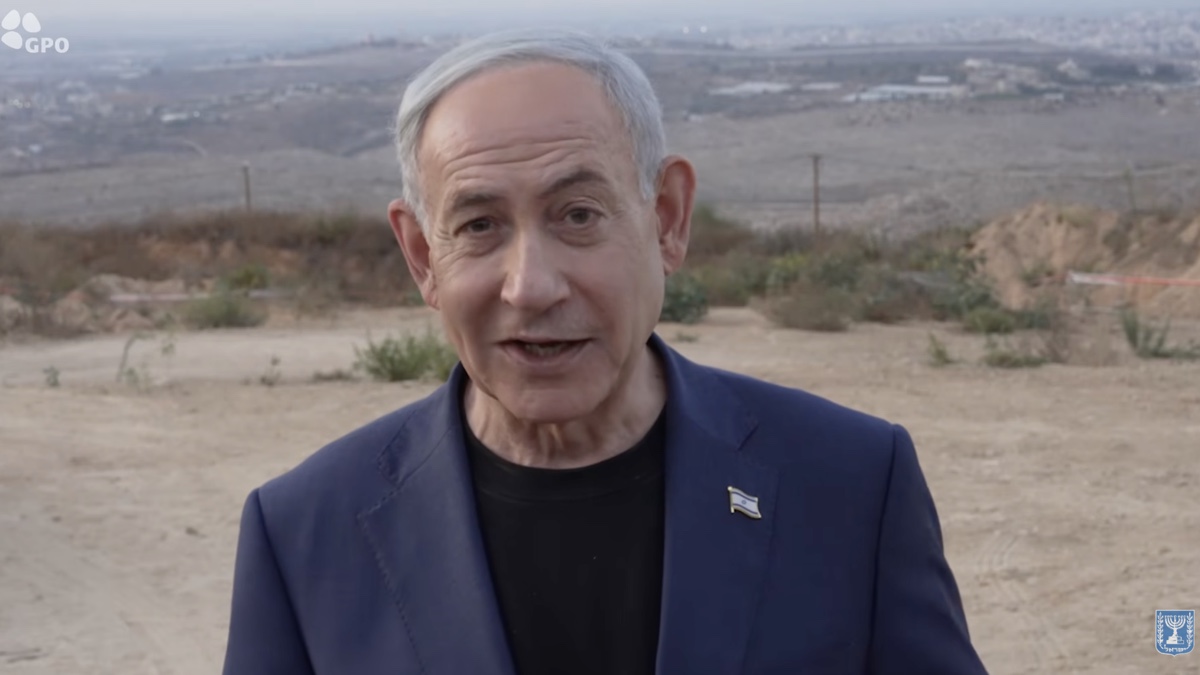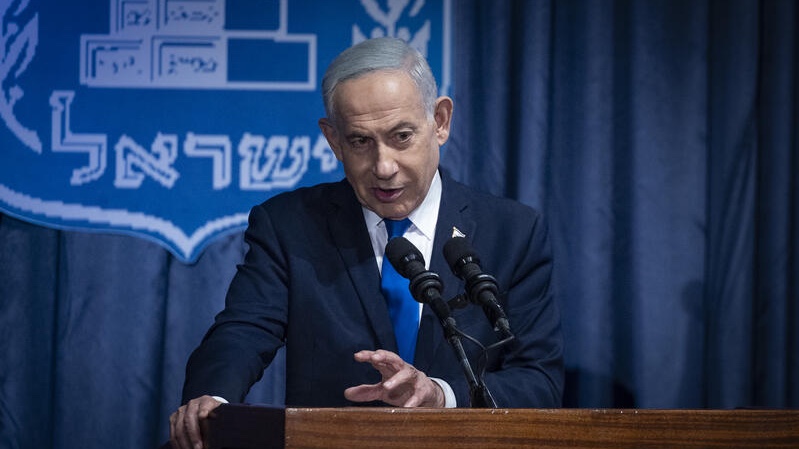
(JNS) “Help has arrived,” Israeli Prime Minister Benjamin Netanyahu declared on Feb. 28, speaking after the Israeli and US militaries launched a joint operation, “Roaring Lion/Epic Fury,” against Iran, killing then-Supreme Leader Ali Khamenei in the opening salvo.
Netanyahu said the offensive was aimed at creating the conditions for the Iranian public to cast off the shackles of the Islamic regime.
“Do not miss this opportunity,” he stressed.
The premier praised US President Donald Trump, calling him “a leader who stands by his word,” adding that cooperation between Jerusalem and Washington was at an “all-time high.”
The operation to “remove the existential threat” posed by Iran would “continue as long as needed,” Netanyahu said, vowing to usher in “true peace” in the Middle East.
Fast-forward six months, and while the Tehran regime is battered, bruised and degraded, it remains entrenched, defiant and aggressive, with no immediate prospects for a deal preventing Iran from obtaining nuclear weapons. The current standoff has effectively turned Carl von Clausewitz’s famous adage on its head: Politics is, for now, the continuation of war by other means.
Israel is, therefore, waiting in the wings, viewing the war as a significant parting shot that may require follow-up kinetic action unless renewed economic pressure brings the mullahs back to the negotiating table.
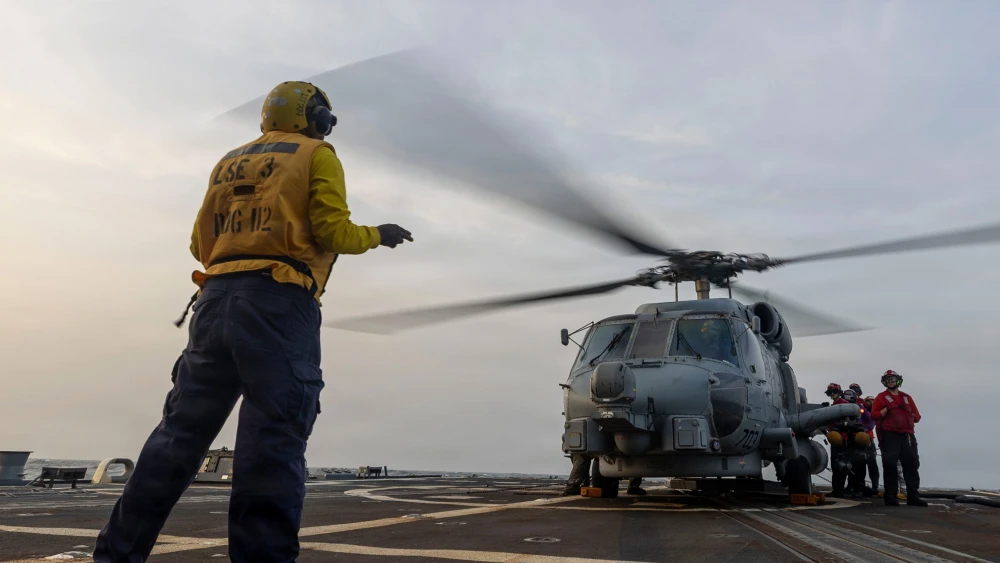
A US Navy MH-60R Sea Hawk helicopter is readied for flight aboard the guided-missile destroyer USS Michael Murphy as the warship supports the U.S. blockade of Iran in regional waters. Credit: United States Central Command.
“The war was an opportunity to inflict significant damage on Iran’s nuclear infrastructure and its ability to produce ballistic missiles. It also gave us an opportunity to work with the Americans to achieve that,” Brig. Gen. (res.) Yossi Kuperwasser, head of the Jerusalem Institute for Strategy and Security, told JNS.
“There is a lot of activity underway to prepare for a potential next round. I think we are going to strike different kinds of targets, as we improve our defensive capabilities, including to detect and intercept incoming projectiles,” he said.
Regime change was never likely to be achieved through air power alone, according to Kuperwasser. “You need to use boots on the ground,” he said.
“At the same time,” he added, “I think the most important thing right now is to make sure that the American economic campaign is as effective as possible.”
Brig. Gen. (res.) Amir Avivi, founder of the Israel Defense and Security Forum, told JNS that the Israeli security establishment views the campaign as ongoing, albeit through different means, with the goal of eventually achieving a decisive victory.
“When the Americans saw Israel’s audacity and creativity [during “Operation Rising Lion” in June 2025], and how within two days it was able to completely wipe out Iran’s air defenses and gain control of the skies over Tehran, they understood what was possible,” said Avivi. “They saw how the opening attack simultaneously took out so many leaders and severely disrupted Iran’s ability to function. This created an understanding in the United States that it can be done—that we can actually win against Iran and prevent it from going nuclear.”
Avivi said Israel’s strategy remains unchanged even as its tactics evolve, and that Jerusalem is waiting for the right opportunity to launch another offensive. Israel has a narrow window of roughly one to two years to act while Trump is in office, he said, adding that the outcome of the upcoming Israeli election will also be critical.
“We have a prime minister who is very well coordinated with President Trump, who knows exactly what he’s doing and has the military audacity, as well as the diplomatic capabilities, to continue on the path toward total victory. And total victory means bringing down this regime. That is what this is about,” said Avivi.
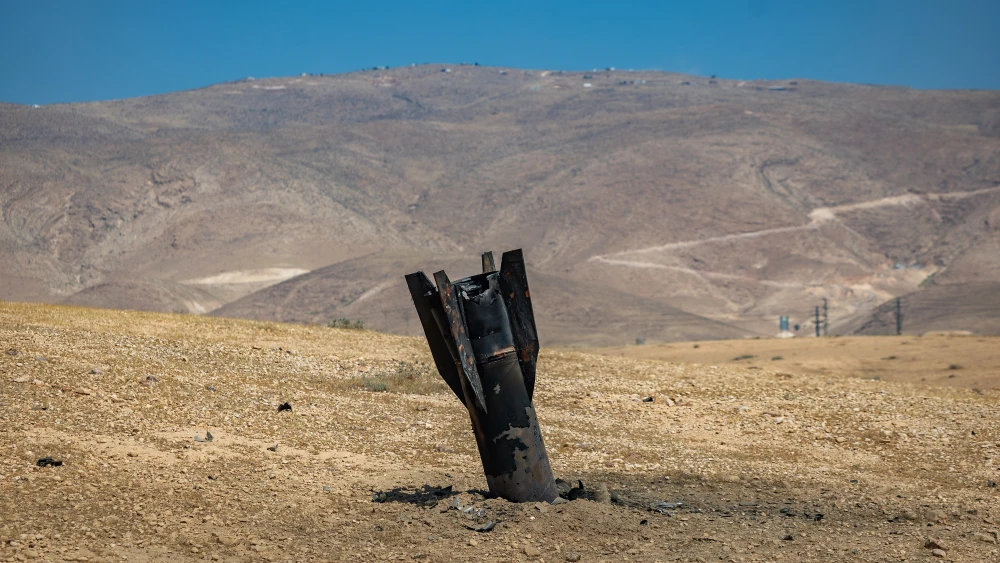
Part of an Iranian ballistic missile is seen lodged in the desert near Moshav Vered Yeriho in Judea, June 8, 2026. Photo by Chaim Goldberg/Flash90.
36,000 munitions on Iran
During the six-week conflict, Israel and the United States significantly degraded the regime’s military command structure, as well as its nuclear and conventional capabilities. According to the Israel Defense Forces, the Israeli Air Force dropped about 19,000 munitions, while the US Air Force dropped approximately 17,000. The combined strikes are estimated to have caused some $100 billion in damage.
Tehran, in turn, launched an onslaught of ballistic missiles against Israel, targeted critical infrastructure in neighboring countries and brought commercial shipping through the vital Strait of Hormuz to a near standstill. The IDF estimates that Iran fired about 550 surface-to-surface missiles at the Jewish state and approximately 850 more at Gulf nations. In Israel, 90 ballistic-missile impacts were recorded, including 64 with cluster-munition warheads.
The attacks sent world energy prices soaring and ultimately culminated on April 7, when Trump announced a “double-sided” ceasefire.
“Subject to the Islamic Republic of Iran agreeing to the complete, immediate, and safe opening of the Strait of Hormuz, I agree to suspend the bombing and attack of Iran for a period of two weeks,” he posted to Truth Social.
“The reason for doing so is that we have already met and exceeded all military objectives, and are very far along with a definitive agreement concerning long-term peace with Iran, and peace in the Middle East,” he added.
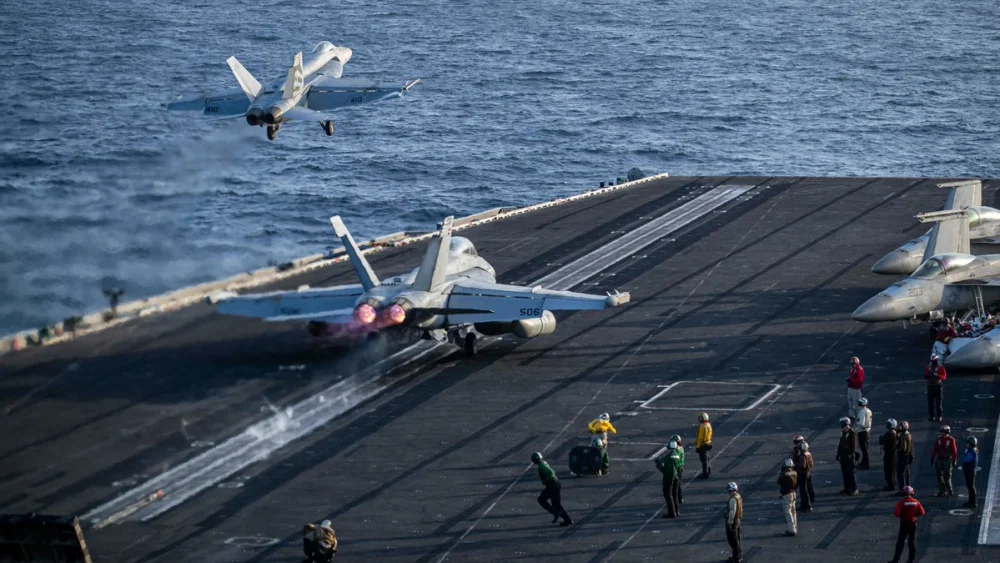
US Navy F/A-18 Super Hornets and EA-18G Growlers launch from the aircraft carrier USS Abraham Lincoln in the Arabian Sea on May 9, 2026. Source: @CENTCOM/X.
The following day, Netanyahu issued a statement in English backing the truce. “Israel supports President Trump’s decision to suspend strikes against Iran for two weeks subject to Iran immediately opening the straits and stopping all attacks on the US, Israel and countries in the region,” the prime minister said.
“Israel also supports the US effort to ensure that Iran no longer poses a nuclear, missile and terror threat,” he added.
Critically, Netanyahu emphasized that the “ceasefire does not include Lebanon.”
Some 24 hours later, Netanyahu described the truce as a “way station” and conceded that “We still have goals to complete and we will achieve them either by agreement or by the resumption of fighting.”
Notably, the prime minister denied reports that Washington had blindsided the Jewish state, saying the ceasefire announcement was made “in full coordination with Israel.”
Caught off guard?
Former Israeli Ambassador to the US Michael Oren told JNS that there was disappointment in Jerusalem over Washington’s diplomatic outreach to Iran, suggesting that the Jewish state was, to some extent, caught off guard.
“Israel would have preferred to continue militarily, certainly—not just to continue, but to carry out a different type of mission. In other words, Israeli operations were kept on a short leash,” he said.
Oren cited Kharg Island, a major Iranian oil export hub, as an example of a target Israel could have struck but was not permitted to.
A historian, Oren noted that the United States has halted Israel’s wars—“every single one”—since 1956, making American restrictions on Israeli military operations nothing new. The difference this time, he said, was that the United States and Israel fought “shoulder to shoulder.”
With respect to the shift away from military engagement, Oren rejected comparisons between the current diplomatic track and the failed efforts of former US President Barack Obama.
“Obama never came remotely close to the type of economic pressure that the Trump administration is putting on Iran,” he said, noting that even Trump’s 2018 sanctions “dwarfed those done by Obama.”
Oren said the conflict should be modeled not on Iraq or Afghanistan, but on the Cold War, with a focus on maintaining an economic blockade of Iran.
“You keep this blockade in place for as long as you have to. It could be years, by the way. People think in terms of months and weeks; it’s not.”
Such pressure could constrain Iran’s ability to fund Hezbollah and Hamas, pay its employees and sustain its economy, reducing the threat it poses to Israel and its neighbors, he said.
“I don’t know if it’s going to bring down the regime—it may—but it already has a material strategic advantage in reducing the Iranian threat to its neighbors and also to us,” Oren said, provided Israel and the United States “keep a close eye on the nuclearization and the breakout.”
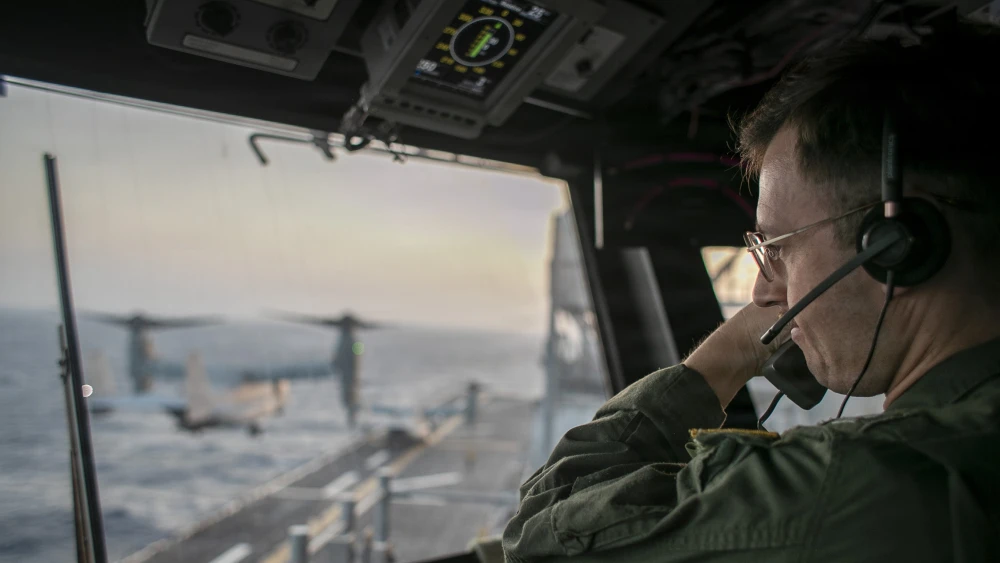
A naval officer aboard USS Tripoli oversees flight operations from the control tower as the amphibious assault ship sails in the Arabian Sea amid the enforcement of a naval blockade on Iran, while executing “Project Freedom” to support the free flow of commerce through the Strait of Hormuz, May 2026. Credit: US Navy.
Cracks in the ceasefire
The tenuous nature of the ceasefire emerged immediately, when Pakistani Prime Minister Shehbaz Sharif contradicted Jerusalem’s position by announcing that the deal also applied to Israeli military operations against Hezbollah in Lebanon.
“With the greatest humility, I am pleased to announce that the Islamic Republic of Iran and the United States of America, along with their allies, have agreed to an immediate ceasefire everywhere including Lebanon,” Sharif wrote on X.
Even as the next two weeks were largely defined by bickering over the terms of the truce, Trump nevertheless on April 21 announced an extension, while directing the US military to continue its blockade of Iran’s ports and coastal areas. On May 4, Washington launched “Operation Project Freedom” to safeguard merchant vessels in the strait following a series of Iranian attacks in the waterway. US Central Command said the mission would include guided-missile destroyers, more than 100 aircraft, unmanned systems and about 15,000 personnel.
The operation was suspended after 48 hours at Pakistan’s request, as Islamabad mediated talks with Tehran.
The following week, Trump called the Iranian regime’s response to a US proposal to end hostilities “totally unacceptable,” accusing the ayatollahs of “playing games with the United States” and warning that the mullahs would be “laughing no longer.” The next day, he conceded that the ceasefire was “unbelievably weak” and “on life support.” On May 12, he warned that Tehran would be “decimated” if it refused to agree to end the war, saying America would prevail, “peacefully or otherwise.”
“Their navy is gone, their air force is gone; every single element of their war machine is gone,” Trump told reporters at the White House before departing for China.
Col. Richard Kemp, former commander of British forces in Afghanistan, told JNS that while Trump has made numerous threats that have not been carried out, this has not diminished the credibility of the US military option.
“He’s clearly trying to intimidate the Iranians into coming to terms, although this has had limited results. I think he is trying to restrain US military forces; he does not want this to blow up any further between now and the midterm elections,” said Kemp.
He noted that while the regime in Tehran was being “strangled economically,” the Iranian people were likely to remain reluctant to rise up against the ayatollahs given the regime’s history of crackdowns, including earlier this year, when tens of thousands were reportedly killed in the streets.
“It’s very unpredictable how this is gonna play out. But I would say, as things stand at the moment, more military action is going to be required. After the midterms, all bets are off and Trump will probably be looking to unleash against them,” said Kemp.

A ballistic missile launched from Iran, as seen over Hebron in Judea, on June 8, 2026. Photo by Wisam Hashlamoun/Flash90.Wisam Hashlamoun/Flash90
On June 7, Iran launched four missile barrages at Israel, shattering the fragile ceasefire that had been in place for two months. Separately, the Israeli military said it detected a missile launch from the Iranian-sponsored Houthis in Yemen.
The following day, Israeli Air Force fighter jets conducted “a large-scale strike on strategic defense systems” in Iran, and targeted several infrastructure sites at the petrochemical complex in Mahshahr.
During the exchange, Trump appeared to draw a false equivalence by lumping Israel together with Iran, calling on both parties to “immediately stop shooting.” In a subsequent post, he suggested that “both sides, Israel and Iran, are looking to do an immediate ceasefire.
“Final negotiations on ‘peace’ are proceeding, subject to ignorance or stupidity getting in its way,” he added.
That evening, Netanyahu said that Israel was holding its fire but would bring “overwhelming force” to bear on the Islamic Republic if the regime resumed its attacks. “Israel has a full right to self-defense, and we are exercising it to the extent necessary,” he said.
Netanyahu added that he had had “good conversations” with his “friend Trump.”
Indeed, the US president emphasized on June 9 that he “can’t blame” Jerusalem for retaliating, but noted that he had told Netanyahu to “do what’s right” but also to “stop as quickly as you can.”
Over the next 48 hours, the contours of a potential US-Iran deal began to emerge, amid reports that Israel was being sidelined, prompting Netanyahu’s office to issue a statement on June 11.
“Even though Israel is not a party to the memorandum of understanding, the prime minister expressed his appreciation for President Trump’s commitment that the final agreement at the conclusion of negotiations will include the removal of enriched material, the dismantling of enrichment infrastructure, limits on missile production and the cessation of Iran’s support for its terrorist proxies in the region,” it stated.
On June 14, Trump announced an interim accord to “bring peace and security to the whole region.”
Did not meet the expectation
Former Israeli Ambassador to the United States Michael Herzog, a retired IDF brigadier general, told JNS that Jerusalem had hoped the Trump administration could better leverage the military achievements into concrete diplomatic gains.
“Israel expected the US to translate the achievements scored by both countries into a strong, enduring diplomatic outcome that addresses the core reasons for going to war—first and foremost, the nuclear issue. The US-Iran MoU did not meet that expectation,” he said.
“Israel sees very little chance that a deal with Iran will materialize. Between the two remaining options of resuming the war and resorting to an economic campaign, it currently prefers the latter,” he continued.
“The whole strategy vis-à-vis Iran will likely be revisited between the two governments after the upcoming elections in Israel and in the United States,” Herzog added.
When asked about reported disagreements with the Trump administration, Netanyahu retorted, “he is the US president, I’m the Israeli prime minister—we often see eye to eye, and there are also instances where we see less eye to eye.” He has also said that Jerusalem would stop Iran from acquiring nuclear weapons, “with or without an agreement.”
Former Israeli Ambassador to Washington Danny Ayalon likewise said Trump’s outreach to Tehran was not well received in Jerusalem, arguing that the diplomatic track had allowed Iran to shift the focus away from the nuclear issue.
“The regime in Iran is steadfast and still the main debate is over Hormuz, which was open before the war. So it’s kind of just sidelining the real, the important objectives,” Ayalon told JNS.
He also criticized what he described as an “erratic and inconsistent” strategy, saying Trump had been premature in halting military operations after 40 days.
“There were many tweets and declarations sometimes contradicting themselves even within one day,” said Ayalon. “And mostly by the results: the unyielding, intransigent Iranian regime, which becomes ever more extreme and radical. I think the negotiation itself was very poorly handled.”
Despite his criticism, Ayalon said Netanyahu was right to work with Trump under the current circumstances, given the political pressures facing the US president ahead of the midterm elections. He also said maintaining and intensifying economic pressure on Iran could eventually force Tehran to remove all nuclear material and allow robust IAEA monitoring and inspections.
“It may be slow in getting the needed results, but this is very important. The more pressure, the ratcheting up, I think is a better chance to bring about a good resolution,” he said.
The Memorandum of Understanding
On June 17, Trump signed the MoU with Iran at the Palace of Versailles during the G7 summit, while emphasizing that the accord was not final and that he could order renewed military action if Tehran did not “behave.”
“It’s a Memorandum of Understanding. And if I don’t like it, we’ll go back to shooting at them, dropping bombs on their head,” the president said.
A day later, he was already strongly denouncing critics. “These fools, who think I haven’t been tough enough on Iran … are either jealous, bad people or stupid,” Trump wrote on Truth Social.
On June 21, the United States and Iran held a first round of talks following the MoU in the Swiss city of Lucerne. The Americans were led by Vice President JD Vance and joined by Steve Witkoff, special envoy to the Middle East, along with White House senior adviser Jared Kushner.
While disagreements had already surfaced over Israel-Hezbollah hostilities, additional divisions emerged over whether Iran had agreed in Lucerne to nuclear inspections, with Trump writing on June 23 that “Despite their protestations and false statements to the contrary, Iran has fully and completely agreed to highest level nuclear inspections long into the future.”
A spokesman for Iran’s Foreign Ministry had said earlier that Tehran had no plans to allow International Atomic Energy Agency inspectors to visit nuclear sites targeted during the recent war.
Nevertheless, the sides held “technical” talks on July 1, during which “the parties agreed to continue discussions over the coming period,” according to Majed al-Ansari, a spokesman for Qatar’s Foreign Ministry.

Talks between teams from the Israel Ministry of Defense and the US administration on a security cooperation framework to succeed the existing 10-year MoU ahead of its expiration in 2028, June 5, 2026. Credit: Ministry of Defense.
Maj. Gen. (res.) Yaakov Amidror, a former national security adviser to Netanyahu, told JNS that Iran is currently prioritizing control of the Strait of Hormuz and that Jerusalem is watching closely, as its ability to assist the United States in this regard is limited.
“We are preparing all our efforts for the future in case we need to bomb Iran to stop or delay its nuclear project. We currently see that it is not yet urgent, and we want to give the Americans the space they need to solve the Hormuz problem,” said Amidror, a fellow at the Jewish Institute for National Security of America in Washington.
He said that the parliamentary elections in Israel on Oct. 27 are likely to have little impact on military decisions, as nearly all candidates support preventing Iran from acquiring the bomb.
“There may be differences in the level of involvement, but at the end of the day, I think almost everyone agrees on the need for Israel to prevent Iran from reaching nuclear military capability,” said Amidror.
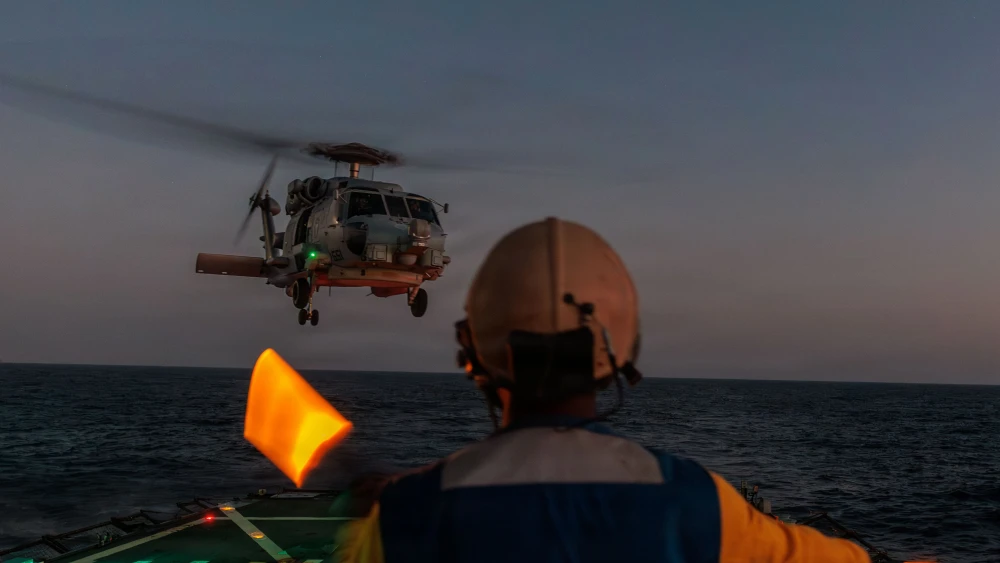
A US sailor, assigned to the Arleigh Burke-class guided missile destroyer USS Gonzalez, acts as a landing signalman enlisted during flight quarters, as part of “Operation Epic Fury,” May 30, 2026. Credit: US Navy.
Ceasefire declared dead
By July 7, the impasse in the talks metastasized into kinetic action, with US forces carrying out “a series of powerful strikes against Iran to impose heavy costs for targeting and attacking commercial shipping crewed by innocent civilians in an international waterway,” according to US Central Command (CENTCOM).
The next day, Trump effectively declared the ceasefire and its accompanying MoU dead, saying: “I don’t want to deal with them anymore.” The Islamic Republic is “led by sick people, and they’re vicious, violent people, and if they had a nuclear weapon, they’d use it. As far as I’m concerned, it’s over,” he added.
A day later, Netanyahu reiterated what might be considered his overarching mantra during the diplomatic outreach to Tehran: “With an agreement or without an agreement, Iran will not have nuclear weapons.”
On July 10, CENTCOM began 13 consecutive nights of strikes on the Islamic Republic, targeting military command centers, drone storage facilities, communications networks, coastal surveillance sites and maritime capabilities.
“There’s a military exit, where we just keep going just the way we are, and we can even make it a heavier dose, and it’s knocking out everything they have,” Trump said on July 24, after the attacks were paused without explanation.
“Or there’s a smarter strategy that you make a deal, and they want to make a deal. I just don’t think they’re ready yet,” he added.
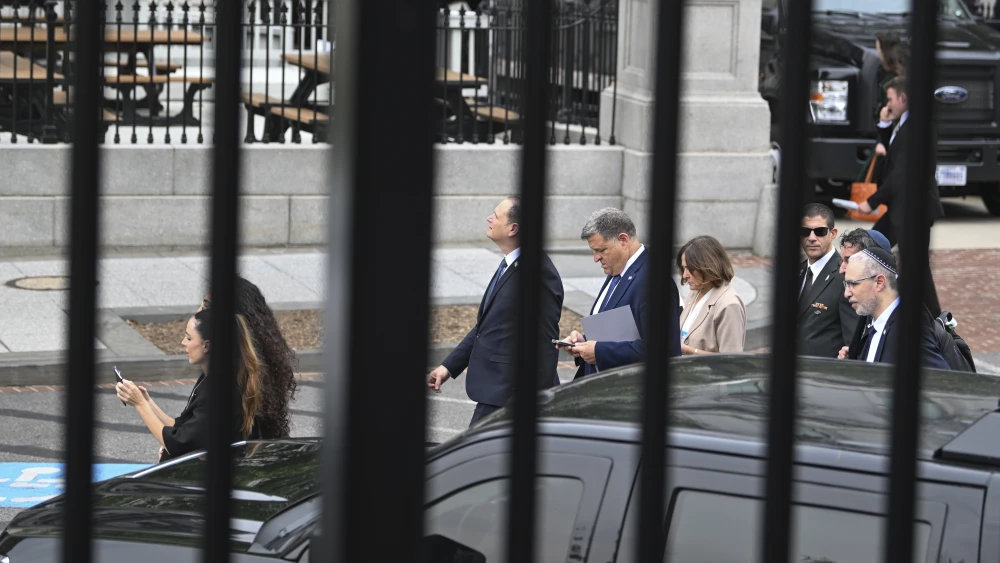
The Israeli delegation arrives at the White House in Washington, DC, for a meeting between Prime Minister Benjamin Netanyahu and US President Donald Trump, July 28, 2026. Photo by Arie Leib Abrams/Flash90.
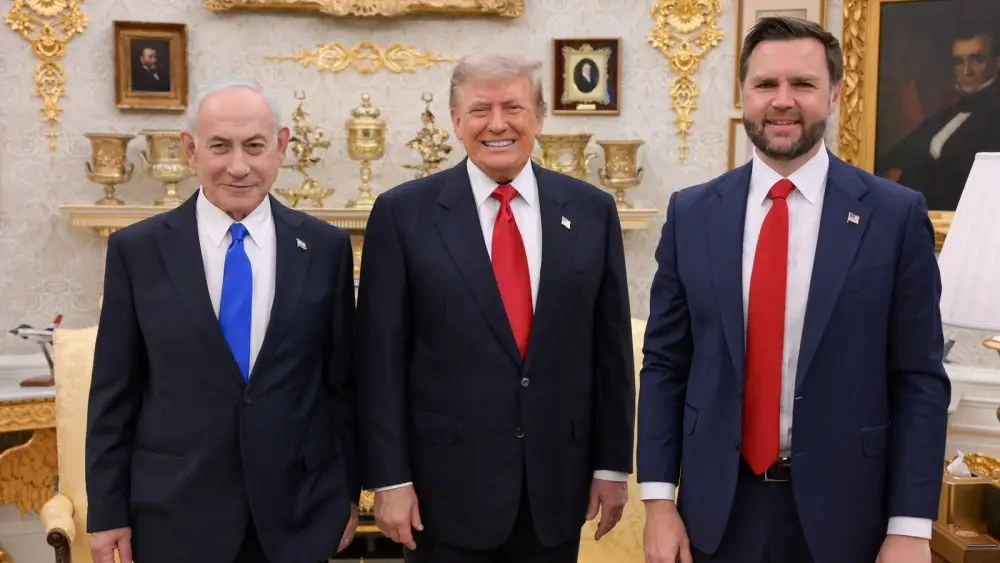
In the meantime, Trump met with Netanyahu at the White House on July 28, with the Israeli premier calling it “one of the best conversations I’ve had with the president of the United States.” He added: “It was a conversation of full partnership, of mutual support, with an understanding of the shared goal to ensure that Iran will not have nuclear weapons, and also other goals.”
Trump stated that it was a “very good meeting,” during which “obviously, many important subjects were discussed.”
Yet cracks in the united front seemingly emerged when Netanyahu, during his DC visit, was compelled to deny that Jerusalem was running an influence campaign against a diplomatic resolution with Iran.
In an interview, Netanyahu responded to comments Vance made on “The Joe Rogan Experience,” in which the vice president accused elements of the Israeli government of “manipulating” American public opinion and funding a campaign to derail negotiations.
“I had a very good conversation with the vice president this morning, and I think we straightened that out, because we’re not. That’s not our policy,” Netanyahu said, adding that while individuals in his government may hold personal views, he alone sets government policy.
Days later, on Aug. 1, Trump raised the level of urgency by announcing he had canceled a planned attack on Iran that would have carried force “not seen since World War II,” because “the perimeters of a deal” had been agreed. He said the proposed terms would include the “immediate, complete, and total” reopening of the Strait of Hormuz and “an end to Iran’s nuclear threat.”
Israel “joins me in this commitment,” Trump wrote in the post.
Two days later, Trump said that talks with Iran would resume that afternoon, but did not say where or who would participate. The next day, the US president warned that the Islamic Republic would “get hit really hard” if it backed out of negotiations, vowing that the Strait of Hormuz would be “open very soon.”
The MoU expired
On Aug. 5, Iranian Parliament Speaker Mohammad Bagher Qalibaf, Tehran’s lead negotiator, mocked Trump in a post to X: “‘Massive attack coming … wait, never mind, they want to negotiate.’ That’s theater diplomacy on loop.”
The cycle ended on Aug. 17, when the 60-day negotiating period stipulated in the MoU between Washington and Tehran expired without an extension.
The same day, Trump was doing damage control amid apparent divisions within his administration. “The number one goal is, and always will be, that Iran cannot have, in any way, shape, or form, a nuclear weapon,” the US president wrote. The comments were construed as a mea culpa of sorts, after Vance raised eyebrows on Aug. 13 when outlining two principal American objectives vis-à-vis the Islamic Republic.
“Goal No. 1, keep oil and gas cheap for Americans all over our country,” Vance said. “And then obviously, goal No. 2 is to ensure that Iran never gets a nuclear weapon.”
Trump also introduced a new variable into the equation, expressing support for declaring the Strait of Hormuz a US territory and reiterating that an active naval blockade had given Washington “total control” of the waterway.
US Secretary of Defense Pete Hegseth said that week that the US Navy could maintain the blockade “indefinitely,” while US Treasury Secretary Scott Bessent hinted at additional measures aimed at further isolating Tehran.
Those threats would later evolve into what Trump called an “economic D-Day,” announced on Aug. 19.
On Aug. 24, Bessent confirmed an “economic onslaught” as part of a comprehensive sanctions program, “Operation Economic Outcast,” which he described as an “unprecedented, whole-of-government” initiative to “collapse every last option for Iran.”
Netanyahu’s response was fairly muted. In a tweet, he congratulated Trump and Bessent, adding: “You justly exact a steep price from that cruel dictatorship and from those who assist its continued aggression.”
A test of endurance
While Washington views its economic pressure campaign as effective, Iran’s restrictions on traffic through the Strait of Hormuz are also exacting a price. The two sides are now locked in a test of endurance, each seeking to determine who can withstand the mounting pressure longer.
In the interim, the Iranian regime has been investing first and foremost in its military, understanding that the war is not yet over, according to Meir Ben-Shabbat, who served as head of Israel’s National Security Council from 2017 to 2021.
“My impression is that the Iranians have not only adapted to the new reality, but their self-confidence has increased. The regime probably estimates that its breathing space, at the current level of pressure exerted on it, is greater than that of President Trump in the face of the constraints he is under,” Ben-Shabbat, who currently heads the Misgav Institute for National Security and Zionist Strategy, told JNS.
The regime is rebuilding the command-and-control structures damaged during the fighting and expanding its options for action, either directly or through terrorist proxies, he said. At the same time, continued economic pressure on Tehran is deepening its economic crisis and could fuel internal unrest.
“History teaches that arrangements that end wars of attrition stop the fire, but usually do not eliminate the source of the threat. If the enemy’s military and political system remains intact, the arrangement freezes the war more than it ends it,” said Ben-Shabbat.
Trump’s dilemma, he added, is quite familiar. The president would prefer a political solution, while the current timing for military action is less favorable from a domestic political perspective. Nevertheless, the Iranians are making clear that they have no intention of giving him what he wants, either on the Strait of Hormuz or on the nuclear issue.
“I think that as we move toward the US midterm elections, the Islamic Republic will also increase manipulations against the United States. The sense of hubris in Tehran increases the chances of a military flare-up, even if the timing is less desirable for Trump. Israel needs to maintain readiness,” said Ben-Shabbat.
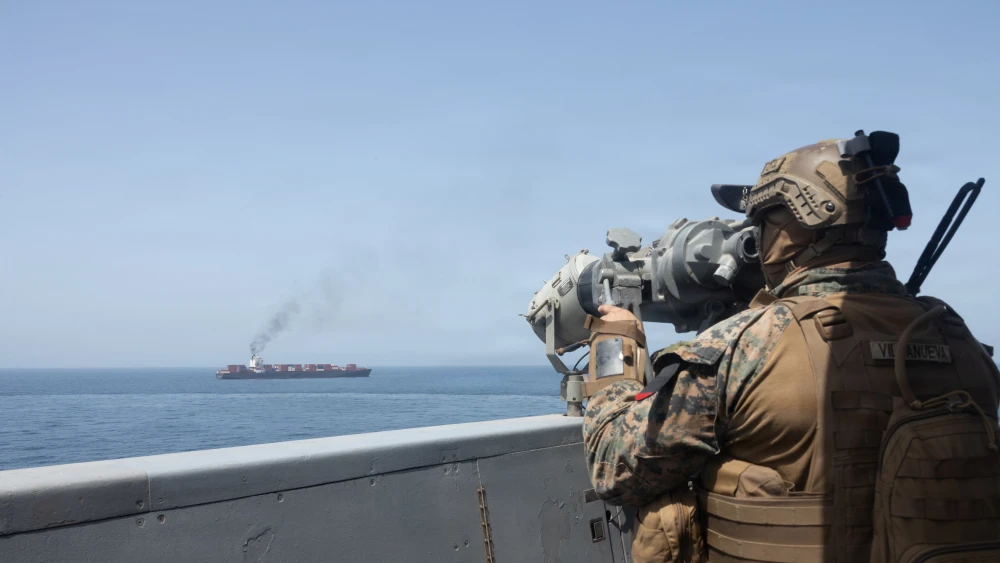
US forces patrol the Arabian Sea near M/V Touska after the Iranian-flagged vessel attempted to violate the US naval blockade, April 20, 2026. Credit: US Navy.
Indeed, the Iranians appear to be digging in their heels.
According to a Wall Street Journal report, the regime spent the two months after signing the MoU preparing for a wider conflict. Tehran strengthened the Islamic Revolutionary Guard Corps’ control over the country’s conventional armed forces, increased missile and drone production, and coordinated plans for expanded attacks by its terrorist proxies across the region.
Iranian military officials have also been issuing a series of escalating statements. On Aug. 16, army chief Amir Hatami announced a $30,000 bounty for killing or capturing US soldiers, with the reward doubled if the act was carried out by a woman, according to the state-run IRNA news agency.
Separately, Iran’s military General Staff said Tehran would not retreat from the “legitimate demands of the nation” until “the enemy surrenders.”
Substantive negotiations?
On Aug. 17, the day the MoU expired, Iranian Foreign Ministry spokesman Esmaeil Baghaei told reporters that the substantive negotiations envisioned under the agreement had never truly begun.
The same day, Qalibaf said in comments published by state media that the Strait of Hormuz would remain closed until the United States met the conditions of the now-defunct MoU. Those conditions include lifting the blockade of Iranian ports, removing oil sanctions, releasing Tehran’s frozen assets, and ending threats and military operations on all fronts, Qalibaf told parliament.
On Sunday night, the underlying tensions again erupted into tit-for-tat military exchanges, ending a weeks-long lull.
“US forces took limited, precise action against IRGC minelaying forces posing an imminent threat in the Strait of Hormuz. In essence, Iran created the threat and the US military eliminated it to protect civilian mariners, commercial shipping, and the free flow of global commerce,” CENTCOM said early Monday.
In response, the Islamic Revolutionary Guard Corps targeted Jordan, with authorities there reporting that air-defense systems intercepted eight missiles that breached the kingdom’s airspace. The Iranian military also said it had attacked the United Arab Emirates’ Al Minhad Air Base with drones, Iranian state TV reported, citing an army statement.
Meir Javedanfar, an expert on Iranian politics who teaches at Reichman University in Herzliya, told JNS that Tehran is currently at a strategic disadvantage because the United States has opened a channel through the Strait of Hormuz for the export of oil from Persian Gulf countries. Meanwhile, the Islamic Republic is unable to export oil due to the US naval blockade.
“This has convinced some elements within the hard-line core of the regime that the only way out of this is through military escalation,” he said.
“Consequently, the regime has launched attacks against the United Arab Emirates and Jordan. This is likely to be the status quo for the time being. By that, I mean low-intensity conflict between the two sides. Iran is hoping that this will force the US to capitulate,” he added.
In the interim, Javedanfar did not discount the possibility that Tehran would make a dash for the bomb.
“Some within the decision-making apparatus of the regime may decide that the best way, and the only remaining way, to strengthen Iran’s hand is by building a nuclear weapon,” he said.
“As long as the Iranian regime does not attack Israel directly, all Israeli eyes will be on Iran’s nuclear program. Secondly, Israel will continue to focus on Iran’s missile program. Third, Israel will continue to focus on Iran’s support for its proxy terror organizations in the region, especially those in Gaza and Lebanon,” Javedanfar added.
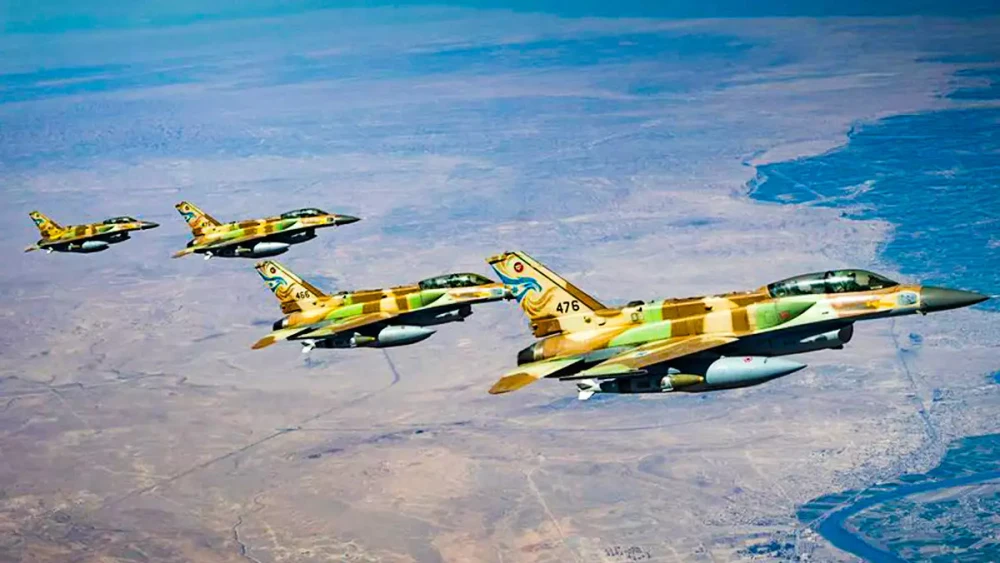
Israeli Air Force F-16I “Sufa” fighter jets over Iran. Credit: IDF Spokesperson’s Unit.
Maj. Gen. (res.) Amos Yadlin, former head of the IDF Military Intelligence Directorate, told JNS that Israel is basing its assessments not on the parties’ back-and-forth and sometimes hyperbolic rhetoric, but on how quickly and to what extent Iran is recovering militarily from “Operation Roaring Lion.”
Regarding ballistic missiles, he said, Tehran has not been able to fully restore its capabilities because the United States and Israel destroyed key elements of its industrial base.
“Still, they have retained around 1,500 to 2,000 missiles that were stored underground during the war and could not be launched because the sites were sealed. They have since reopened the tunnels and restored the missiles to operational status, but I believe the IDF would know how to neutralize them in another war,” said Yadlin.
As for Iran’s air defenses, he noted the IDF has twice demonstrated its ability to overcome them and would likely achieve air superiority again unless Tehran receives advanced equipment from China or Russia.
Finally, there is the nuclear issue, which he said Israeli and US intelligence agencies are closely monitoring.
“To the best of my knowledge, the Iranians have not yet begun efforts to retrieve the uranium and find a site to enrich it,” said Yadlin. “I think this is the only red line Israel will have, in which case it would act, even if it must do so alone.”
Want more news from Israel?
Click Here to sign up for our FREE daily email updates