(JNS) The Israel Defense Forces’ Military Rabbinate has spent months preparing supplies, logistics and religious services for those who need them so that soldiers everywhere, including those operating beyond enemy lines, can observe the High Holidays, Lt. Col. Rabbi Udi Schwartz, head of the Military Rabbinate Halacha Department, told JNS on Wednesday.
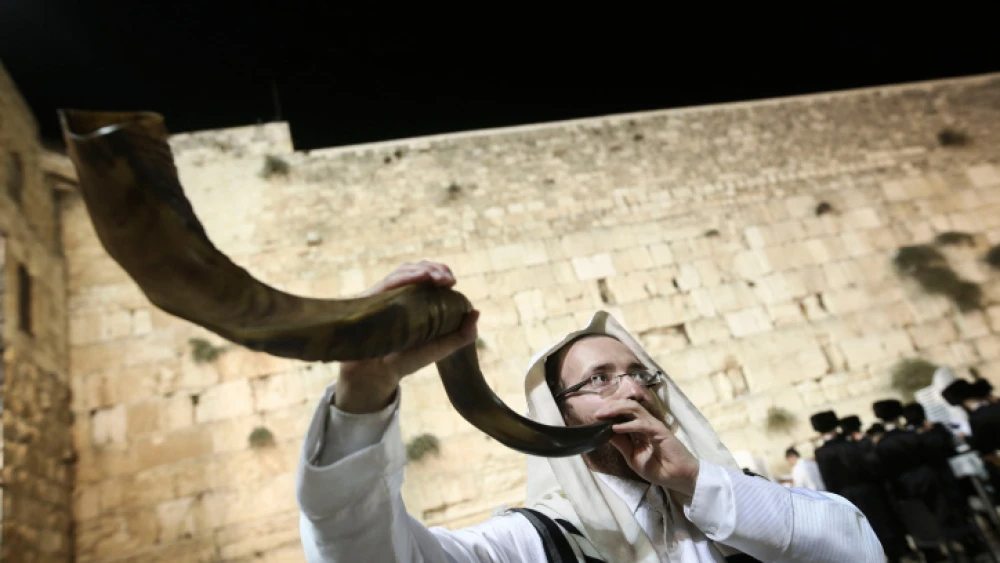
Schwartz said the rabbinate’s “Tishrei holidays operation” has been underway for months and covers a wide range of logistical work.” We needed to make sure that at every single point there would be a shofar and there would be Rosh Hashanah symbolic foods, so that soldiers were able to celebrate the two nights of Rosh Hashanah according to Jewish law,” he said.
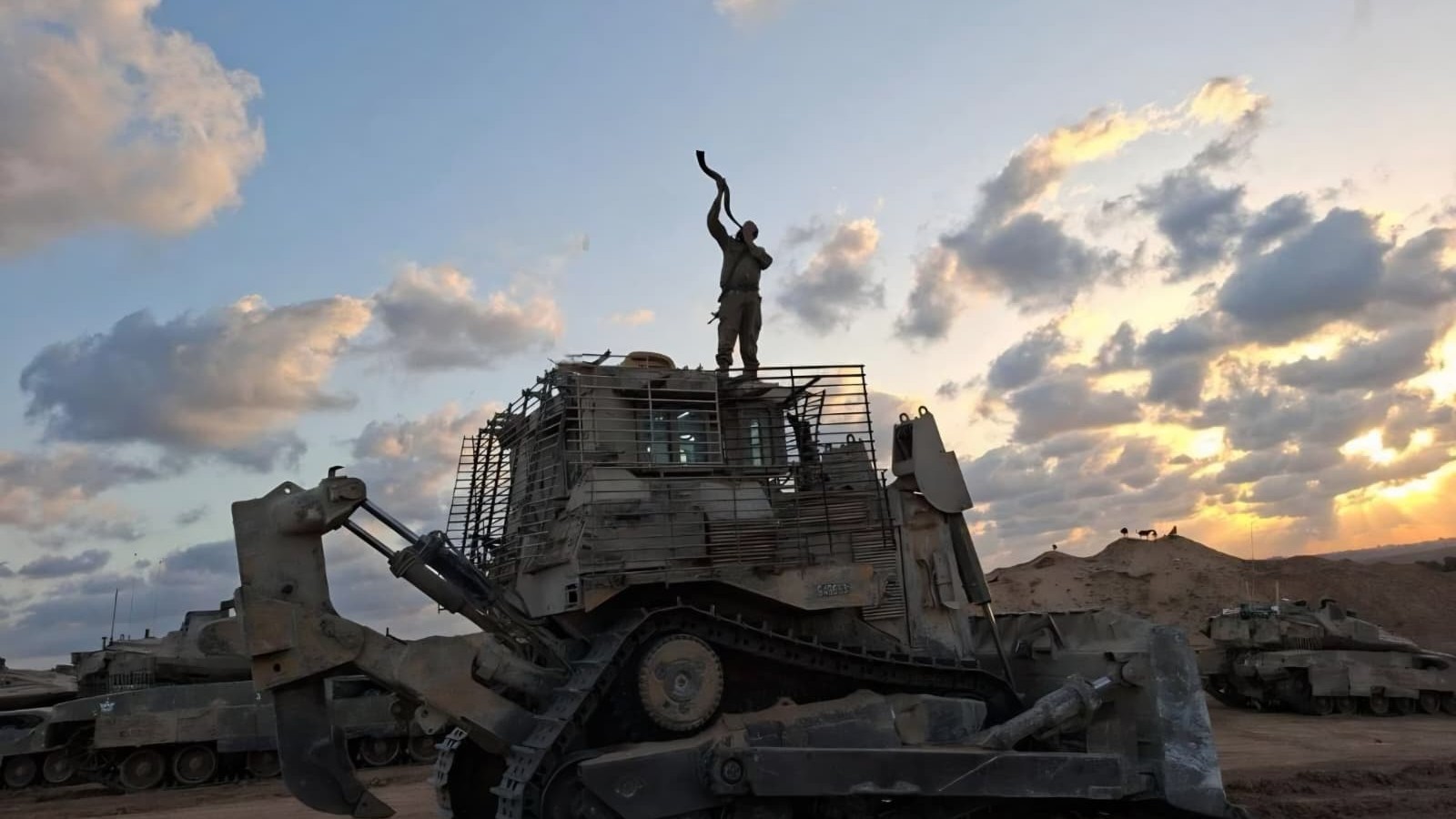
That effort extends deep into hostile territory. “Even soldiers who are located in enemy territory receive sealed packages of this kind, where instead of a pomegranate there is pomegranate juice, but there are dates there and there are all kinds of things that can be preserved so that even in such places, a soldier can celebrate Rosh Hashanah according to Jewish law,” he said.
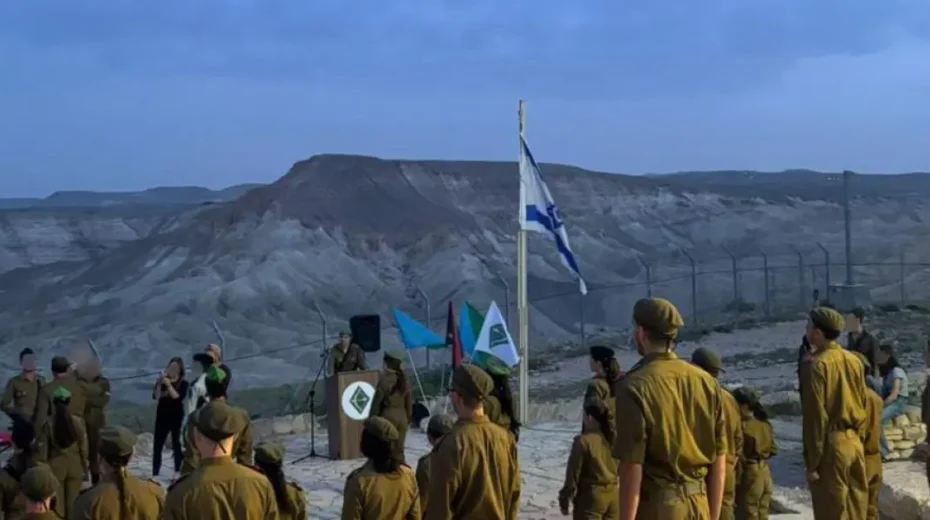
Schwartz described the atmosphere at the holiday prayers and meals he attended at the Officer Training School, known as Bahad 1, near Mitzpe Ramon in the Negev. “There were very uplifting prayers there, very special, prayer quorums, Torah classes on both nights of the holiday, a festive meal in which all the soldiers take part, not only the religious soldiers,” he said.
“At the meal, on the night of Rosh Hashanah, everyone takes part, the battalion commander speaks, I spoke, it’s an event that I think is a very connecting and unifying event,” he added.
Turning to Sukkot, which begins this year on the evening of Sept. 25, Schwartz said the logistical challenge becomes even more complex. The Military Rabbinate supplies sukkahs of all sizes, in all shapes, ranging from structures that can fit 300 soldiers inside at once, to tiny sukkahs that can only receive seated visitors.
The goal, he said, is that every IDF soldier, even if they are in a very remote location, “and even in enemy territory, can sit in a sukkah.”
Building a sukkah beyond the border requires strict command approval at the rank of lieutenant colonel at minimum, he added.
“In a place where there is a drone threat, then of course we won’t build a sukkah, but we are prepared to provide a response beyond the border as well,” he said.
He described a ruling his department issued for outposts on the northern border covered by anti-drone netting, which enabled them to contain a sukkah despite the netting.
“We have outposts on the northern border where they built very large nets above the outpost to prevent drone penetration. About a month ago already we were asked, so what do we do about the sukkah mitzvah? After all, a sukkah must be under the open sky, a sukkah cannot be underneath something else,” he said. “We in the Halacha Department of the rabbinate sat down, examined the halachic case, and we reached the conclusion that it is permissible to build a sukkah even under these nets, because these are not such dense nets, you can see the sky through the holes in the net.”
The commandment of war
Schwartz said his department publishes detailed halachic guidance booklets ahead of the holidays, addressing questions such as how to pray briefly during operational activity and how Yom Kippur fasting rules apply to combat troops.
“A soldier who is in combat, in active fighting in Gaza, in Lebanon, does not fast, period. The commandment that is placed upon him is the commandment of war, the commandment of operational activity, and not the fast,” he said.
The rabbinate has even composed a short prayer for soldiers who must eat on Yom Kippur, he added.
For soldiers on less intensive duty, Schwartz pointed to a different mechanism, known as “Drinking by measured amounts,” meaning they drink a small quantity of water or another sweet liquid, say every few minutes, or every quarter hour. IDF Rabbinate staff in every unit guide soldiers individually on which category applies to them.
Schwartz said the rabbinate serves both religious and secular soldiers alike. “The rabbinate is for everyone,” he said. “I feel, watching the soldiers at these events, that there is something highly connecting here, unifying, and bonding,” he said, describing the Rosh Hashanah table as a distinctly Israeli, not merely religious, occasion.
That inclusiveness extends to non-Jewish soldiers, Schwartz said. “Druze, Circassian or Christian soldiers who serve in the IDF, they are a part of the Israeli story of all of us. A new year begins for everyone, even a soldier who is not Jewish, as here in the State of Israel a new year is now beginning,” he said.
Schwartz also noted the rabbinate’s traditional Selichot tours, held jointly with the Identity and Jewish Awareness Branch of the IDF Personnel Directorate.
“One of the cadets at Bahad 1 told me on the night of Rosh Hashanah that this was already his third consecutive Rosh Hashanah away from home,” he recalled. “In order for them to best carry out their mission, and concentrate on what matters most, to focus on operational activity, we want to bring the holiday into the army for the soldiers. For the holiday atmosphere to enter the army. I think this is a very significant thing for building morale,” he said.