
On the occasion of the upcoming 88th anniversary of the Night of Broken Glass, international police representatives gathered on Thursday at the New Synagogue in Berlin. Participants from Germany, other European countries, and the United States commemorated the National Socialist November pogroms of 1938 and addressed the responsibility of security authorities in protecting Jewish life.
The event, held under the motto “Not on Our Watch – Putting ‘Never Again’ into Action,” was organized as part of an international initiative against antisemitism. The participating organizations included the Police Union (GdP), the Jewish Community of Berlin, and the International March of Life.
The commemoration ceremony was intended to send a clear signal against antisemitism and in support of the safety of Jewish communities. The remembrance of the victims of National Socialism must be linked to concrete responsibility in the present.
The Federal Chairman of the Police Union, Jochen Kopelke, emphasized ahead of the event that Jewish life is an inseparable part of Germany. It is unacceptable for Jews to have to fear practicing their religion openly, visiting a synagogue, or sending their children to Jewish institutions.
Kopelke also warned of the growing antisemitism in Germany. The memory of the crimes of the National Socialists must not be confined to commemoration events. What matters is taking responsibility today and consistently protecting Jewish life.
He also pointed to Berlin’s particular historical responsibility. The city, from which the systematic persecution and annihilation of European Jews largely originated, must today be a place where Jewish life can visibly take place without fear.
Holocaust survivor returns to Berlin
Among the speakers was 94-year-old Holocaust survivor George Shefi, who as a child had experienced the Night of Broken Glass of 1938 in Berlin.
At the time, nearly seven years old, he witnessed the synagogue of his school go up in flames. He now returned to Berlin to speak before police leaders from around the world about his experiences.
The international commemoration event at the New Synagogue in Berlin was also broadcast on YouTube. The recording of the event can be viewed here:
According to a report by the Jerusalem Post, Shefi expressed deep concern in his speech about the growing antisemitism in Germany and worldwide. Police officers are on the front lines in the fight against antisemitism and must therefore remain especially vigilant.
Jews are still not safe in many places today, the Holocaust survivor warned. The hatred toward Jews that he experienced as a child continues to exist.
His participation lent the event a special historical significance. As fewer and fewer people are able to report from their own experience about the crimes of the National Socialists, the passing on of their memories to subsequent generations is becoming increasingly important.
Remembering the November pogroms of 1938
The choice of Berlin as the venue held particular historical significance. During the Night of Broken Glass from November 9 to 10, 1938, synagogues were set ablaze, Jewish businesses were destroyed, and Jewish citizens were assaulted, murdered, or arrested throughout the German Reich.
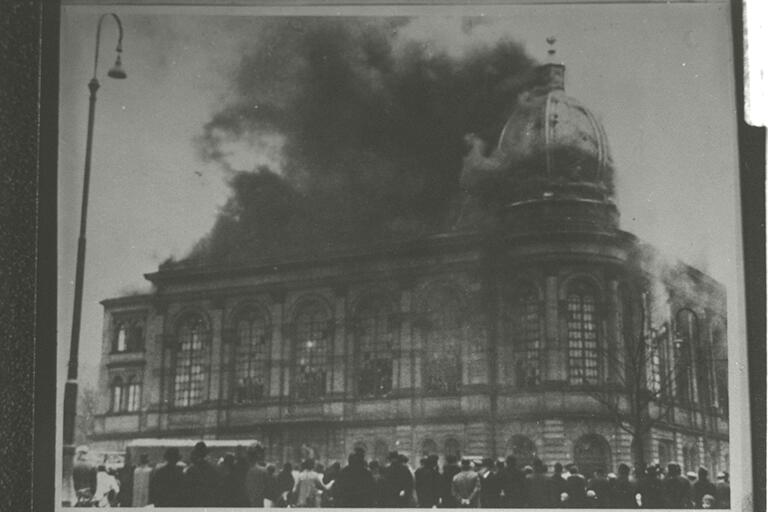
The burning synagogue in Frankfurt am Main during the November pogroms in November 1938. Photo: Center for Jewish History, NYC, Public domain, via Wikimedia Commons.
According to figures from the Federal Agency for Civic Education, around 30,000 Jewish men were arrested and transported to the concentration camps of Dachau, Buchenwald, and Sachsenhausen. The pogroms marked a further escalation of the National Socialist persecution of Jews and a decisive step on the path to the Holocaust.
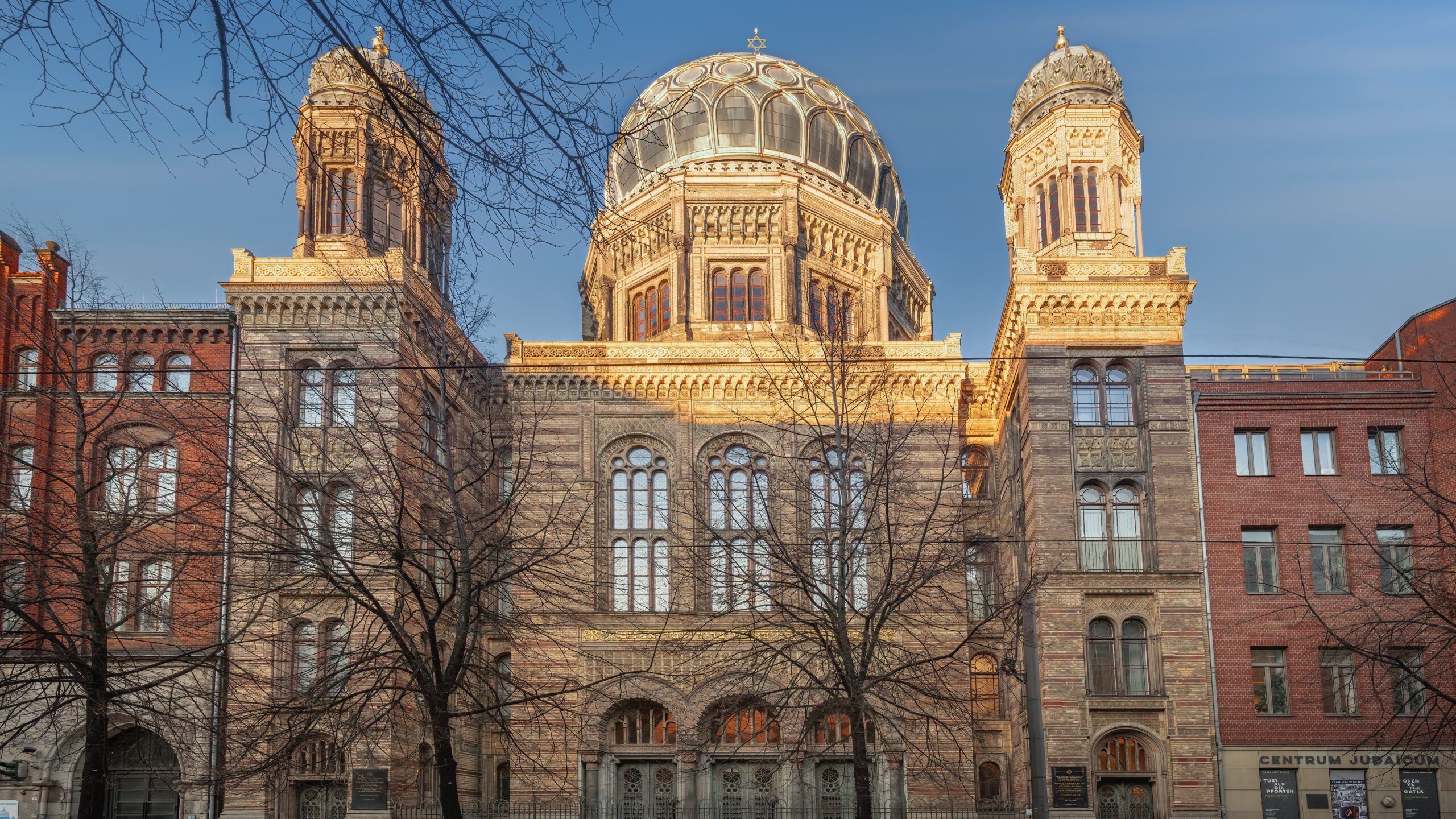
The New Synagogue on Oranienburger Strasse in Berlin was also attacked during the riots. Berlin police officer Wilhelm Krützfeld intervened at the time and prevented a fire that had been set from destroying the building.
The synagogue, consecrated in 1866, was one of the most significant Jewish houses of worship in Germany. It was severely damaged during the Second World War. Today, the Centrum Judaicum in the partially restored New Synagogue commemorates the history of Jewish life in Berlin.
Krützfeld’s intervention demonstrates that even during National Socialist rule, individual police officers were willing to stand against the violence targeting Jewish institutions. His conduct stands in stark contrast to the involvement of large parts of the police apparatus of the time in the persecution of Jews.
International cooperation against antisemitism
The Berlin commemoration event was part of an international collaboration between police organizations and Jewish institutions. The goal is to connect the lessons of the Holocaust with the current responsibilities of security authorities.
The international initiative also involves American institutions engaged with policing, public safety, and the relationship between security authorities and civil communities.
The central focus is on how police leaders can learn from history and take early action against antisemitic threats. The international collaboration aims to facilitate the exchange of experiences and improve the protection of Jewish communities.
The Police Union also sees this as an obligation for German society as a whole. The necessary protection of Jewish institutions simultaneously highlights the fact that Jewish life in Germany continues to face particular security threats.
The message of the Berlin commemoration event is therefore not directed solely at the past. The remembrance of the November pogroms of 1938 is also meant to compel concrete action today. The protection of Jewish life and the resolute fight against antisemitism remain central responsibilities of the state, the police, and society.
Want more news from Israel?
Click Here to sign up for our FREE daily email updates