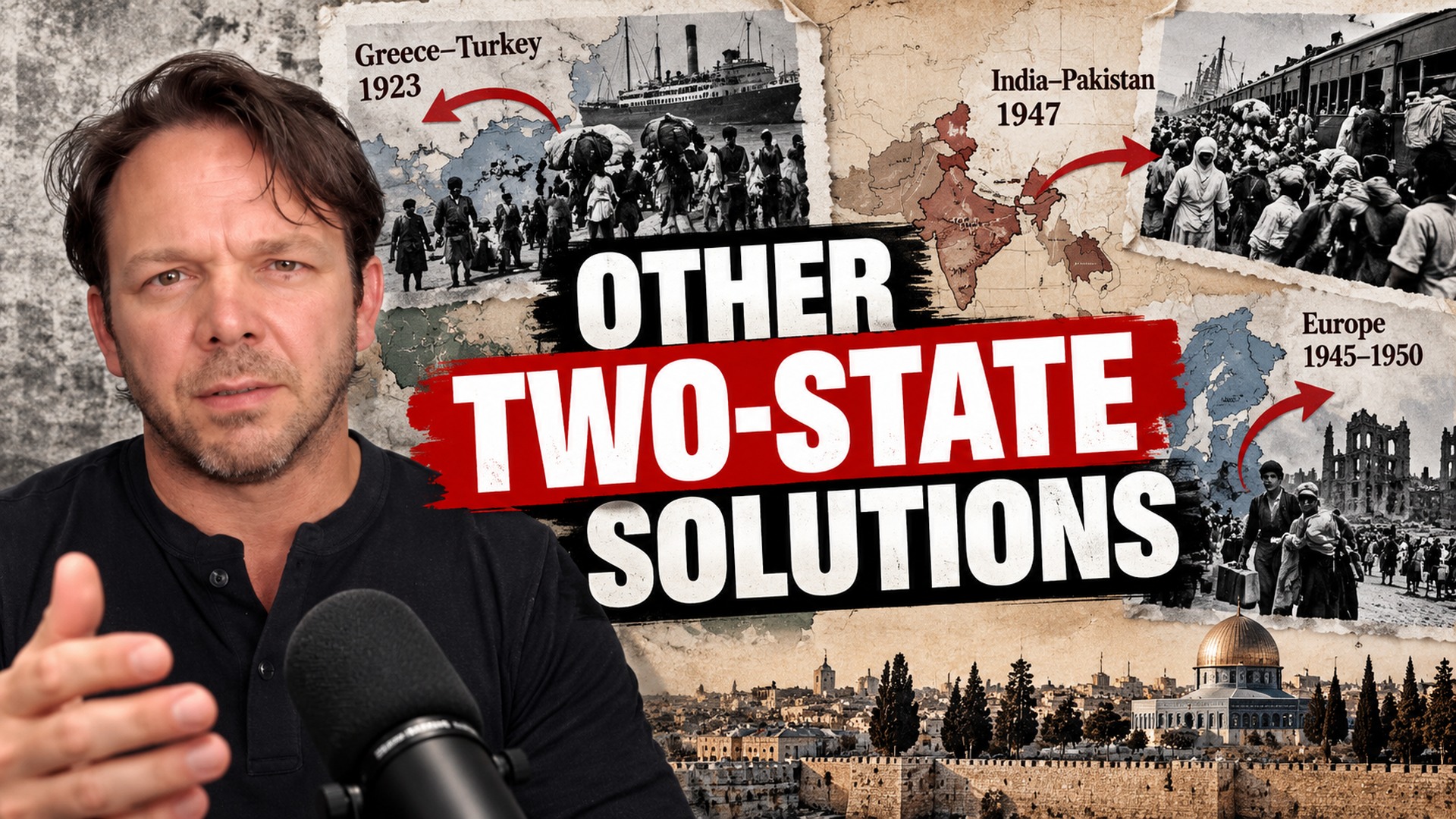

The 20th century was an era of mass displacement. In 1923, Greece and Turkey exchanged some 1.6 million people under an agreement backed by the League of Nations. The 1947 partition of India uprooted at least 14 million. After the Second World War, around 12 million ethnic Germans were expelled from Eastern Europe.
Every one of them was a refugee. Within a generation, every one of them had become a citizen of a new home.
The Holy Land saw an exchange of its own. Around 700,000 Arabs fled or were forced from their homes during the 1948 war. In the decades that followed, more than 850,000 Jews were driven out of Arab countries, and Israel took in around 600,000 of them.
Yet only one group is still considered refugees today. Unlike every other refugee population, Palestinians fall under UNRWA, a dedicated UN agency whose refugee status passes from generation to generation. Most Arab states also refused to grant them citizenship. As a result, some 700,000 people in 1948 have become more than five million registered refugees today.
In this video, Ryan Jones explains why the world applied one standard to every other partition, and a different one to Israel.