

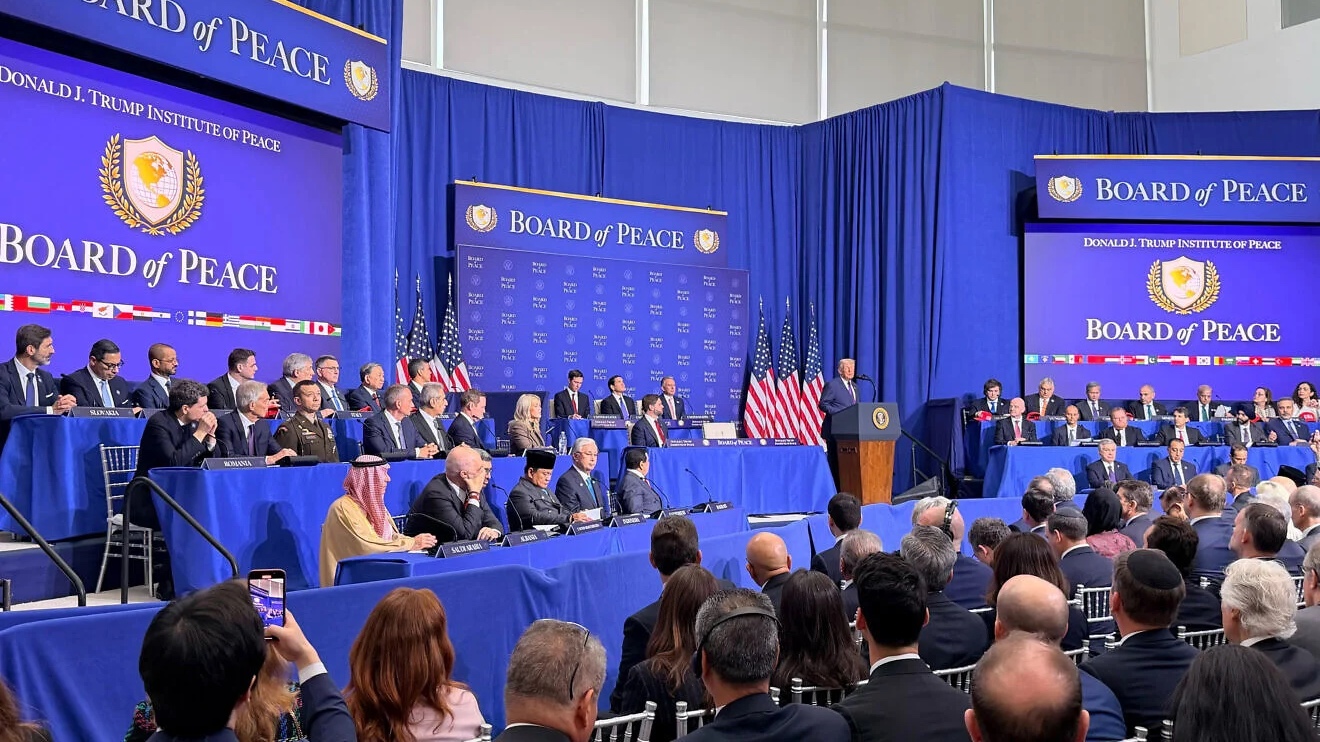

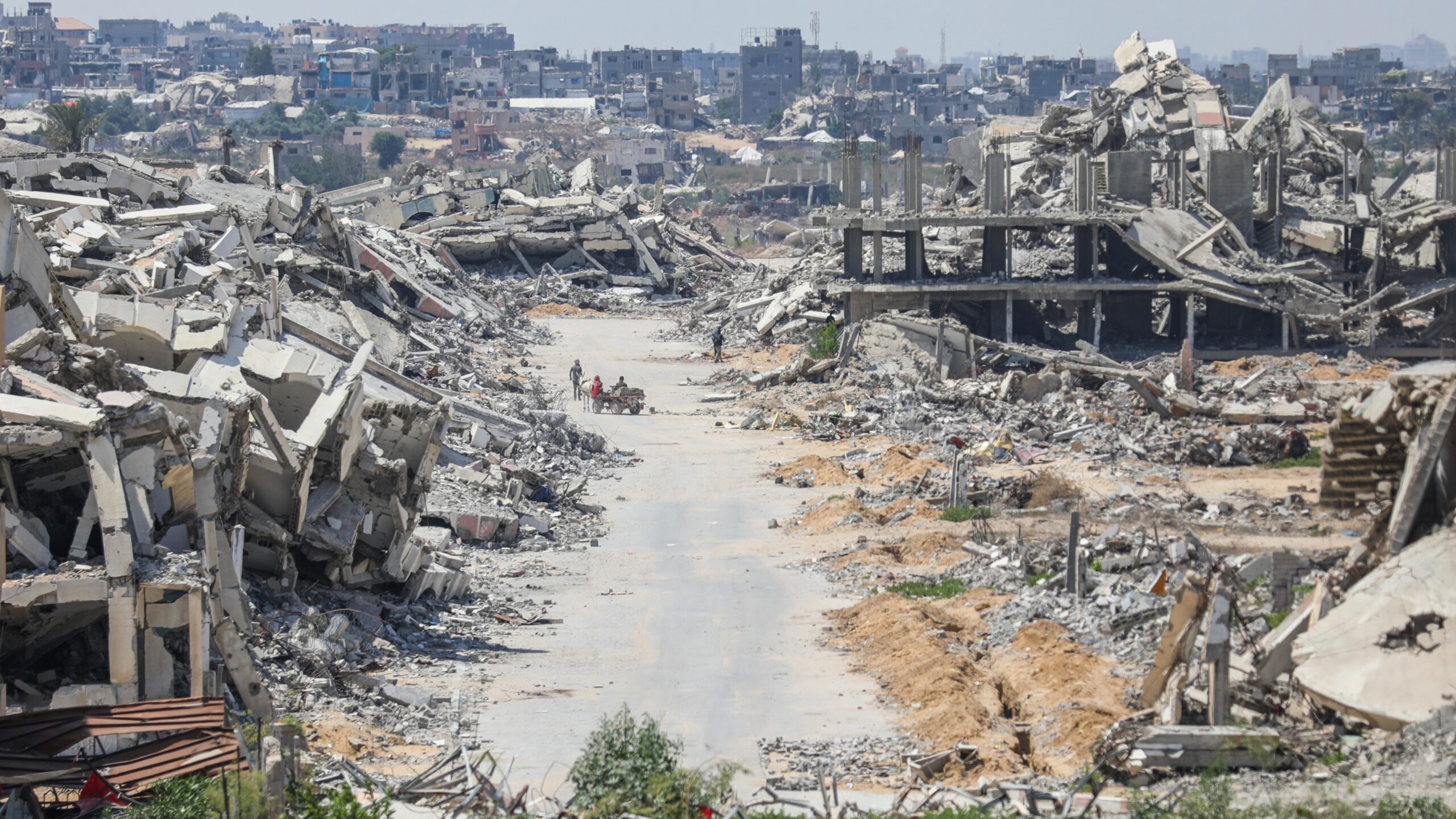
(JNS) The Trump administration and the “international community” are revving up to raise funds for Gaza’s rehabilitation, even under de facto Hamas rule. The talk is of $70 to $120 billion in funds to provide Palestinians in Gaza with “human dignity” and “humanitarian relief.”
At the inaugural meeting in Washington of his grandiose Board of Peace, on Feb. 19, US President Donald Trump announced $10 billion in US funding for Gaza alongside $7 billion more from other countries.
All this passion and concern would be admirable if it were not so counterproductive (at this point) and so one-sided.
The world at large still has said nothing at all about Hamas’s use of women and children as human shields, hospitals as weapons depots, or United Nations schools as launchpads for rockets. It has said little at all about Hamas’s violent seizure of humanitarian-aid shipments into Gaza or its targeting of Palestinians approaching aid centers operated by Western-backed humanitarian foundations.
The world seems incapable of admitting that Hamas’s dictatorial and genocidal regime in Gaza is responsible for every bit of ruin suffered by Palestinians, and it has nothing but platitudes to offer about how this time it might be different.
But what really gets my goat is that nobody around the world is talking about raising even one penny for the rehabilitation and reconstruction of Israel—of the country’s southern and northern areas that have been depopulated and devastated by Hamas and Hezbollah attacks over the past two years, and even the past decade.
Not a penny for the battered people of Israel—war widows and orphans, terrorized civilians, traumatized soldiers and battered businesses.
Except for Jews abroad, nobody is prioritizing relief and aid for Israel.
Sure, with the war over, Western countries will now return to buy Israeli technology and weapons for their own benefit, and cooperate in science and the arts, too. But lavish sympathies and abundant budgets are reserved for the attacking Palestinians, not for the attacked Israelis.
Understand: The cumulative economic toll of the two-year-long conflict inflicted upon Israel by Hamas, Hezbollah, the Houthis and Iran is estimated at 352 billion shekels ($112 billion), according to the Bank of Israel. This figure encompasses direct military spending, property compensation and broader civilian outlays. This calculates to a daily burden of about $100 million on Israeli taxpayers.
Remember that this war has brought about the mass displacement of Israeli civilian communities. Approximately 200,000 Israelis remain displaced from their homes in border communities near Gaza and Lebanon. The cost of evacuating northern residents alone topped $2 billion. Israel has dedicated about 60 billion shekels ($18 billion) to supporting displaced citizens and maintaining social services.
To rebuild the southern region (Gaza Envelope), the government has established the Tekuma (Revival) Directorate with an initial five-year budget of 19 billion shekels ($5.3 billion) to rehabilitate and upgrade 47 communities and cities in the south.
Some 1.8 billion shekels have been devoted towards development in the regional councils of Ofakim, Netivot, Merhavim, Eshkol, Sha’ar HaNegev and Sdot Negev. The funds are earmarked for 24 municipalities that sustained damage during the war, but are not included in the budget for the western Negev Tekuma region.
To rehabilitate, secure and revive northern towns, Israel intends to invest 15 billion shekels ($4 billion) over five years, with an initial NIS 200 million injection for immediate infrastructure restoration. Wildfire losses caused by Hezbollah rockets in the north are said to exceed $100 million.
As for the destruction wrought by Iranian ballistic missiles, mainly in the center of the country, Israel faces $10 billion in property compensation and rebuilding costs.
Then there are the workforce absences caused by the war. Reservist call-ups have cost the economy an estimated $600 million per week in lost productivity. The Bank of Israel estimates that one month of reservist service equals roughly 38,000 shekels ($12,100) in lost production per soldier.
As a result of the war, especially the heavy load of army reserve duty, more than 50,000 Israeli businesses have closed.
I won’t elaborate here on Israel’s direct military costs, but these amount to at least NIS 243 billion ($77 billion) on ammunition, fuel and equipment. Israel likely spent more than $1 billion on Arrow missile interceptions alone since the start of the multifront war.
And I won’t elaborate on the cost of preparing for the next wars, which against Hezbollah and Iran may begin this month. The Israeli defense establishment has already decided that it needs a far more independent defense-industrial base as a hedge against any future boycotts or embargoes, like the one imposed by the Biden administration when it decided to suspend deliveries of 2,000-pound bombs.
The development of cutting-edge military technologies that allow Israel to stay a step ahead of its enemies, such as the Iron Beam laser, for which the state last year signed a $500 million contract with defense contractors Elbit and Rafael, will further strain the public purse, even if the laser is ultimately able to dramatically reduce the cost of interceptions.
Israel’s defense spending as a percentage of GDP, which stood at 4.5% in 2023, has risen to a whopping 8.8%—the second highest in the world, according to the Stockholm International Peace Research Institute. Israel’s Nagel Commission, headed by Brig. Gen. (Res.) Jacob Nagel believes that those numbers are only going to increase. The military budget is expected to nearly double, reaching as much as 500 billion shekels ($159 billion) over the next decade.
On the fiscal/monetary levels, Israel has taken on an additional 19 billion shekels ($6 billion) in debt servicing costs due to increased borrowing. Israel ran a budget deficit in 2025 of 6.9% of GDP. That is more than twice the level of Germany and higher than even France.
Israel has already begun cutting civilian ministry budgets by roughly $5 billion, with a view toward bringing its budget deficits to below 3% over the next three years.
In short, the economic and fiscal burden that Israelis shoulder is enormous—and this does not take into account pain, trauma, post-trauma and other “medical” costs—nor the tribulations of 2,000 families with widows and orphans, nor 15,000 soldiers with varying degrees of injury, including many with long-term medical rehabilitation challenges.
But again, nobody around the world is talking about raising even one penny for the reconstruction of Israel and the rehabilitation of Israelis, never mind for their “human dignity.” Except for Jews abroad, nobody is prioritizing the rebuilding and strengthening of Israel.
Now, of course, Israel is a strong first-world country that has miraculously and smartly pulled through the war with incredible economic resilience. Israel does not run around the world with a cap in hand begging for handouts. And Israel has graciously received massive military assistance from the United States.
Nevertheless, there is something grossly perverse about the fact that the world sees only the suffering of the attackers, Palestinians, and not the suffering of the attacked, Israelis.
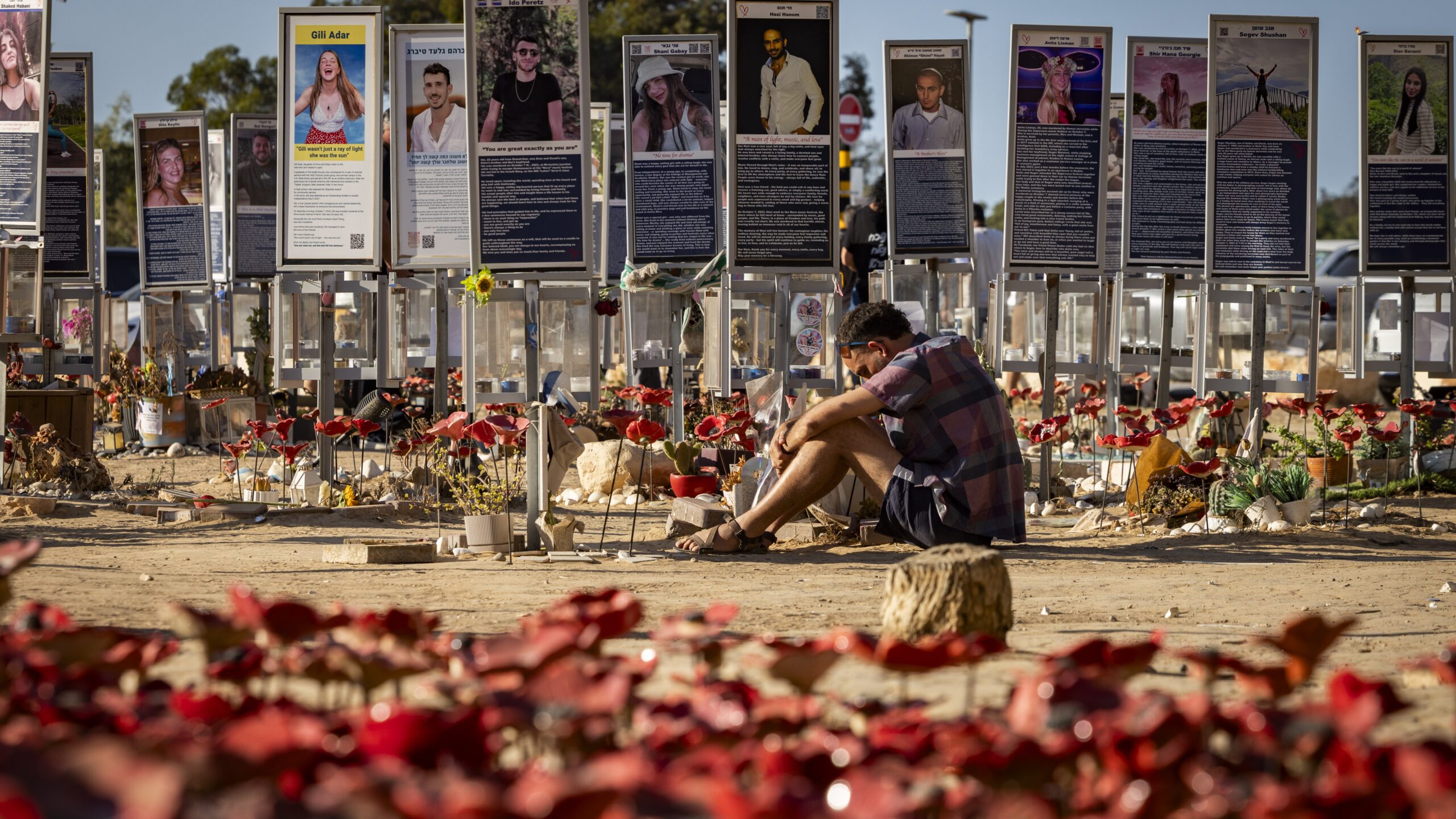
There is something truly wicked about the fact that the world rushes to plunk down billions for Gaza but not Kfar Aza; for Rafah (and of course Ramallah, as always) but not Rehovot; for Khan Yunis but not Kiryat Shmona.
I’m just saying.
Want more news from Israel?
Click Here to sign up for our FREE daily email updates






Investing money in the enemies of the God of Israel when you claim to be friends of Israel will bring poverty and shame on those who do so. The Lord does not reward ignorance.
I believe that can also be said of those of the family of Jacob who refuse to take advantage of this time of grace to seek the face of their messiah as the time of the insanely violent ending of this current war takes place. The deceitfulness of the family of Esau will be completely exposed by the Lord Himself.