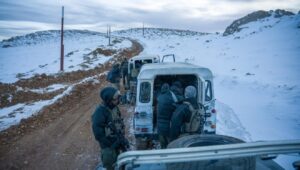
(JNS) As Syrian President Ahmed al-Sharaa consolidates control over Kurdish areas in northern and northeastern Syria, the Israel Defense Forces is formalizing its strategic relationship with the Druze population in southern Syria, who were targeted by regime forces in a July 2025 massacre until Israel intervened.
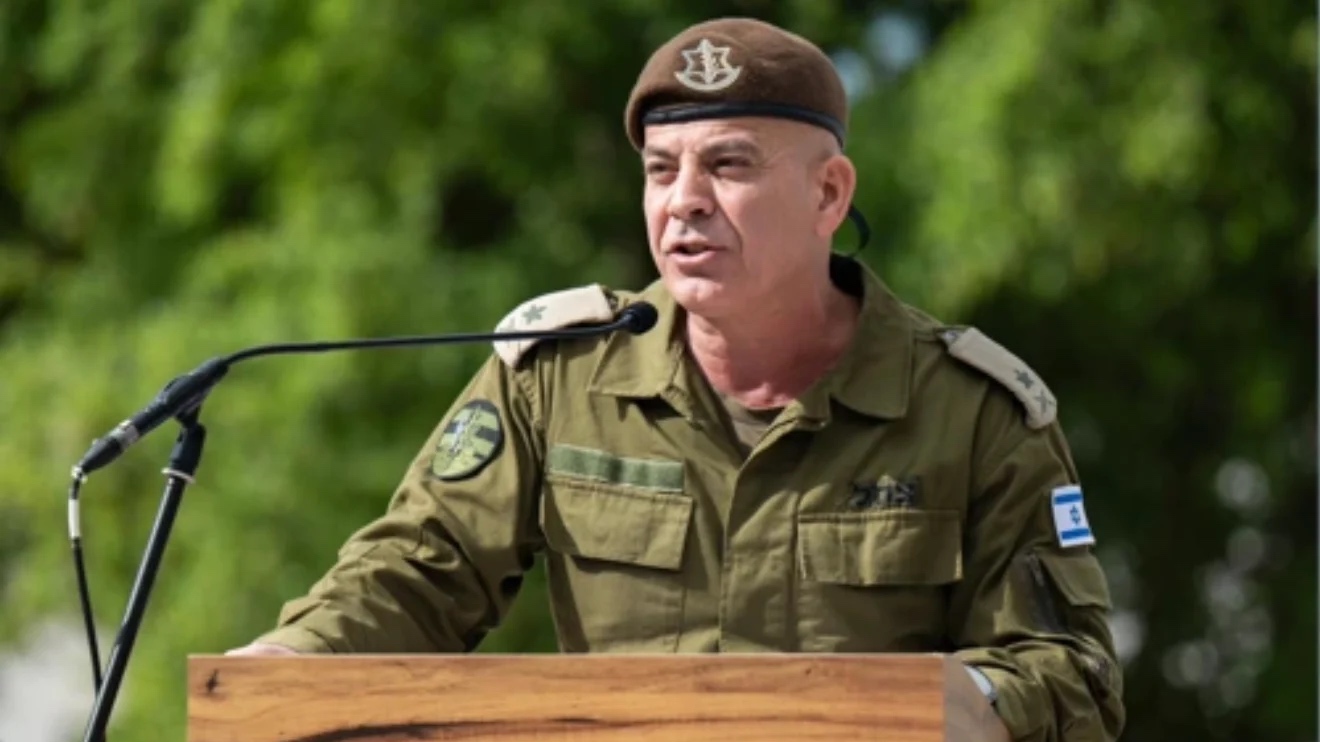
A report by Mako stated that Israeli Druze Maj. Gen. Ghassan Alian, who completed his term as Coordinator of Government Activities in the Territories (Judea and Samaria) on Feb. 4, has been appointed to the new position of coordinator for relations with the Syrian Druze. The appointment comes amid sporadic firefights between Syrian Interior Ministry security forces and local Druze factions, including the National Guard led by pro-Israel Sheikh Hikmat al-Hijri.
The creation of the new role follows Israel’s continued assistance to the embattled minority community, signaling a long-term commitment to its security and humanitarian welfare.
Lt. Col. (res.) Marco Moreno, a former senior officer in the IDF Human Intelligence Unit 504 responsible for the Lebanon and Syria arenas and founder of Operation Good Neighbor, which assisted Syrian civilians from 2012 to 2016, voiced strong support for the move.
“I think this is an excellent decision, because the role itself is required,” Moreno told JNS. “In the end, if the State of Israel defines the Druze issue in Syria as a strategic issue, then you must also adapt a structure to it, in the form of a coordinator for this activity.”
Moreno praised the selection of Alian, citing his operational, intelligence and administrative experience.
“He is a highly decorated officer, whom I also know personally. He is very experienced, a combat commander,” Moreno said.
He added that Alian brings essential civilian and logistical expertise from his time heading COGAT.
“He also knows the intelligence systems, knows the operational systems. And he is also Druze. He knows the language, the mentality, knows the colors and shades of the community, and is connected to the spiritual leadership both in Syria and mainly in Israel,” Moreno explained.
Discussing the broader strategic landscape, Moreno outlined Israel’s interests under the new Syrian regime.
“The Israeli interest is a security agreement with Syria, which has two main components,” he said. “One is the demilitarization of southern Syria—no armed groups and no balance-breaking weapons in the area. This directly affects the defense of the border with Syria on the Golan Heights.”
The second component is concern for the welfare of the Syrian Druze. As long as both conditions hold, Moreno assessed, Israeli interests are protected, adding that Damascus itself has incentives to reach understandings with Jerusalem.
Prof. Eyal Zisser, a Syria expert and vice rector of Tel Aviv University and chair of contemporary Middle East history, said the appointment reflects geographic and communal realities.
“The Druze are geographically close to Israel and connected through the Israeli Druze. Therefore, it is clear that Israel will show interest in them and develop the connection, and such an appointment has both declarative and practical significance—especially regarding humanitarian aid,” Zisser told JNS.
He contrasted the Druze situation with that of Syria’s Kurds.
“The Kurds are geographically distant, and the Turks and the Americans are also involved there, so Israel is more cautious and at the moment does not appear likely to be actively involved regarding the Kurds,” he said.
Zisser noted that northeastern Syria remains fluid. “Their areas in Qamishli and Hasakah are still under Kurdish control and the regime has not fully entered there. Southern Syria is a different matter—it is easier to assist there.”
He cautioned, however, about limits to Israeli oversight beyond Druze enclaves. “It is one thing to prevent an official Syrian army with tanks, and another to prevent jihadist armed operatives, which will be harder,” he said.
Meanwhile, an AFP report said US forces leading the international coalition in Syria for over a decade are expected to complete their withdrawal within a month. Convoys of armored vehicles have already begun leaving bases in Hasakah province toward Iraqi Kurdistan.
The pullout follows an agreement by Kurdish forces to cede territory to Damascus and integrate into the Syrian state framework, enabling al-Sharaa’s government to expand control in the northeast. Roughly 1,000 US troops remain and are preparing to depart.
During the ceremony marking the end of his tenure as COGAT chief, Alian reflected on his service.
“Five years ago, I took upon myself with pride and a sense of mission and heavy responsibility the command over COGAT,” he said. “Today, I stand here with mixed feelings—alongside happiness over what I was privileged to lead, I feel terrible pain and shame as an officer and commander over the systemic failure of Oct. 7. The memory of all who fell will accompany me wherever I go.”
Want more news from Israel?
Click Here to sign up for our FREE daily email updates