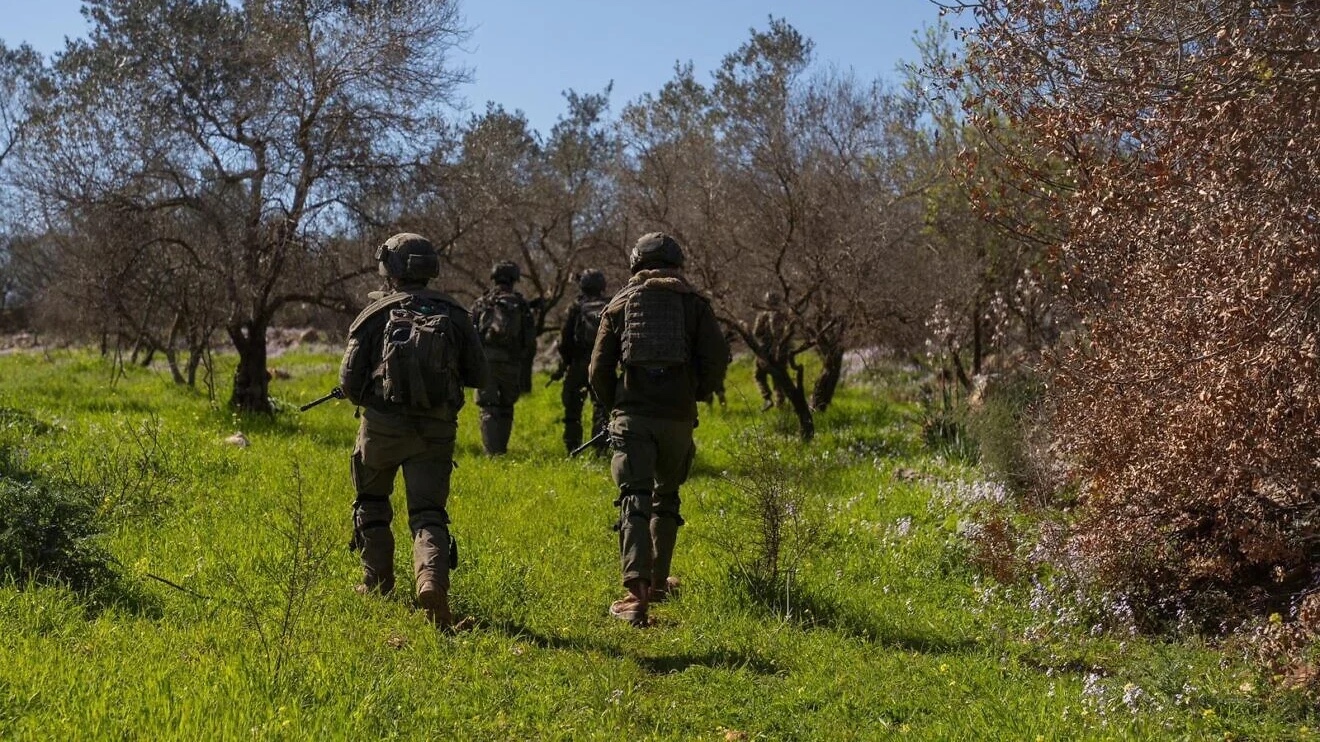
(Israel Hayom) In recent days, the Israel Defense Forces have called on residents of villages in Southern Lebanon to evacuate north of the Litani River.
The move is seen by the defense establishment and by communities along Israel’s northern border as part of an effort to create a new security reality along the frontier—a space in which the direct threat to Israeli towns is removed.
Even so, many officials deliberately avoid using the familiar term “security zone” because of the heavy historical baggage it carries. Instead, they speak of a “demilitarized area” or a temporary buffer zone intended to push Hezbollah away from the first line of homes in northern Israeli communities.
Israel’s security zone in Southern Lebanon, maintained from the Lebanon war in 1982 until the IDF withdrawal in 2000, evokes negative memories among the Israeli public, often described as leaving IDF soldiers “sitting ducks.”
But the reality on the ground in Lebanon is complex—the first line of villages near the border remains devastated and has not been rebuilt since Operation Northern Arrows against Hezbollah in November 2024.
The Christian villages, from which no fire has been directed at Israel, were exempted from the evacuation orders. In more distant villages, most of the Shi’ite residents have left.
Still, Hezbollah cells continue to operate from those areas, attacking IDF forces and firing anti-tank missiles toward positions inside Israel, some of them within civilian communities. The distance from there to homes that still have residents is short.
Calls to evacuate the population of Southern Lebanon are not new. Already at the beginning of the war, some local leaders in northern Israel demanded such a move, arguing that as long as civilians remain in villages near the border, Hezbollah can continue operating from within them.
Prosper Azran, a former mayor of Kiryat Shmona, says the step should have been taken long ago.
“From the start of the war, I have demanded the evacuation of residents of southern Lebanon,” Azran said. “Hezbollah should not be the one evacuating Israel’s northern border communities. Israel should be evacuating the residents of Southern Lebanon.”
Azran argues that the reality of recent decades allowed Hezbollah to entrench itself right along the fence.
“Hezbollah was sitting on the fence next to our communities,” he said. “That policy of containment led to what we see today. The terrorists can hide among the civilian population, and that is why the population must not return. Every house in southern Lebanon serves Hezbollah.”
Not returning to the old model
Among residents of Israel’s north, there is broad agreement that the reality that emerged following Operation Northern Arrows cannot be allowed to return.
Asaf Langleben, head of the Upper Galilee Regional Council, said that reliance on the Lebanese government or the Lebanese army has proven to be an illusion.
“After decades of illusions about the Lebanese army and the Lebanese government, until there is effective action, the IDF needs to restore a line of outposts,” he said.
At the same time, he stressed that this does not mean returning to the old model.
“No one wants to go back to the security zone reality of the past,” Langleben said. “We need to hold many more positions that prevent Hezbollah from occupying the hills that dominate our communities.”
The real debate, he added, is not only about how many kilometers should separate the border from Hezbollah forces, but primarily about who will control the ridgelines overlooking Israeli towns.
Brig. Gen. (res.) Asher Ben Lulu, a former commander of the IDF’s 769th Brigade and former chief of staff of the Northern Command, said the key factor is topography.
“What determines control is not distance but the ridgelines that dominate the first line of homes,” he said. According to Ben Lulu, the ground maneuver in Lebanon is aimed first and foremost at seizing those commanding areas.
He emphasized that the real test will come the day after the fighting.
“The test will be where forces position themselves and whether we remain there the day after,” he said. “We achieved significant gains, but the agreement forced us to withdraw except for five points.”
Risks for soldiers
Under the emerging security concept, which would place the IDF roughly seven kilometers (4.3 miles) inside Lebanese territory and include strikes against a third line of villages about 15 kilometers (9.3 miles) from the border fence, the demilitarized zone is meant to create a clear buffer between the threat and civilians.
“Between the threat and the residents of the north, there must be IDF soldiers,” Ben Lulu said. “The security concept is that contact with the enemy should be with IDF soldiers, not with residents and farmers.”
He acknowledged that such a presence would carry risks for troops but argued that it is an unavoidable part of defending Israel’s home front.
“There will be risks for IDF soldiers stationed in a demilitarized area, but it is a temporary security necessity until we are convinced that this threat no longer exists,” he said.
For now, however, the reality on the ground is still in flux. Security officials note that Hezbollah is an organization capable of adapting quickly to changing circumstances.
“Hezbollah is an organization that was born to adapt and rebuild itself in complex situations,” one official said. “It doesn’t need 150,000 missiles to pose a threat. Even 30,000 missiles are enough.”
For residents of Israel’s northern border communities, the question is not only about security but also about civilian life. After many months of war and evacuation, they are searching above all for one thing—certainty.
Originally published by Israel Hayom.