



At 10 a.m. Tuesday morning, a siren pierces the entire country—and for two minutes, Israel stands still.
Cars stop on highways, drivers get out, pedestrians freeze in place. In offices, schools, and construction sites as well, people interrupt what they are doing. It is one of the most powerful moments of the year: the national standstill on Yom HaShoah, Israel’s Day of Remembrance for the six million Jews murdered in the Holocaust.
These two minutes are not a ritual in the usual sense. They are a collective act of remembrance—visible, audible, unavoidable.
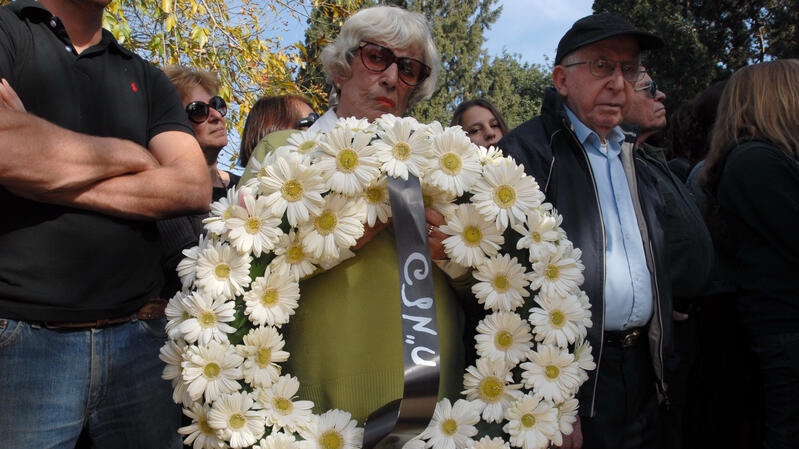
The Day of Remembrance begins the evening before with the central state ceremony at the Yad Vashem Holocaust Memorial in Jerusalem. There, survivors light six torches, representing the six million victims. The president and prime minister deliver speeches that draw a line between past and present. Because of the current security situation, this year’s ceremony was prerecorded and broadcast on the eve of the day.
Across the country, further ceremonies follow the next day: in schools, military bases, communities, and institutions. Witnesses share their testimony, names are read aloud, and candles are lit.
But while Israel pauses, the reality of remembrance is also changing.
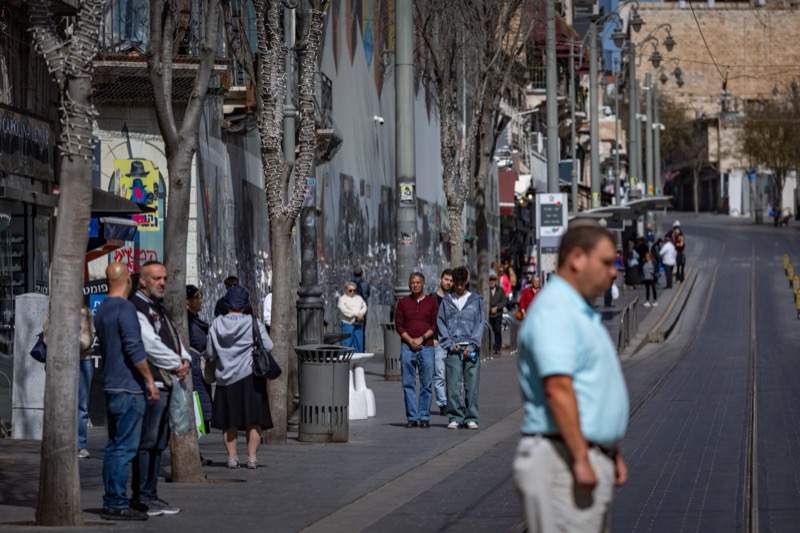
People stand still in Jerusalem as the nationwide siren sounds for Holocaust Remembrance Day, April 14, 2026. Photo: Yonatan Sindel/Flash90.
According to current figures, around 111,000 Holocaust survivors are still living in Israel today—most of them of very advanced age, many over 80 or 90 years old. With each passing year, they become fewer. The direct testimony of the survivors, which formed the heart of remembrance for decades, is gradually disappearing.
That places a growing responsibility on the generations that follow.
Yom HaShoah is not only a look back at the past. The day is also deliberately defined as the “Day of Holocaust and Heroism,” commemorating not only the victims but also Jewish resistance, such as in the Warsaw Ghetto.
That dual perspective continues to shape Israel’s self-understanding to this day: remembrance and self-preservation.
For many Israelis, the siren that sounds on this day carries an additional, almost suffocating dimension. Its sound resembles those that precede missile attacks. For a moment, past and present merge—the history is not distant, but part of reality.
That is precisely why the message of this day remains central: “Never again” is not a historical phrase, but a mandate.
Want more news from Israel?
Click Here to sign up for our FREE daily email updates





Total Unity!