
Three months ago, I scheduled an appointment for March 23 at Shaare Zedek Hospital — an examination of the parathyroid gland. The waiting list was long, and back then no one would have imagined that at exactly this time we would be in the middle of a war with Iran.
I arrived at eight in the morning, first in line.
An injection, a radioactive substance, half an hour of waiting — then the first of three scans.
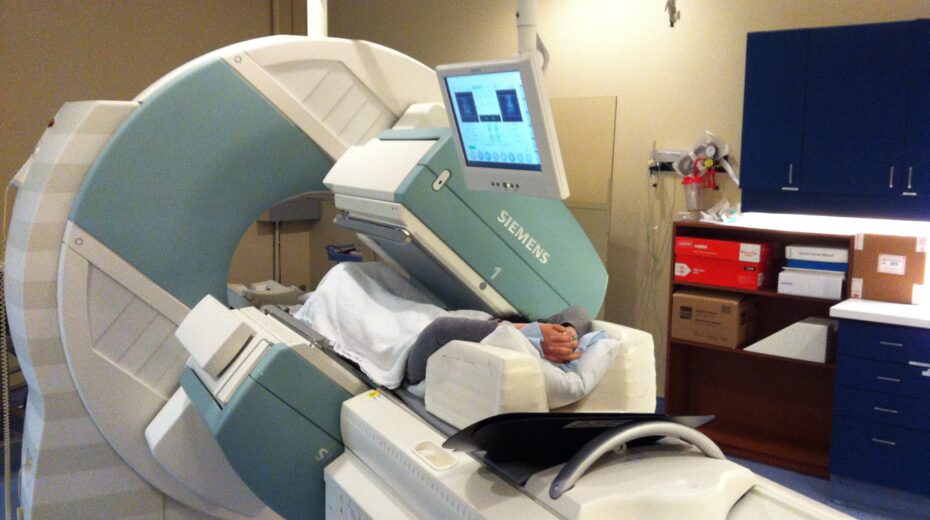
I lie down on the examination table. Above me looms a huge machine — a monster. The technician explains calmly: ten minutes, do not move, and please do not be startled when the machine lowers.
It comes closer and closer. A little more — it is almost touching my chest.
In my head, I am already beginning to plan how I might jump up and get out of here. But can one even get up when such a monster is hanging over you?
When it finally comes very close to me, I want to scream — but at that exact moment it stops.
I lie still, the monster above me.
I am not allowed to move — breathing is permitted.
So I count. One number every two seconds. Up to 600.
Shortly before that, the signal sounds.
Finished. I breathe again.
“Please wait outside. In an hour, there will be two more scans — one lasts 15 minutes, the other ten.”
Ten minutes before the next examination, I am called in again. I put my phone on silent and play Candy Crush — surprisingly helpful in moments like these.
Then suddenly — a piercing sound.
Alert.
An incoming missile alert takes precedence. It ignores time, place, and even silent mode. It breaks through every barrier.
“Is that an alert here?” asks a man sitting across from me.
I look at my phone: Bar Giora — my place of residence.
“Probably near my home,” I say.
Barely have I said it when the other phones also begin to buzz.
“What do we do when there is a siren? Is there a shelter here?” I ask.
Of course there is. Hospital.
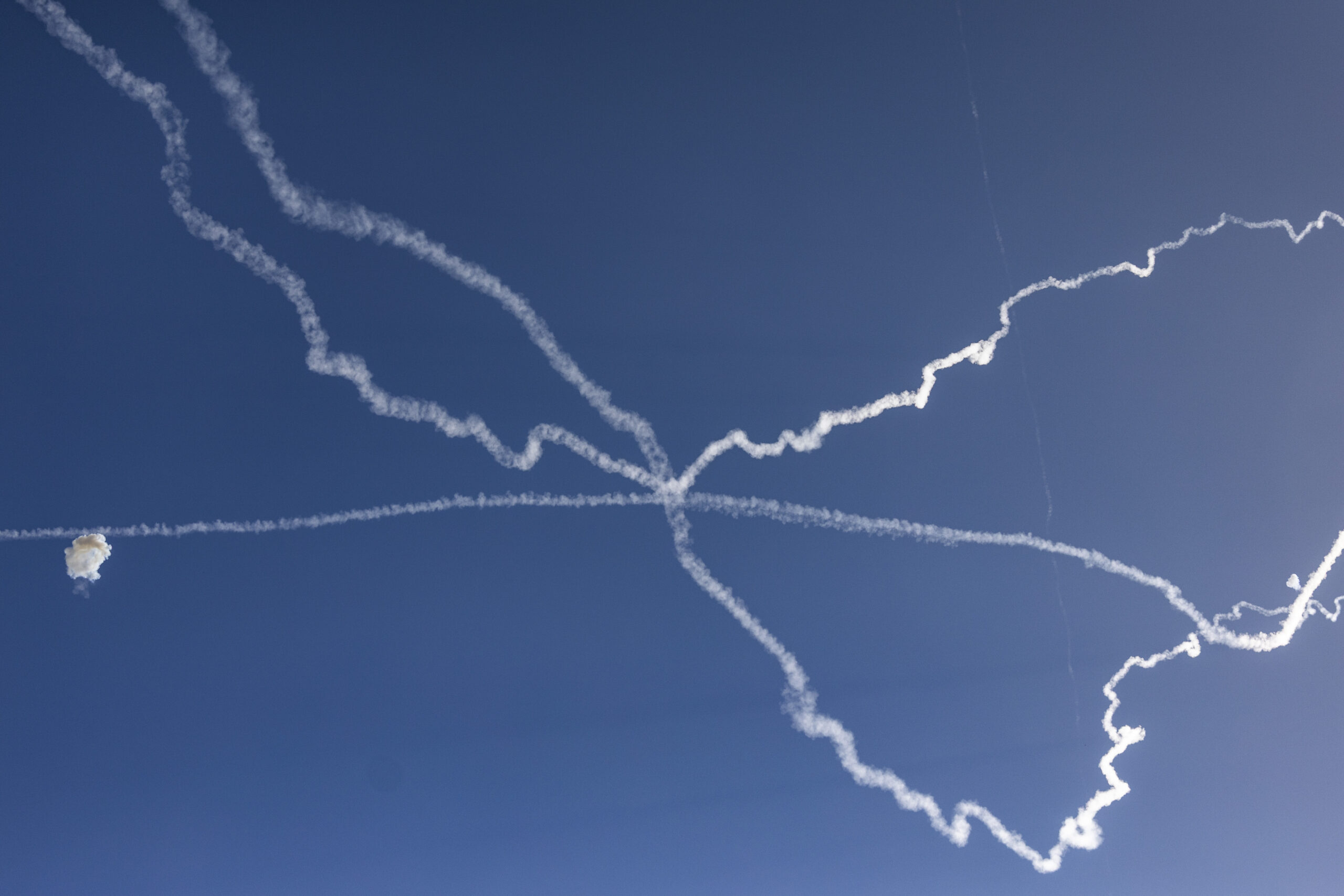
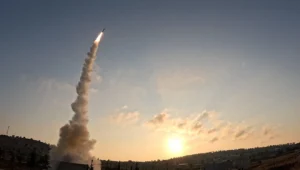
Interception traces in the sky over Jerusalem. Photo: Yonatan Sindel/Flash90.
The man tells me that he and his sick wife live in an old building — like the one that was destroyed this week in Arad. The nearest shelter: three minutes away.
“I hope you go to the shelter during the sirens,” I say.
“No,” he replies. “It’s complicated.”
Fourth floor. No elevator. Too difficult.
“But you come to the hospital, want to be treated — and you do not go to the shelter?”
“It is difficult.”
“Is there no other solution?”
“I have no job. There is no alternative.”
I fall silent. What can one say to that? There are tens of thousands like him.
Then — siren.
A doctor leads us into a room that is supposed to be a shelter. But hardly have we arrived there when I am already called for the next scan.
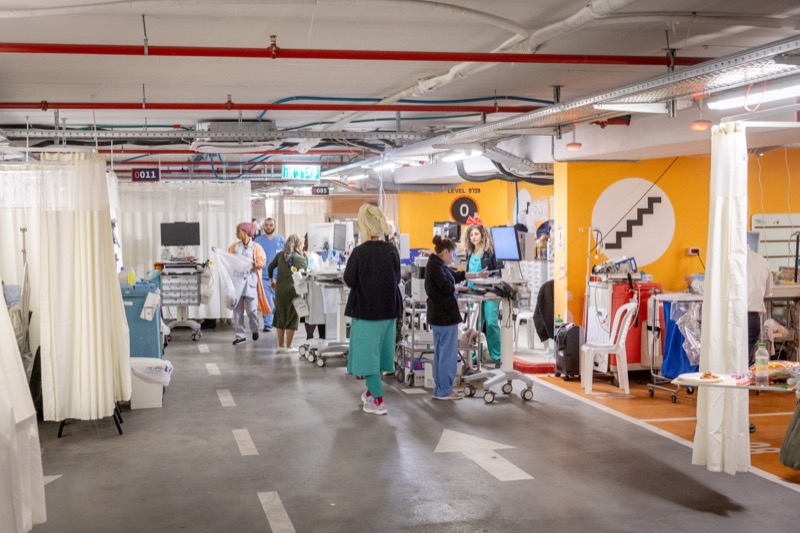
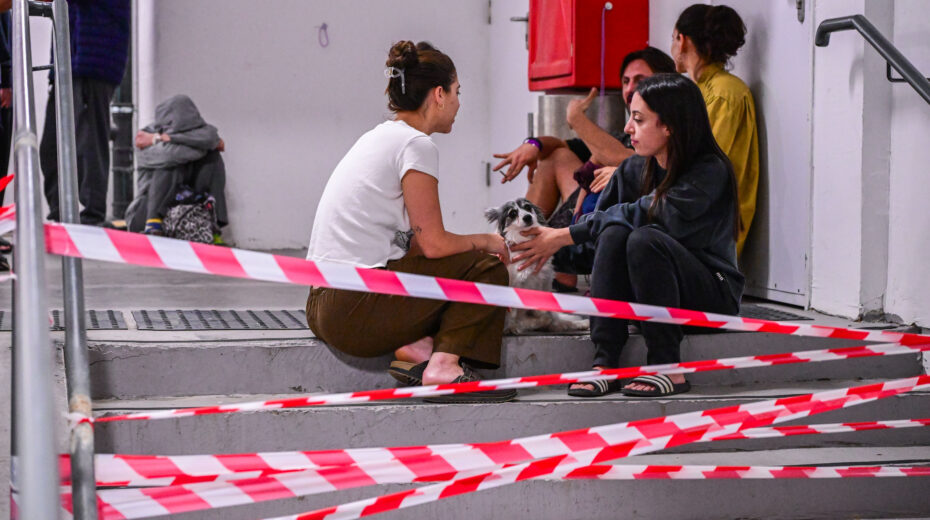
Underground: The Share Zedek Hospital in Jerusalem has moved parts of its operations to protected areas – the lines between treatment and threat are blurred. Photo: Chaim Goldberg/Flash90
I ask once more: “Is this really a shelter?”
“That is what we were told,” the technician answers.
I lie down.
Again the monster above me — and this time missiles above us too.
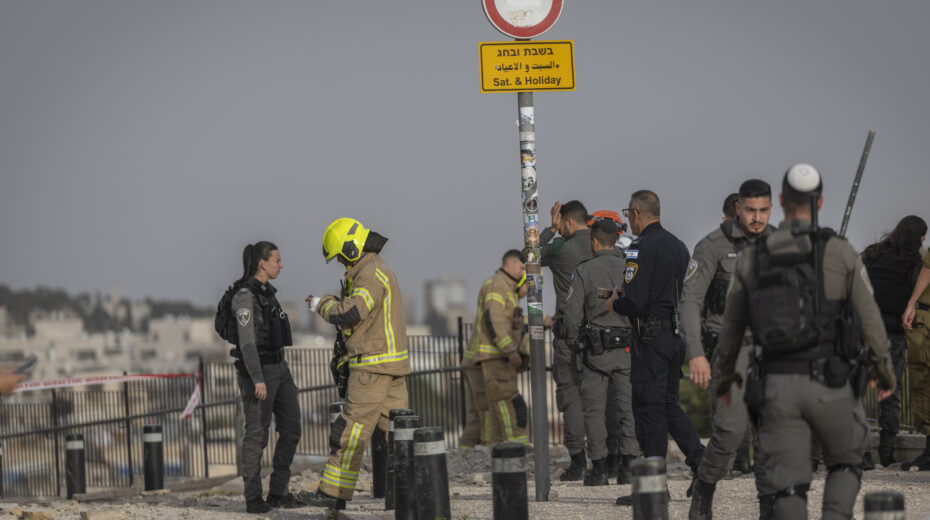
Just two days ago, two missiles were not intercepted. Both hit buildings; there were injuries and major damage.
As if the machine were not enough, I begin imagining what happens if a missile strikes right here.
What do I do then? How does one flee when the monster is only centimeters from the heart — and no one knows where the missiles will land?
“Breathe,” I tell myself.
“Count.”
“Close your eyes. Wait.”
What happens, happens for your highest good.
That is what Judaism says: Everything is ultimately for the good.
Really? For whom?
When I get up, my body is tense. If there were a mirror there, I would probably be chalk white.
What have I learned?
I am afraid of doctors.
I do not like examinations.
I tremble before injections.
In such machines, I tense up.
And when missiles are added to that, I ask myself whether any of this is real.
The third examination follows immediately afterward. I am already a little more accustomed to it. But then the technician smiles:
“Please wait another hour. The substance has not yet spread well enough — we have to repeat the third scan.”
Now I am the monster.
And if this sounds to you like a scene from a film: reality surpasses every script.
Perhaps something very simple is revealed in it: when we have no control — neither over our body nor over the machine or what is happening outside — only one thing remains to us: to govern our thoughts. Breath by breath.
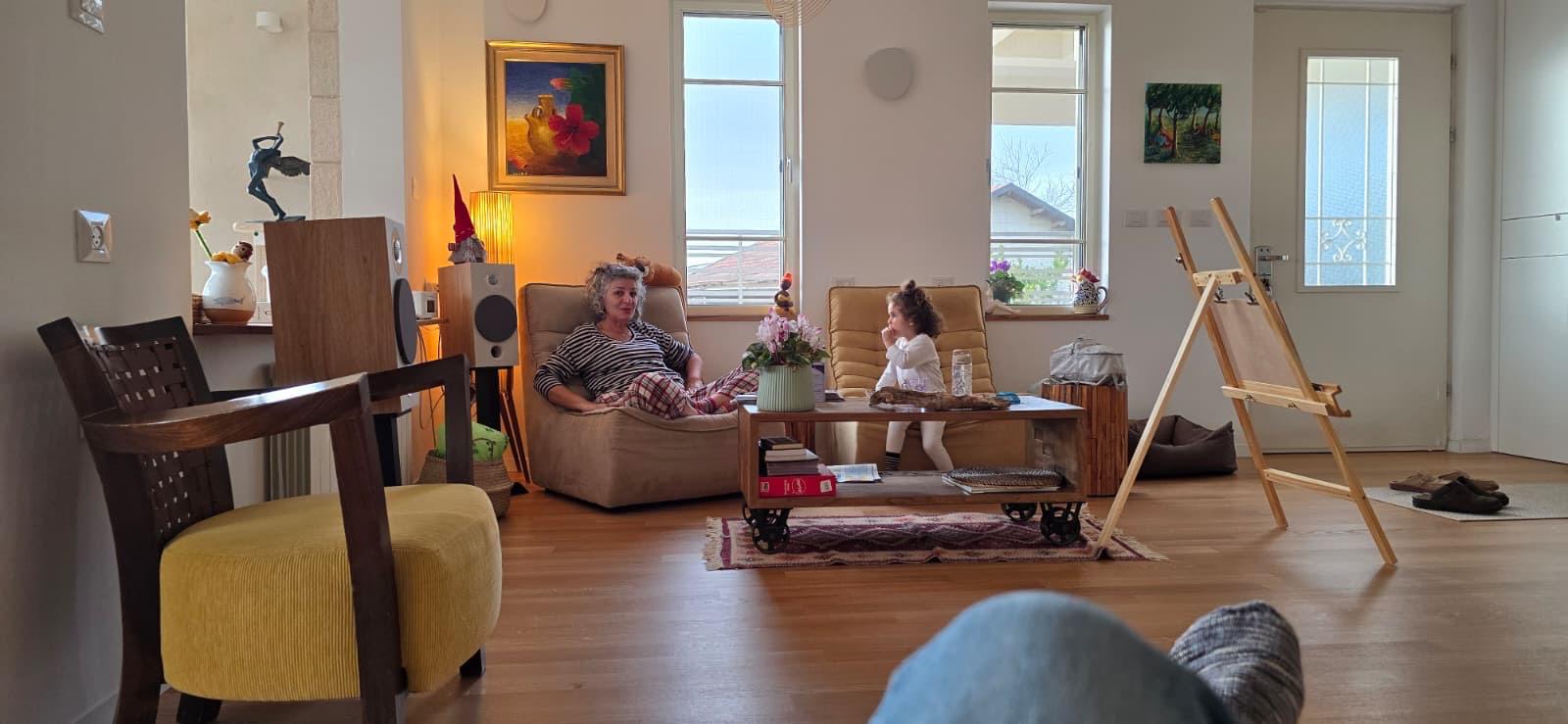
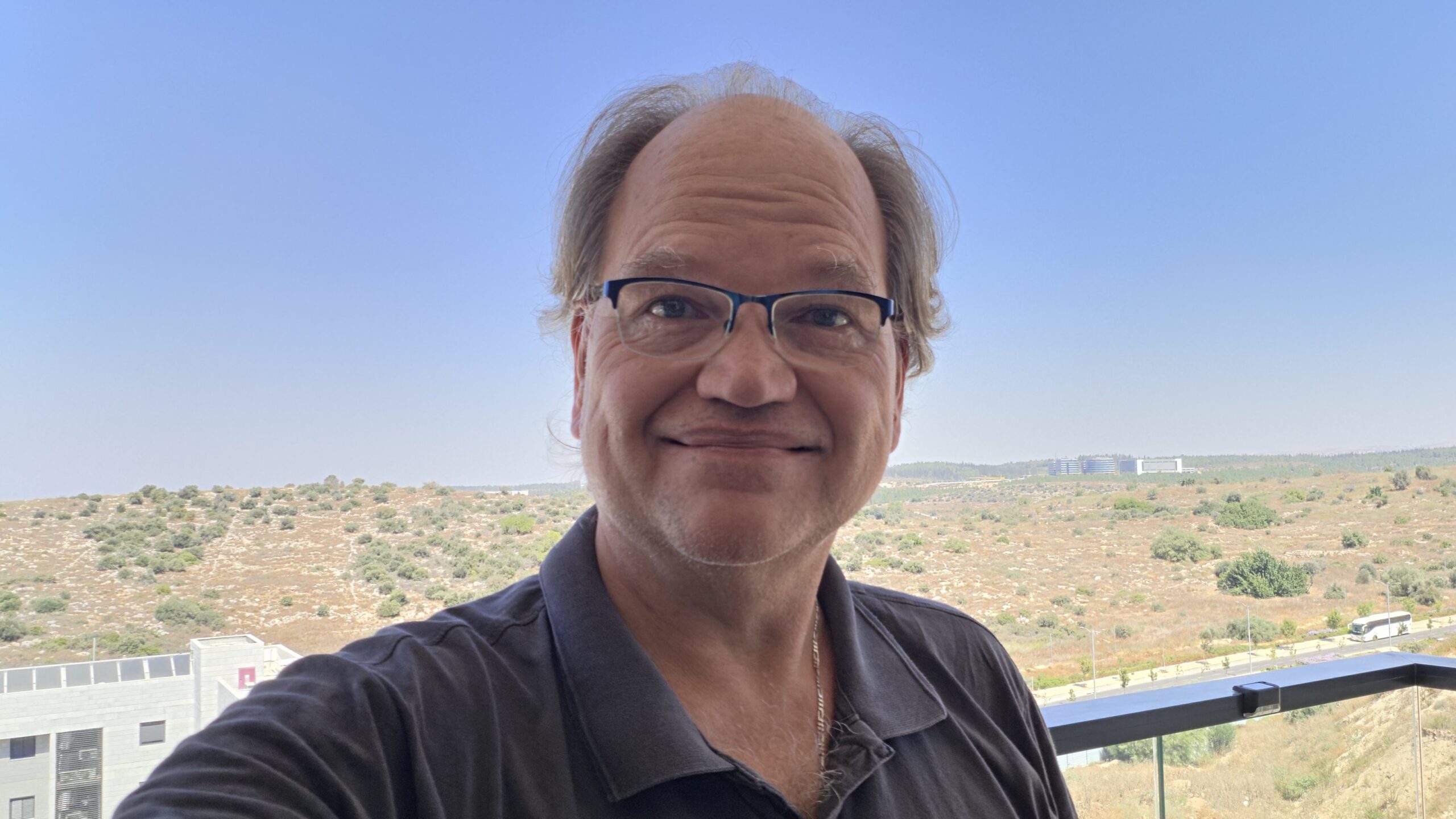
A moment of peace – but outside, the war continues to dictate the rhythm of everyday life. Photo: Anat Schneider.
And as for the results: prayer is needed here — and the faith that in the end, everything truly is for the good.