(JNS) As Israel continues to apply its new, post-Oct. 7, 2023, security doctrine, it has set up and maintained a security zone over critical territories beyond its borders in Lebanon, Syria and Gaza to ensure long-term protection of civilian areas.
The post-Oct. 7 doctrine includes a critical focus on forward defense, meaning direct and prolonged physical retention of cross-border buffer zones to preserve operational freedom and neutralize the enemy’s ability to re-entrench itself near Israeli civilian communities.
According to a report by Mako on May 23, 2026, the IDF holds approximately 1,220 square kilometers of territory beyond its borders (equal to around five percent of its size), including some 60% of Gaza, a 10-kilometer security zone in southern Lebanon, and a 15-kilometer zone in Syria.
Former Israeli National Security Adviser Meir Ben Shabbat, who is today head of the Misgav Institute for National Security, told JNS on Wednesday, “The current reality in the Gaza Strip, in Lebanon and in Syria demonstrates part of the principles that Israel implements in its security concept since October 7.”
Defining these principles, Ben Shabbat stated, “Control in territories vital to its security in areas beyond the border, and full utilization of freedom of action to enforce security demands in these areas and against emerging threats and against intensification of the enemy in the different arenas.”
The former national security adviser stressed that “In the foreseeable future, Israel will need to persevere in this approach,” adding, “It must not exchange tangible security assets for promises or agreements that will not be worth the paper on which they will be signed.”
According to Ben Shabbat, “In the current regional reality, this is the way to protect ourselves.”
Oded Ailam, a former head of the Counterterrorism Division in the Mossad, and currently a researcher at the Jerusalem Center for Security and Foreign Affairs, told JNS, “The events of October 7 and what is followed them obligate the creation of security strips.”
The former Mossad official added, “It is not about annexation but about seizing territory until it is proven beyond any doubt that no danger is posed from across the border.”
“As long as there is danger, Israel must hold and even thicken [its presence in] these areas,” said Ailam.
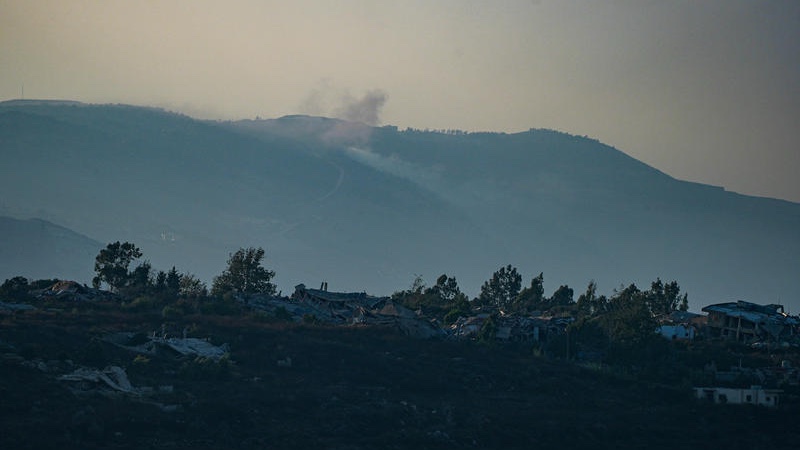
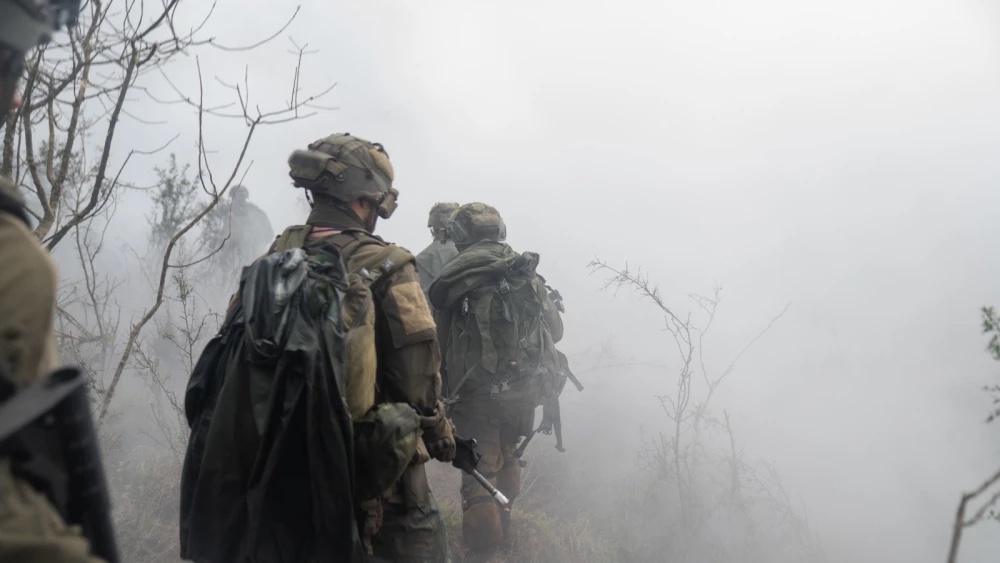
The IDF controls approximately 600 square kilometers of land in southern Lebanon, and in recent days, following Hezbollah drone attacks, reports from Lebanese media have indicated that this may be expanding further.
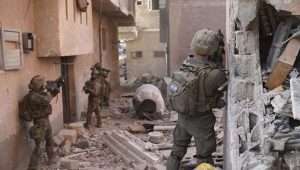
The IDF has used its control of this area to systematically target and destroy Hezbollah’s cross-border invasion and firing infrastructure, improving security for northern communities, particularly against the threats of anti-tank missiles and cross-border raids by the Radwan elite unit terror commando cells, but it is paying a painful cost in casualties, with multiple IDF soldiers and officers being killed every week in the sector.
Meanwhile, in Gaza, the IDF established its positions along the designated yellow line from the October 2025 ceasefire, converting what began as a temporary tactical maneuver into a permanent security fixture.
This has reportedly grown to an area encompassing 220 square kilometers stretching continuously from Beit Hanoun in the north down to Rafah in the south. The IDF has used its control of the area to destroy Hamas’s terror infrastructure, while detecting and neutralizing Hamas attempts to cross the yellow line on a near-daily basis.
In Syria, by May 2026, the military held approximately 400 square kilometers, maintaining nine active outposts and penetrating to a depth of 15 kilometers from the original border line. This is designed to protect the civilian communities of the Golan Heights from jihadist terror cells, whether Sunni or Shi’ite.
Israel’s defense establishment is adamant that such buffer zones are critical for defending Israeli residents from cross-border terror armies.
Despite the diplomatic pressure exerted by international mediators to return to the pre-October 7 international lines, the Israeli security cabinet has ordered the IDF to remain in the buffer zones to prevent the re-emergence of hostile infrastructure on the doorstep of border communities, based on the understanding that it is impossible to defend against such threats from the border line itself.
Want more news from Israel?
Click Here to sign up for our FREE daily email updates