
Tropical islands, white beaches, limitless freedom — that was what I was looking for when I arrived on Koh Phangan, Thailand. That evening, I wanted to go to a traditional jungle party. Beforehand, I stopped by the hostel where two friends I had met on the island were staying — a French Jew and a Dutch woman who lives in Italy.
We sat down in the lobby, and in the typical cosmopolitan backpacker atmosphere, our group quickly grew. Two tourists from Germany joined us, along with another German and a young American woman.
The conversation began casually. After a few minutes, we went around introducing ourselves. The American woman asked each person their name and country of origin. When it was my turn, I answered simply: “I’m from Israel.”
Her reaction came almost reflexively: “Ew.”
An awkward silence spread through the room. Everyone understood what had just happened, but most lowered their eyes and said nothing.
I, however, decided not to remain silent. I asked her to explain what she meant. She did not take it back. Instead, she repeated: “Israel is ew.”
I made it unmistakably clear that she should sit aside — as far as I was concerned, the conversation was over. Only then did she begin to stammer and qualify her words, saying her problem had to do with “the situation and the politics.”
I looked at her and at the others and made things clear. I also have criticism of politicians — but telling a person “ew” as a first reaction, solely because of where he comes from, is pure antisemitism. That is how someone speaks after being brainwashed.
At that moment, one of the German women tried to defend her, claiming that Israel was acting wrongly and “killing children.”
Suddenly, I found myself on a front line. This was no longer a situation for velvet gloves.
“You Europeans sit comfortably on a continent without an existential war and allow yourselves to be influenced by media channels that give you a distorted picture of us,” I told them.
I added that it was shameful to lecture a nation morally when a brutal war had been forced upon it. I concluded by saying they were “losers” in the way they were handling their own migration problems — and that if they did not wake up, they would pay a heavy price.
The words landed. The silence in the lobby showed that they had been heard.

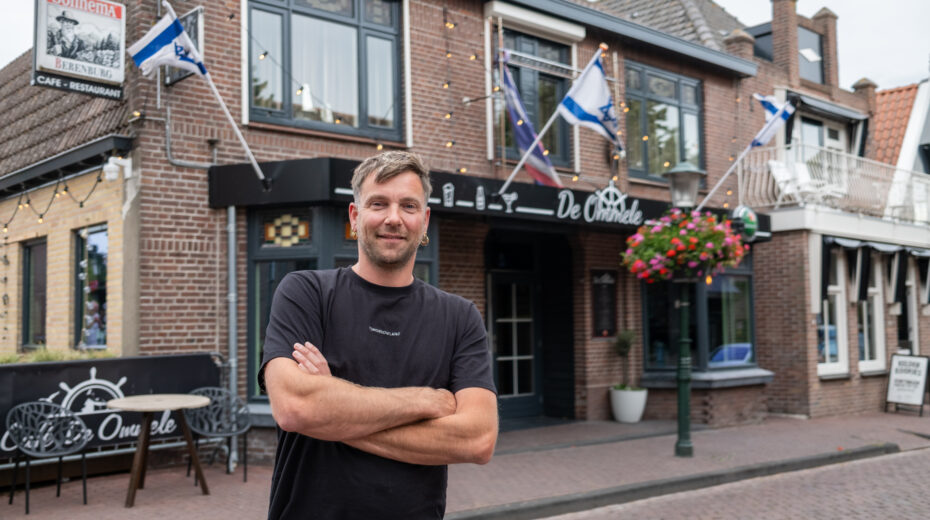
Elad (right) and his friends in Thailand.
Despite everything, the American later joined our group when we went to the jungle party. Throughout the evening, it was clear that the situation made her uncomfortable. Again and again, she looked in my direction, apparently searching for a way to bridge the distance.
At that moment, I decided to set my ego aside. As clearly as I had experienced her behavior as antisemitic, I also recognized that one can forgive a person who is exposed day after day to one-sided media conditioning.
I approached her, gave her a high five and said I hoped she had truly understood the complexity of the situation.
Her reaction came immediately and seemed sincere. She said she had understood. Then she apologized and gave me a friendly hug.
I returned from that evening with a clear realization: The battle for our name in the world is hard and exhausting. But sometimes it is precisely this combination — standing firmly for one’s truth while also being willing to forgive — that can break through walls.
Dear readers:
Now it is your turn. Do you know people or acquaintances in your neighborhood who think like these young people?
Many form their opinions from media reports that often target the State of Israel while leaving out important facts or twisting truths. We want to hear the criticism young people have of Israel.
What questions do these people have? What moves them? What do they accuse Israel of? Why do they hate Israel? Where are the misunderstandings?
Write to us and send us exactly these points of criticism. We will respond and publish an article addressing precisely those questions, accusations and charges.
Because it is possible — especially with young people — to respond with the right answers, as Elad’s case shows. There is hope. Even today, many people can still be persuaded by facts.
Write to us about what you have experienced or what questions are being raised:
We also encourage you to consider becoming an Israel Today Member so you are better informed for just such situations – Become a Member today