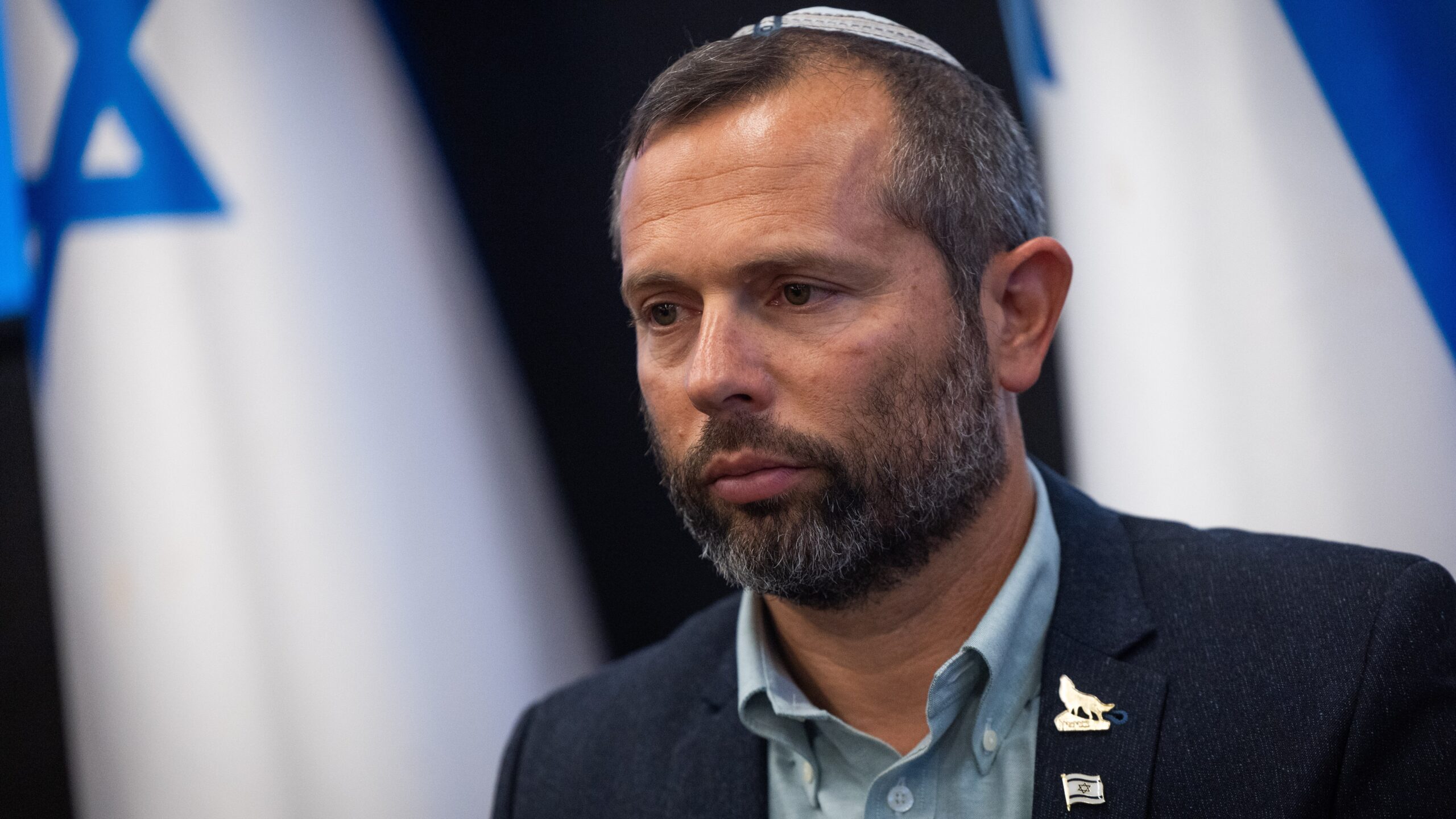
(JNS) Days after Binyamin Regional Council head and Judea and Samaria Council Chairman Yisrael Ganz returned to Israel from a trade promotion visit to the United States, five nations—Australia, Canada, France, Norway and the United Kingdom—announced sanctions against what they described as “extremist settlers” in Judea and Samaria.
During the trip, Ganz led a municipal delegation to Arkansas, where he met with Gov. Sarah Huckabee Sanders and other senior state officials to advance direct economic cooperation.
On Wednesday, Ganz told JNS that the sanctions are “a dangerous misunderstanding of the situation” that strengthens the Palestinian Authority and increases the security risk for Israeli civilians.
He said the P.A. continues to pay terrorists and their families with its “pay-to-slay” initiative, incites violence through its education system, and maintains armed security forces numbering in the tens of thousands, which are located minutes from Jerusalem and the Tel Aviv metropolitan area.
“In a single moment, those weapons could be turned against Israeli civilians, and we could find ourselves facing another Oct. 7,” he warned.
Ganz called on Israel to respond by dismantling the P.A., ending “the artificial division” into Areas A, B and C [administrative zones in Judea and Samaria established under the Oslo Accords] and strengthening Israel’s presence throughout the region.
“The P.A. is a corrupt entity that is bad for Arabs, bad for Jews, and bad for the world,” he said.
He argued that the sanctions would keep the region trapped in a perpetual conflict rather than resolve it.
“Instead of encouraging investment, economic development and infrastructure that would benefit all residents of the region, they choose to boycott those who are building, developing and creating opportunities,” he said. “In the end, they harm both Arabs and Jews alike.”
Ganz contrasted the sanctions with his visit to the U.S., where he met with American leaders to discuss trade, investment and cooperation.
“The contrast reflects two worldviews: One seeks to isolate Judea and Samaria, while the other seeks to connect it to the global economy,” he said.
At a time when Iran is seeking to extend its influence into Judea and Samaria, and others are attempting to isolate Israel, he added, new alliances are being built.
“The answer to the axis of terror and the boycott movement is more partnerships, more trade, and stronger relationships with leaders and communities that believe in freedom, security and our shared values.”
In Arkansas, the delegation met with senior officials to strengthen cooperation in agriculture, wine production, innovation, industry and emergency technologies, reflecting what Ganz described as a genuine willingness to promote long-term partnerships.
Too many people around the world view Judea and Samaria only through the lens of conflict, he said. “We offer a different vision.”
He added that the future of the region would be shaped not by boycotts and sanctions, but by infrastructure, investment and job creation.
“Instead of exporting conflict from the Middle East, we want to export innovation, industry and hope,” Ganz said.
Shared interests, future solutions
Sanders said her state was privileged to host Ganz and his team, adding that they were honored to return the hospitality after Ganz hosted her in Israel last year.
“We look forward to continuing to strengthen our partnership and working together for the benefit of both our peoples,” she said.
Acknowledging that Sanders and other Arkansas officials with whom the Binyamin group met are Republicans, Ganz responded to JNS questions about what Democratic support might look like in light of the latest European sanctions.
He said Democratic officials are regularly hosted in Binyamin, and that meetings also take place in Washington, D.C., with ongoing discussions about shared interests, future solutions and opportunities for cooperation in the House of Representatives and the Senate.
“Everyone understands that the reality that existed before Oct. 7, [2023], cannot continue today. We are confident that our Democratic friends, like us, want to see all the people of the region thrive—Muslims, Christians, and Jews alike,” Ganz said.
He added that conversations are rooted in mutual respect and a shared commitment to security, stability and prosperity for all communities. “Even when perspectives differ, we believe that meaningful dialogue and firsthand engagement are essential to building understanding and identifying practical paths forward,” he added.
Ganz said he believes that by working together with friends from across the political spectrum, “bonds can be strengthened between Israel and the U.S. to create a better future for everyone who calls this region home.”
Eliana Passentin, international desk director for the Binyamin Regional Council, who accompanied Ganz to Arkansas, told JNS her delegation was embraced with genuine love, friendship and support from allies who deeply respect and appreciate where they live in Israel.
At a time when Jews in the region are facing criticism and measures such as sanctions, these relationships become even more important, she said.
Passentin added that when friends visit Judea and Samaria and experience their way of life, those bonds become stronger.
“Visiting them in Arkansas has taken those relationships to an even higher level,” she said. “Together, we are building a better future for Judea and Samaria, and through our shared commitment and cooperation, we can make a lasting difference for generations to come.”
Want more news from Israel?
Click Here to sign up for our FREE daily email updates