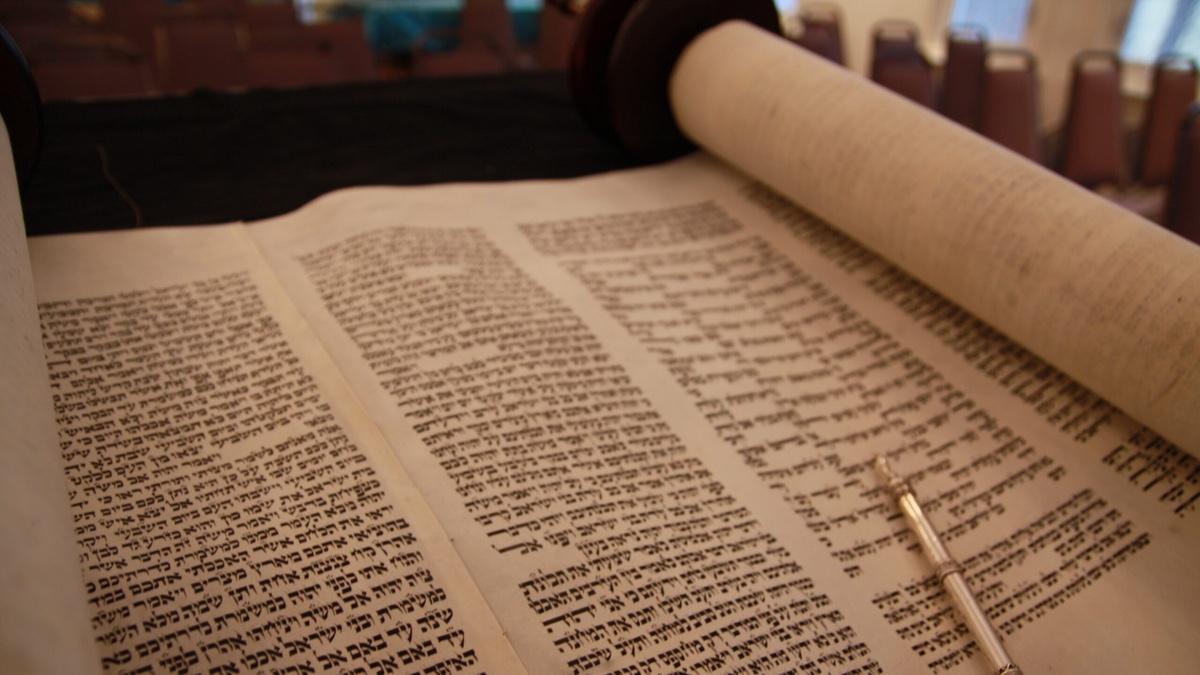
On the road to Emmaus, Yeshua met with two of His disciples and, beginning at Moses and all the Prophets, He expounded to them in all the Scriptures the things concerning Himself. (Luke 24:27). For our Torah studies this year, therefore, week by week we will seek to discover how all of Torah prepared the way for the coming Messiah.
29th August 2026 (16 Elul)
Ki Tavo (when you enter in): Deuteronomy 26:1-29:9
The teaching contained in our Bible study this week is arguably the most important of all our Torah portions. It is concerned with every aspect of the life of the Lord’s people over all history and, when studied in context, reveals the need of Messiah. One must dig deeply and even then, there is more – only God knows the full depth of what He pronounced through Moses.
These chapters from Deuteronomy relate to the entire history of the world. Moses’ words are relevant to our understanding of the Fall of Adam and Eve, the immensity of the Great Flood at the time of Noah, the Covenant with Abraham, the election of Israel as God’s chosen people, the lessons learned when Israel lived in Egypt, the giving of Torah in the journey from Mount Horeb to the Promised Land, and to the New Covenant.
Throughout thousands of years of history after Moses’ time, the chapters confirm that God’s words are exactly as stated and will never pass away. Their purpose defined Israel’s history, the good days and the bad days, peace from enemies, captivity in a foreign land, right up to today when, through the Holocaust, Israel is back in the Land waiting for the appearance of the Messiah at the end of time. What lies behind these chapters is no less important than that.
Most importantly, when everything is considered, our Torah Portion cries out for us to understand the magnificent ministry of Yeshua HaMashiach, through Whom came the New Covenant.
It is a great mistake to read these passages and consign them to ancient history as if now being irrelevant.
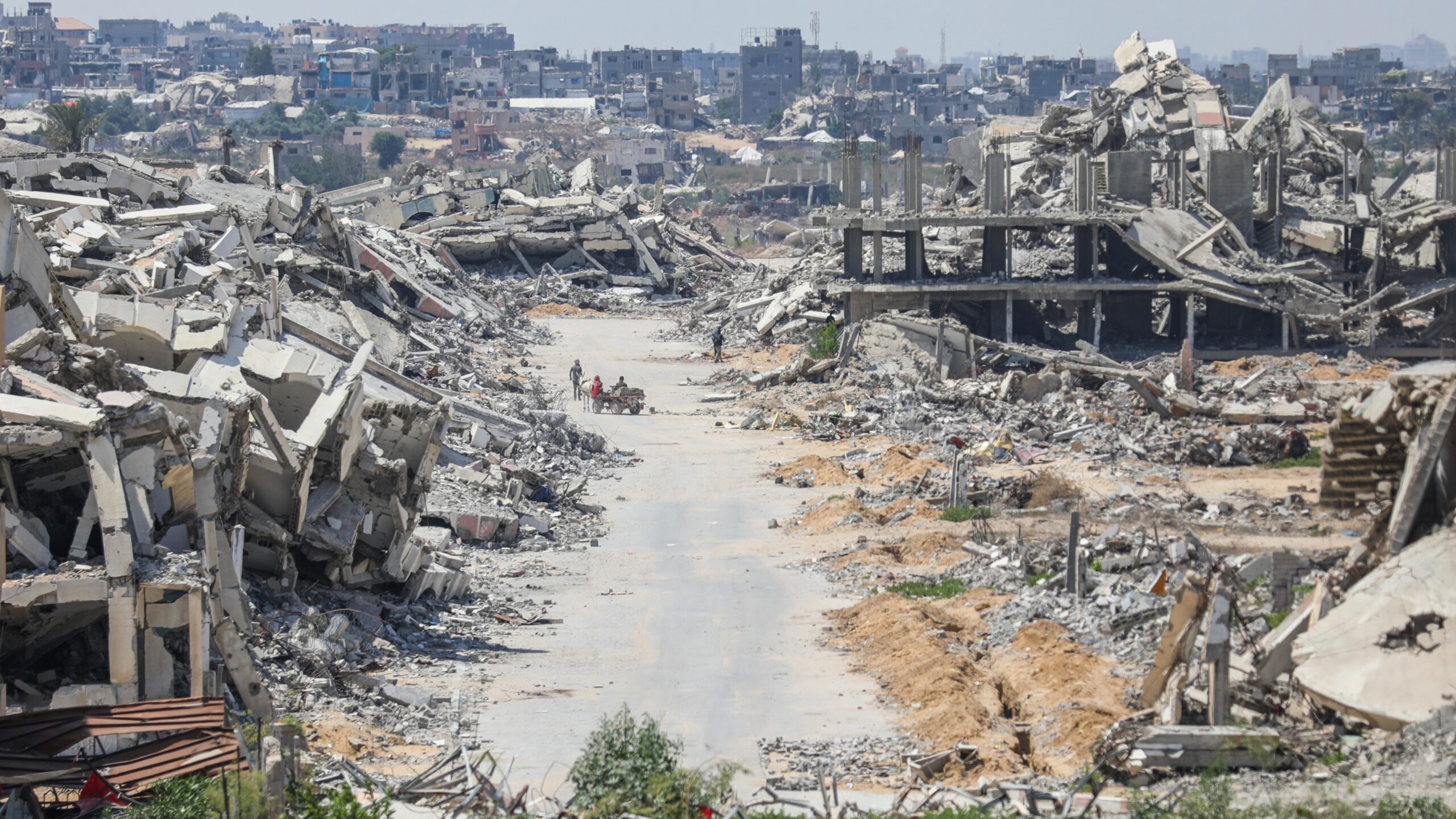
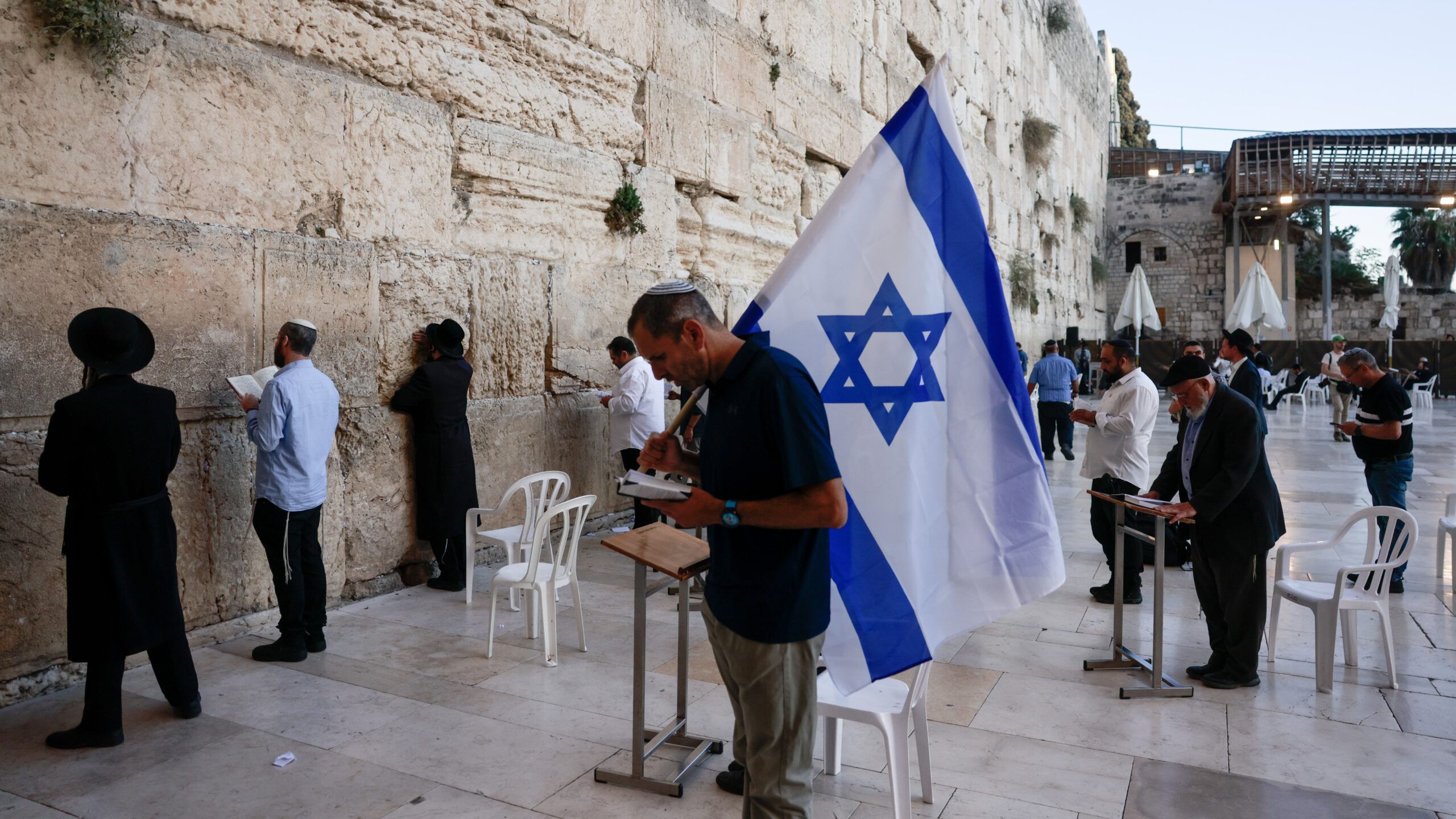
One can visit the Land of Israel today and everywhere find evidence of God’s Word having impact. Walk the ancient streets of Jerusalem and consider the evidence from the excavations. Foreign nations have come and gone sometimes with devastating effect: the ancient Roman street called The Cardo, the Broad Wall reconstructed by Nehemiah after the Babylonian captivity, Temple Mount – where there are only foundations now standing with an Islamic presence, because the Temple was destroyed by the Romans.
Drive up the Jordan Valley with Mount Gilboa on your left where Saul and Jonathan were slain by the Philistines. Go up to Galilee and find the city of Tiberius, named after a perverted Roman Emperor. Consider the hill of Gamla, where the Roman commander Vespasian, under the orders of the evil Emperor Nero, destroyed a community, many of whom committed suicide to avoid capture and others who fell by the sword. Visit the ruined remains of Bethsaida, Chorazin and Capernaum and read Matthew 11 in the context of Deuteronomy 28.
Likewise, go to the exceedingly hot, rocky mount of Masada near the Dead Sea, where a last stand took place of a remnant of Jews at the time of the fall of Jerusalem in 70 AD, in the fortified stronghold built there by Herod. Consider the historical records of the determined siege of Masada by the Romans and the suicide pact when all was hopeless for the Jewish exiles.
Read the words of Deuteronomy 27 and 28 and begin to consider the impact of them on Israel. From there we can extend our prayerful thoughts over the entire history of the world. If we find tears welling up from deep in our spirit, we are beginning to understand the gravity of what Moses taught Israel. Even then we would be just at the beginning of understanding God’s heart for the fallen world which He created for beauty and honour, and be just in the shallows of understanding Yeshua’s own tears shed for Jerusalem:
Now as He drew near, He saw the city and wept over it, saying, “If you had known, even you, especially in this your day, the things that make for your peace! But now they are hidden from your eyes. For days will come upon you when your enemies will build an embankment around you, surround you and close you in on every side, and level you, and your children within you, to the ground; and they will not leave in you one stone upon another, because you did not know the time of your visitation. (Luke 19:41-44)
And when He spoke to the bystanders who witnessed His journey to the Cross:
……a great multitude of the people followed Him, and women who also mourned and lamented Him. But Jesus, turning to them, said, “Daughters of Jerusalem, do not weep for Me, but weep for yourselves and for your children. For indeed the days are coming in which they will say, ‘Blessed are the barren, wombs that never bore, and breasts which never nursed!’ Then they will begin to say to the mountains, ‘Fall on us!’ and to the hills, ‘Cover us!’ For if they do these things in the green wood, what will be done in the dry? (Luke 23:27-31)
Surely Yeshua, in referring to the green wood and the dry, would have us refer to the great Prophet Ezekiel who also used this imagery before the Babylonian captivity:
Hear the word of the Lord! Thus says the Lord God: “Behold, I will kindle a fire in you, and it shall devour every green tree and every dry tree in you; the blazing flame shall not be quenched, and all faces from the south to the north shall be scorched by it. All flesh shall see that I, the Lord, have kindled it; it shall not be quenched.” (Ezekiel 20:47-48)
The context of Yeshua’s sacrifice was centred precisely on the Torah, the Prophets and the Writings of the Tanakh. God’s earnest appeal through Ezekiel with profound visions, powerful prophetic acts and clear warnings about the reason for the coming Babylonian captivity, was centred mainly on Israel’s turning away from God and His Covenant, to follow idols. The interpreters of Torah had become dangerously negligent:
Thus says the Lord God: “On the day when I chose Israel and raised My hand in an oath to the descendants of the house of Jacob, and made Myself known to them in the land of Egypt, I raised My hand in an oath to them, saying, ‘I am the Lord your God.’ On that day I raised My hand in an oath to them, to bring them out of the land of Egypt into a land that I had searched out for them, ‘flowing with milk and honey,’ the glory of all lands. Then I said to them, ‘Each of you, throw away the abominations which are before his eyes, and do not defile yourselves with the idols of Egypt. I am the Lord your God.’ But they rebelled against Me and would not obey Me. They did not all cast away the abominations which were before their eyes, nor did they forsake the idols of Egypt……. (Ezekiel 20:5-8)
Her priests have violated My law and profaned My holy things; they have not distinguished between the holy and unholy, nor have they made known the difference between the unclean and the clean; and they have hidden their eyes from My Sabbaths, so that I am profaned among them. Her princes in her midst are like wolves tearing the prey, to shed blood, to destroy people, and to get dishonest gain. Her prophets plastered them with untempered mortar, seeing false visions, and divining lies for them, saying, ‘Thus says the Lord God,’ when the Lord had not spoken. (Ezekiel 22:26-28)
When Adam and Eve were expelled from Eden, a plan of redemption was needed. God has been, and still is, working out His purposes for this. The Flood at the time of Noah demonstrated the depth of human need because of how far mankind can fall. Covenant was declared through Abraham, but the nature of fallen mankind did not change. Abraham’s physical descendants were chosen. Within the over-arching Covenant with Abraham, Covenant was also made through Moses beginning at Horeb and renewed on the borders of Canaan (Deuteronomy 29:1). The terms of God’s Covenant with Israel through Moses are so compelling that one can hardly understand, humanly, why all the blessings, from the produce of the Land to the defeat of their enemies, could not be sustained. Yet history reveals that through their ability to choose the blessing or the curse, the weakness inherent in fallen mankind’s nature inevitably leads to a falling away and its consequences. Israel, a prophetic people through their actions, teaches this to the entire world. Every one of us, if we were given the same situation without God’s extra help and provision, would ultimately find ourselves choosing by default to live under the curse for disobedience, despite the clear and compelling words of Scripture:
Behold, I set before you today a blessing and a curse: the blessing, if you obey the commandments of the Lord your God which I command you today; and the curse, if you do not obey the commandments of the Lord your God, but turn aside from the way which I command you today, to go after other gods which you have not known. (Deuteronomy 11:26-28)
Israel, above all the people of the earth, has lived through the consequences of this, and in a sense has suffered for us all, so that God can teach us all about our need of a Saviour to complete God’s plan of redemption.
However, whilst Israel has been a suffering servant, they are not the suffering servant of Isaiah 53. The Suffering Servant has to be greater than natural born Israel to fulfil the deepest purposes of Torah.
Whilst the consequences of the curse for disobedience are known and studied seriously year by year with reference to the Torah portions, eyes can still be blind to the fact that Yeshua HaMashiach has now fulfilled the promise of Isaiah 53.
Jewish teachers of Torah, when they read this week’s portion, will have first hand reference to their history. They will also consult popular commentaries which bring a constant reminder of God’s fulfilling, over history, what was said through Moses. For example, in the well-known Keil & Delitzsch Commentary on the Old Testament (Keil & Delitzsch Commentary – Online Bible Commentary – Worthy.Bible), studied by both Jews and Christians, we read how the consequences of Deuteronomy 28 are ongoing, and considered as still relevant. The commentary on verse 68 states:
Last of all, Moses mentions the worst, namely, their being taken back to Egypt into ignominious slavery. “If the exodus was the birth of the nation of God as such, return would be its death” (Schultz). “In ships:” i.e., in a way which would cut off every possibility of escape. ….. As a fulfilment of a certain kind, we might no doubt adduce the fact that Titus sent 17,000 adult Jews to Egypt to perform hard labour there, and had those who were under 17 years of age publicly sold (Josephus, de bell. Jud. vi. 9, 2), and also that under Hadrian Jews without number were sold at Rachel’s grave (Jerome, ad Jer 31). But the word of God is not so contracted, that it can be limited to one single fact. The curses were fulfilled in the time of the Romans in Egypt (vid., Philo in Flacc., and leg. ad Caium), but they were also fulfilled in a horrible manner during the middle ages (vid., Depping, die Juden im Mittelalter); and they are still in course of fulfilment, even though they are frequently less sensibly felt” (Schultz).
We can also draw reference to more recent writings. For example, in Chapter 2 entitled Serving the Creator, of the first volume of Popular Halacha (Department of Torah Education and Culture in the Diaspora, The World Zionist Organization, 1978), Rabbi Jacob Berman writes (sections 6 and 7):
Because of the sins of our forefathers, we were driven from our land, the land of Israel. Exile, dispersion and suffering caused many of our people to neglect the study of the holy language (Hebrew), to forget the Torah and to assimilate among the gentiles ……. If Israel would return to God in true repentance, then will He fulfil unto us His promise which He gave us through the prophets, His servants, to gather in the remaining exiles from the four corners of the earth, to restore us to the land of our inheritance, and bring us the Messiah who will rebuild the Temple and restore Divine Worship on the holy mountain, in Jerusalem.
There is a clear consciousness of the importance of what we read in Deuteronomy 27 and 28, but can Israel or any nation live by the holy requirements of God within the terms of the Old Covenant alone? In reality, there will always be another inevitable turning away and the painful consequences that follow, due to the often revealed weakness in the human nature of mankind.
It would also be shallow to consider the outworking of God’s pronouncements of blessing and curses as simply within the sphere of crime and punishment. It would be equally superficial and naive to think that this can be solved in the political arena. The logic of Heaven is far deeper than that. The entire world must know of God’s holiness and our deep need because eternal redemption cannot be attained by human effort alone. Israel’s failure is an ongoing lesson to the whole world and it has been both painful and costly. Israel will not be abandoned by God, as we discover from other readings in the Prophets, but all must learn the deeper need as we continue to delve into the depths of God’s teaching, week by week, through the Torah studies.
What we learn is that redemption for Israel, and for all who seek to live by faith in the God of Abraham, Isaac and Israel, did indeed come from out of the heart of the Nation, but in a way that transcended the sinful tendencies of all naturally born human beings. God’s own Son, Yeshua, was miraculously born both as a Jewish man and of the Holy Spirit. This was so that He could represent the Nation to God by total identification, as the Sacrificial Saviour of Isaiah 53, and thereby draw all who would respond in faith through Him to the Father.
Only in Him is the curse of the Torah (law) removed that is expounded in this week’s portion – the same curse that has overshadowed Israel over millennia of their history. Only in Him can the tendency to fail be covered as we continue to seek to learn and walk with the God of Abraham.
Paul stated this very meaningfully in his letter to the Galatians:
For as many as are of the works of the law are under the curse; for it is written, “Cursed is everyone who does not continue in all things which are written in the book of the law, to do them.” But that no one is justified by the law in the sight of God is evident, for “the just shall live by faith.” Yet the law is not of faith, but “the man who does them shall live by them.” Christ has redeemed us from the curse of the law, having become a curse for us (for it is written, “Cursed is everyone who hangs on a tree”), that the blessing of Abraham might come upon the Gentiles in Christ Jesus, that we might receive the promise of the Spirit through faith. (Galatians 3:10-14)
The only complete way to study our portion this week and meditate upon the course of history which was outworked through its truth, is through the full and final solution to our need, through the sacrifice of Yeshua. Then, at last, we will begin to touch the infinite depths of God’s Covenant purpose and mankind’s need. Then we will look up with hope to wait for the Kingdom of Heaven – a Kingdom that was impossible to achieve without Him.
As serious as the teaching of Deuteronomy 27 and 28 are, so is the teaching of Yeshua. After the wonderful invitation to salvation through faith in Him where the curse of the Torah is removed, enabling us to regain and retain fellowship with the Father on the halakha of life, there was a warning even stronger than that given by Moses:
God did not send His Son into the world to condemn the world, but that the world through Him might be saved. He who believes in Him is not condemned; but he who does not believe is condemned already, because he has not believed in the name of the only begotten Son of God. (John 3:17-18)
Likewise, in remembering the wonderful life-giving words of Yeshua, let us also remember that He said:
Heaven and earth will pass away, but My words will by no means pass away. (Matthew 24:35)
Herein, is the end-purpose of our studies on the seriousness of Moses’ words to Israel on the shore of the Jordan river.