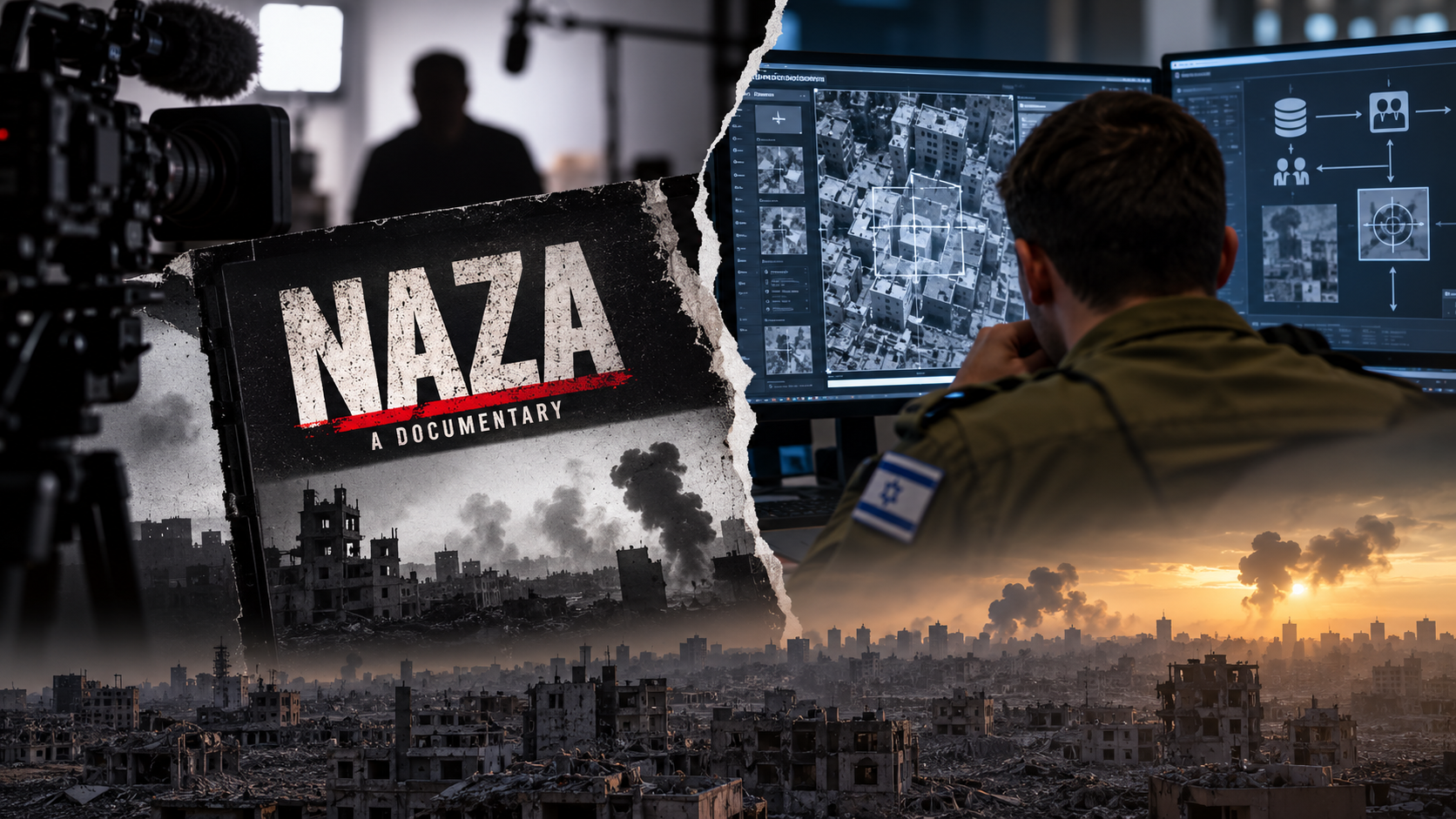

The Israel Defense Forces has issued a detailed rebuttal of “NAZA,” a new documentary on its Gaza targeting process. It calls the film “distorted, misleading and disingenuous,” a narrative built on what the army describes as substantial factual errors.
That should surprise no one who has watched the world’s appetite for stories that cast the Jewish state as the villain of its own defense.
The IDF’s statement addresses the film’s central claims:
- No strike was ever planned, approved or carried out in which 500 civilians, or anything close to it, were expected to die.
- Artificial intelligence has never independently chosen targets. Authorized intelligence officers identify targets, professionals plan the strikes, and operational commanders decide.
- “Lavender,” the system the film presents as a kill list, is described as a database that assists analysts, not a roster of approved targets.
The army also flatly denies that its directives ever pre-authorized fixed civilian casualty quotas, such as the “20 for a junior operative, 200 for a commander” figures cited by one interviewee.
The very notion of civilian casualties as a war crime is a distortion. Under Article 51(5)(b) of the Geneva Conventions’ Additional Protocol I, which Israel accepts as customary law, an attack is unlawful only if the expected civilian harm would be “excessive” compared to the anticipated military advantage. That is proportionality: a duty to weigh, not a ban on striking whenever civilians are nearby.
Article 51(7) goes further, stating that civilians’ presence “shall not be used to render certain points or areas immune from military operations,” particularly when used to shield military targets. In other words, the law anticipated Hamas’s playbook and refused to reward it. Critics who treat every civilian death as proof of a war crime are describing a law that doesn’t exist.
Skipping the fact-check
According to the IDF, the film’s problem is narrow sourcing. Its interviewees came largely from early intelligence stages, not the operational, legal and command teams who actually approve or reject strikes. Those people, the army notes, are conspicuously absent from the documentary.
So is context. There is no meaningful reckoning with October 7. There is little attention to Hamas’s deliberate strategy of hiding behind Gaza’s civilians. And the warnings, munition choices, aid facilitation and strikes cancelled because civilians were at risk are left out. Apparently those details didn’t fit the edit.
Even the title is upside down. “NAZA” abbreviates the Hebrew for “collateral damage,” an assessment international law requires every lawful army to make. The film treats Israel’s care in counting potential civilian harm as proof of indifference to it. By that logic, the only moral army is one that never bothers to ask.
The IDF says the filmmakers never submitted their allegations for comment before release. They also ignored its request for a copy, which is hardly the gold standard of journalism.
To its credit, the army doesn’t claim perfection. It acknowledges that errors occur in complex combat. It says hundreds of incidents have been reviewed and that suspected violations are investigated. That is more accountability than Israel’s loudest critics demand of anyone else.
“The tragic consequences of wars do not justify distorting the facts,” the IDF said.
Israel has answered the charges. The question now is whether anyone is listening.
Want more news from Israel?
Click Here to sign up for our FREE daily email updates