
On Friday morning, two gunmen from Hebron drove up to the checkpoint at Judea Junction with an assault rifle, a pistol and, according to IDF Chief of Staff Eyal Zamir, a large quantity of ammunition intended for a much bigger attack.
The army’s preliminary probe concluded that they planned to hit Israeli civilians on Route 35 but realized they could not get past the checkpoint, so they opened fire on the soldiers there instead. Staff Sgt. Ron Yonatan Roytman, 23, and Sgt. Yuval Shai Svilem, 20, were killed. The gunfight lasted more than 20 minutes.
But much of the world’s coverage started with what happened after.
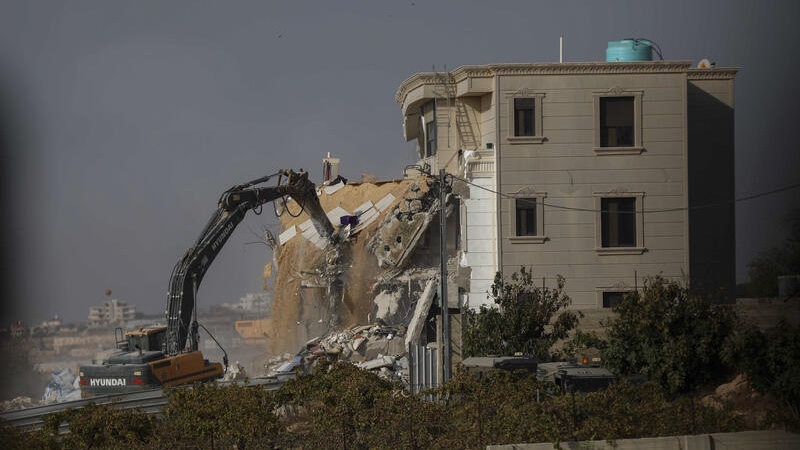
That version opens with bulldozers. Some 2,000 Palestinians have been displaced from their homes in Hebron, according to Defense Minister Israel Katz. Palestinian Authority Vice President Hussein al-Sheikh condemned what he called “collective punishment,” and the world media dutifully followed suit.
What falls out of the frame
Several things disappear when the story starts with the demolitions.
The first is the attack itself, along with the larger massacre that soldiers prevented. The second is Hamas’s reaction. The group praised the shooting as heroic and urged Palestinians to carry out more attacks like it.
The third is the most important. According to Israeli media reports, Hamas leaders recently sent a message through the UN humanitarian coordinator in Gaza stating that the group is readying another October 7-style attack, and will perpetrate it on any front where it becomes possible, including Judea and Samaria. The IDF’s chief liaison to the Palestinians described the threat as unusually blunt and direct.
That is the background against which Israel sent troops into the gunmen’s neighborhood.
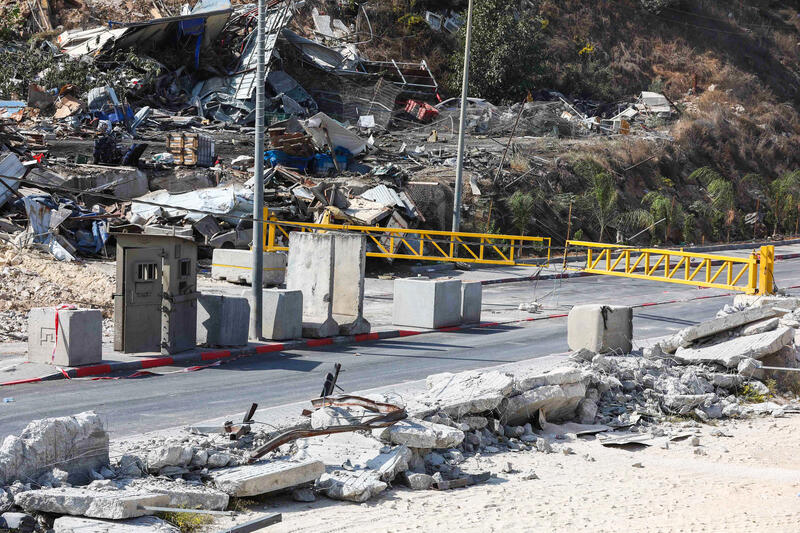
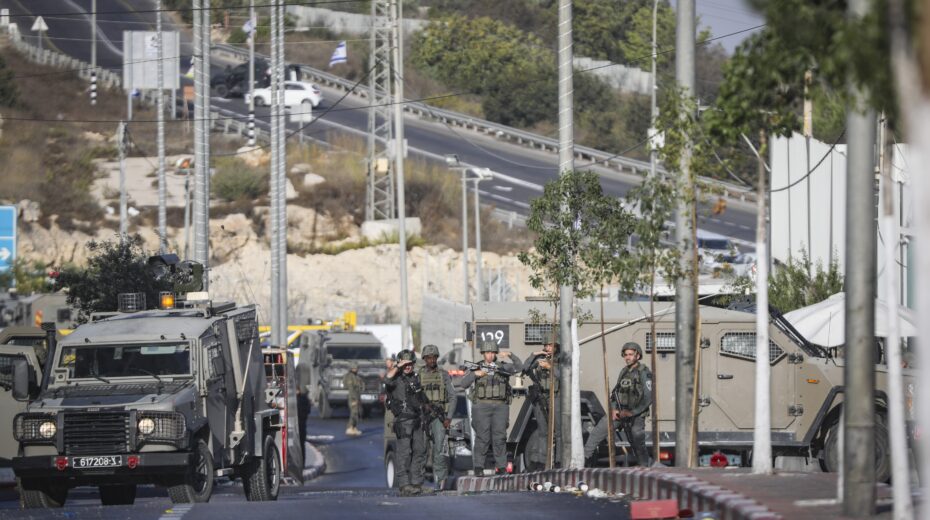
A view of the scene of a deadly shooting attack at the Judea Junction checkpoint near Hebron, where two Israeli soldiers were murdered and three others wounded by Palestinian gunmen the previous day, October 24, 2026. Photo by Wisam Hashlamoun/Flash90
The October 6 habit
Before October 7, Israel had a familiar routine for attacks like this. It killed or arrested the attackers, demolished their family home and went back to managing the threat.
Israelis no longer accept that routine. They learned at enormous cost what happens when an armed infrastructure is left alone because no one can yet prove what it is planning.
Critics should take that seriously. The IDF says about 2,000 residents of the area where Israeli troops are now operating belong to the Jaaba clan, which it describes as Hamas-affiliated.
The army does not need to prove each resident’s guilt before searching an area. Finding out what is there is the reason for the search. If Israel may act only once it already knows who else is armed, then in practice it may act only after the next attack.
Cover, not revenge
The demolitions have drawn the angriest reaction. They also have the most straightforward explanation.
The gunmen used nearby buildings as cover while firing on the checkpoint, according to the army’s preliminary probe. Authorities said the structures they razed had been built illegally in Area C and were being removed because of the security risks they posed. Prime Minister Benjamin Netanyahu also said Israel would clear unpermitted homes along West Bank roads, citing the threat they pose to troops.
That is how most Israelis understood Netanyahu and Bezalel Smotrich when they spoke after the attack. They heard a commitment to remove the cover that had just been used to kill two soldiers.
It is also a lesson from Gaza. There, the army found that buildings with no military role of their own could still be turned into firing positions and ambush points. Israelis are no longer willing to send their sons past such buildings to spare a structure that was built without a permit.
The European (double) standard
The collective-punishment argument rests on a principle: a whole community should not suffer for what a few of its members did. European governments apply that principle selectively.
Over the past year, several EU states have banned goods from Israeli settlements:
- Slovenia: began its ban in August 2025.
- Spain: its full ban took effect at the start of 2026.
- Ireland and Belgium: both acted in July 2026.
- The Netherlands: its ban took effect in September and applies even to goods in travelers’ luggage.
None of these bans asks whether a particular farmer or vintner ever harmed anyone. The test is where the product comes from.
The governments ground the bans in law rather than punishment. The Dutch prime minister said the aim is to keep Dutch economic activity from supporting what he called “unlawful occupation.” But Leiden law professor Larissa van den Herik, defending the Dutch measure, said it also addresses violence and extremism.
That defense concedes the point. Europe accepts that everyone from a particular place can bear the consequences of what some people there do, as long as the place is Jewish.
As long as it takes
Katz has said the displaced residents will not return “until we’ve finished dealing with all the Hamas issues in Hebron.”
Critics howled that an open-ended displacement was unfair and unlawful. But after October 7, Israelis are no longer willing to accept the risk of a larger attack later in order to shorten the disruption now.
Roytman and Svilem stopped one attack at a checkpoint. The operation that followed their deaths will end when the threat behind that attack is gone, not when the headlines demand it.
Want more news from Israel?
Click Here to sign up for our FREE daily email updates