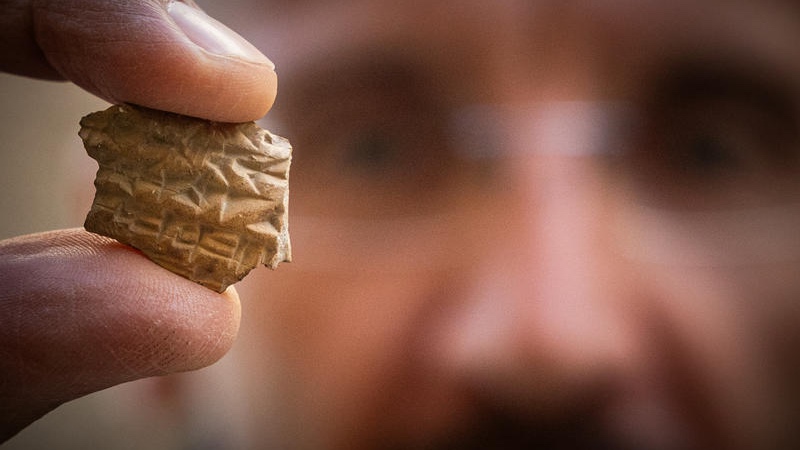

Shiloh Attoun, 17, had only been in Israel for two days when he made an extraordinary discovery during a school trip. The student at Muss High School Israel, an educational program of the Jewish National Fund-USA, noticed a small object on the ground at Tel Gezer National Park. Upon closer inspection, he recognized that it could be an ancient object.
Together with his teacher Benji Hain, he reported the find to the Israel Antiquities Authority (IAA). Archaeologist Adam William Asper subsequently retrieved the amulet. Shiloh received a certificate of appreciation for his responsible behavior.
The artifact is a so-called scarab, an amulet in the shape of a dung beetle. It has been dated to approximately 3,300 years old and originates from the Late Bronze Age. Particularly striking is its decoration featuring two cobras.
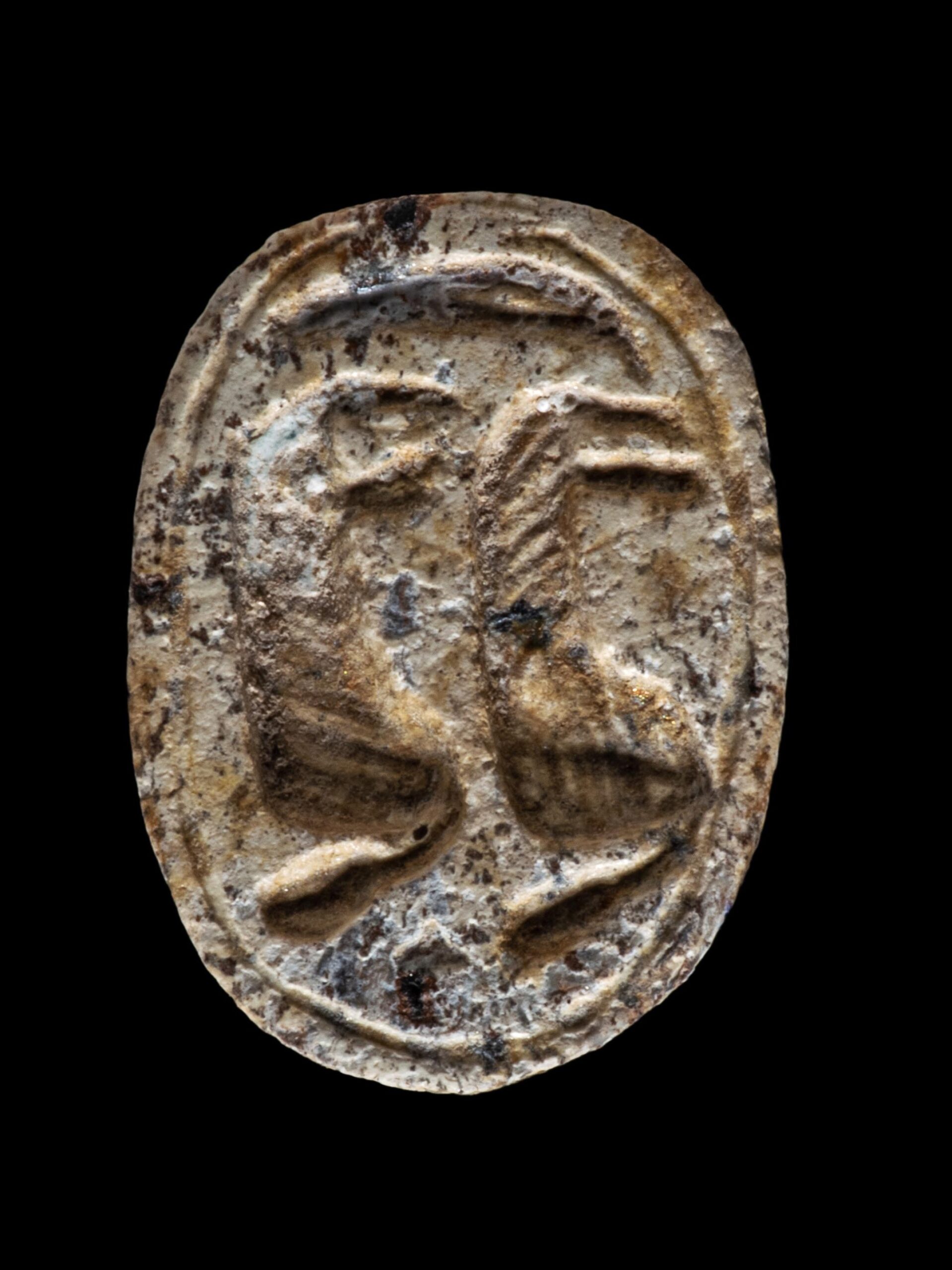
The amulet depicting two cobras – Assaf Peretz/Israel Antiquities Authority
Egyptian symbols in ancient Canaan
Professor Ido Koch from Tel Aviv University examined the amulet and explained the significance of its imagery. The two snakes are positioned above a semicircular shape. The cobra, known in ancient Egypt and in the Greek-speaking world as the uraeus, was regarded as a symbol of protection and rulership. It was widely used both in Egypt and in the southern Levant.
According to Koch, the semicircular depiction below corresponds to the Egyptian hieroglyphic sign “nb,” meaning “lord.” A similar scarab featuring three snakes instead of two had previously been discovered during excavations at Tel Megiddo.
Scarabs held religious significance in ancient Egypt. The dung beetle was considered a symbol of the emergence of new life and was associated with creation and rebirth. Such amulets served, among other things, as personal protective objects and could also be used as seals.
The site of Tel Gezer was one of the most significant Canaanite cities in the region during Egyptian rule approximately 3,500 years ago. The city controlled an important strategic crossroads in the Shephelah, the hill country between the coastal plain and the Judean highlands.
The Antiquities Authority emphasized that the find could be scientifically documented and added to the national antiquities collection thanks to the immediate report.
Shiloh himself expressed surprise at his discovery. While the group had just been discussing the slim likelihood of ever making an archaeological find themselves, he suddenly found himself holding such an object in his hands.
The Antiquities Authority takes this opportunity to remind the public that archaeological objects found by chance should not be taken or moved, but left in place and reported immediately. Only in this way can the archaeological context also be reliably examined.
Want more news from Israel?
Click Here to sign up for our FREE daily email updates