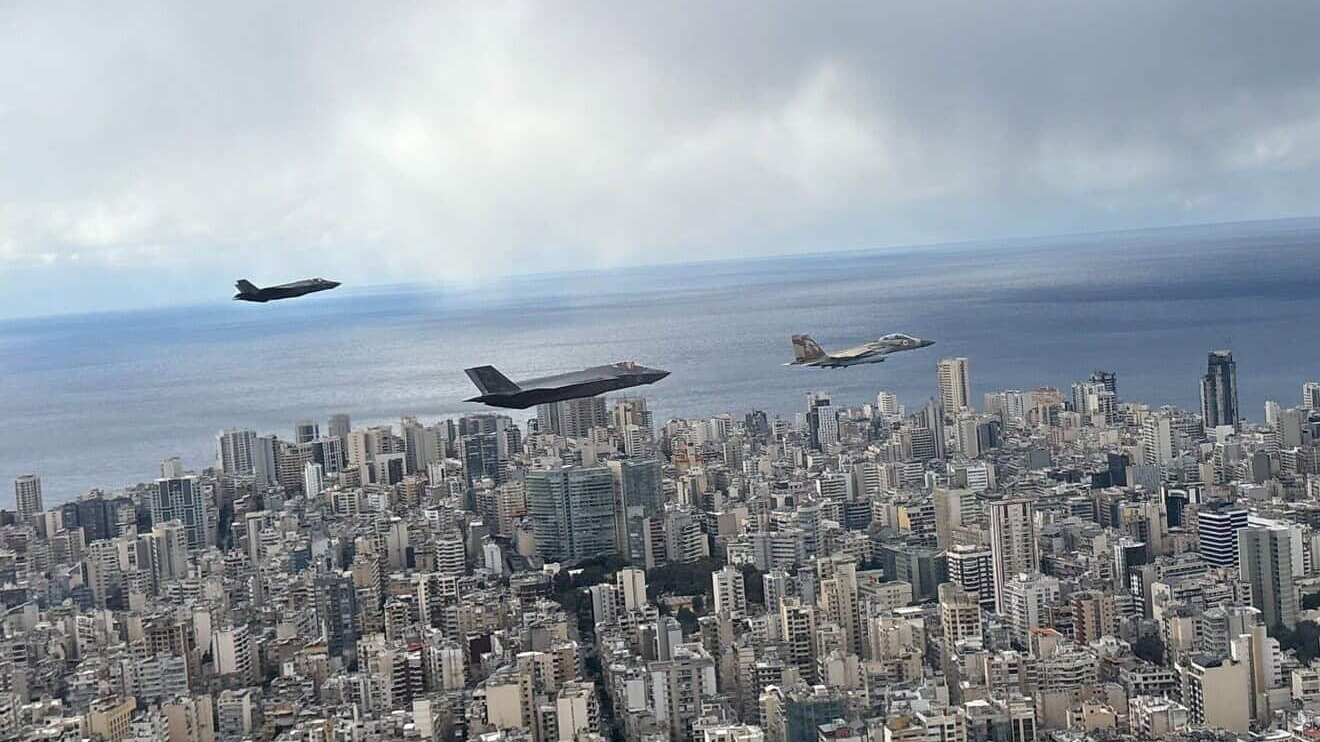
(JNS) On the second week of the US-Israeli military operation in Iran, the European Union has maintained a cautiously supportive tone regarding the actions of its two Western allies, despite growing internal pressure to denounce them.
On March 9, the presidents of the European Council and the European Commission, António Costa and Ursula von der Leyen, published a statement that condemned “the indiscriminate attacks by Iran” on its neighbors. It mentioned neither Israel nor the United States, recalling instead the Iranian regime’s nuclear program and repression.
Germany prizes unity
Friedrich Merz, the German chancellor, summarized this approach on March 1, tweeting in English: “This is not the moment to lecture our allies, but to stand together in unity.”
But 10 days later, visible cracks are on display within the EU, most visibly in Spain’s explicit opposition to the US-Israeli operation and in France’s implicit criticism, despite the fact that an EU member state, Cyprus, has been targeted by Iran or its proxies since the operation’s launch on Feb. 28.
Analysts interviewed by JNS said the EU’s inaction regarding the current conflict traced to several EU core policy principles, some of which are conflict with each other. Whereas Europe’s leaders are genuinely hostile to Iran’s ayatollah regime, the analysts said, they also have an entrenched aversion to military solutions and distrust of US President Donald Trump and Israeli Prime Minister Benjamin Netanyahu.
Trump ‘toxicity’
Additionally, the aftermath of the 2003 US-led invasion of Iraq, in which several European allies participated, has contributed to the European reluctance to support the Iran operation, Simone Rodan-Benzaquen, senior envoy to Europe for the Foundation for Defense of Democracies (FDD), told JNS.
Missing WMDs
No weapons of mass destruction were found in Iraq, contrary to pre-war intelligence that was put forward as part of the justification for going to war, and “the experience of 2003 trained a generation of European elites to distrust intelligence-driven military action and to fear escalation,” Rodan-Benzaquen said.
Maya Sion-Tzidkiyahu, a lecturer at the European Forum of the Hebrew University and director of the Israel-Europe Relations Program at Mitvim—The Israeli Institute for Regional Foreign Policies, said the main obstacle preventing the EU from confronting the Iranian threat even after Cyprus’s targeting on March 1 is not public opinion.
“It lies deeper, in Europe’s political DNA: a strong adherence to international law and a rejection of the Trump–Netanyahu worldview, in which the strongest player sets the rules, and of the ‘peace through strength’ approach,” Sion-Tzidkiyahu said.
Spanish rebuke
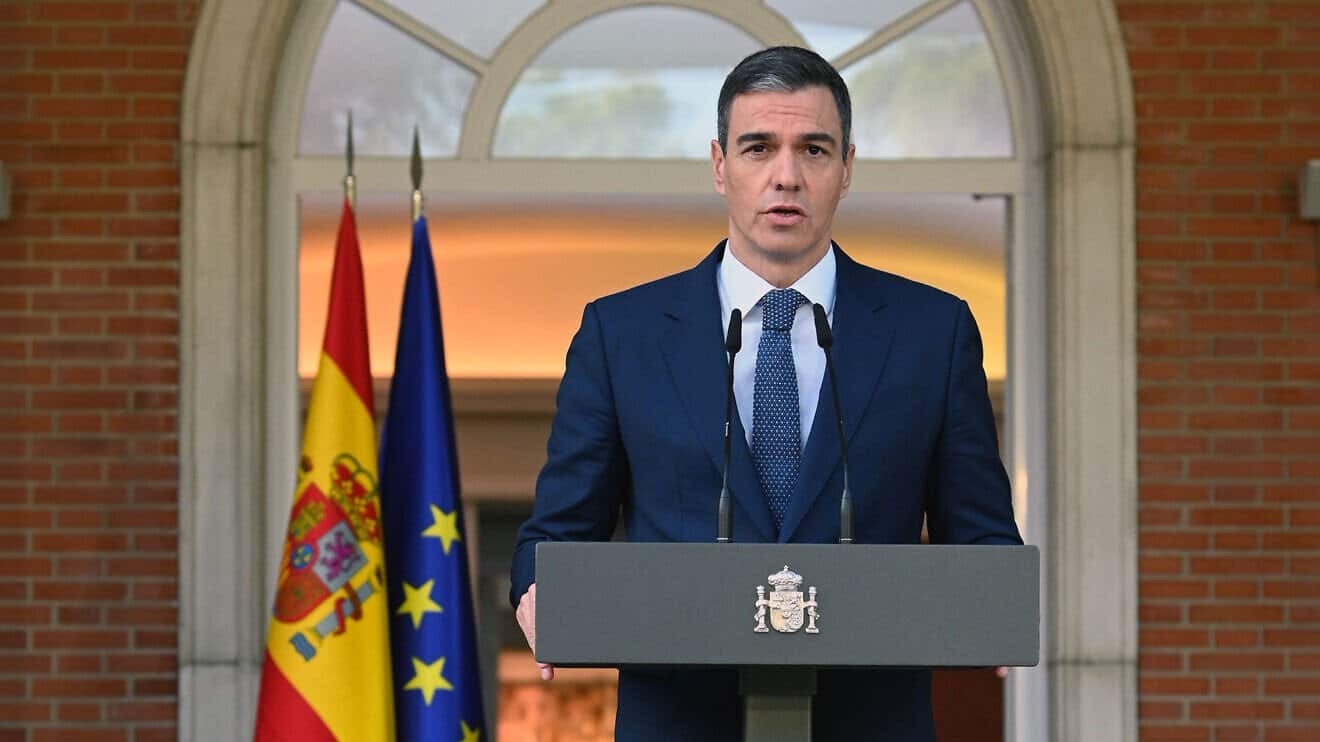
Spanish Prime Minister Pedro Sánchez, one of the most hostile EU leaders to Israel, which he has called a “genocidal state,” encapsulated this approach by adopting, in a speech, the slogan “No to war” and announcing Madid would refuse to allow the US to use its bases in Spain at Rota and Morón for the campaign.
Trump reacted angrily and threatened trade retaliation against Spain, in the sharpest rift to date between a major EU member state and the administration.
Publicly, Spain’s Socialist-led government did not reverse course, but White House press secretary Karoline Leavitt on March 4 said it had “agreed to cooperate with the US military,” adding, “The president expects all of our European allies to cooperate in this long-sought-after mission.”
A lower-intensity dispute erupted between Trump and British Prime Minister Keir Starmer, who had expressed “caution” about the US–Israeli military operation against Iran, urging “restraint” and emphasizing the need for diplomacy rather than escalation.
‘No Churchill’
This was after the March 1 strike in Cyprus, which hit a British military airport. The British Defense Ministry said the striking projectile did not come from Iran, but did not name its origin.
In an interview with The Telegraph, Trump said Starmer “is no Churchill,” suggesting he lacked wartime resolve.
The UK announced it would dispatch a destroyer to Cyprus following the incident, but it left only on March 10, prompting internal criticism over the 10-day delay.
France reacted by sending warships and air defense to Cyprus, “but there has not been a strong or unified European response,” Rodan-Benzaquen told JNS.
French President Emmanuel Macron said the US and Israeli strikes were carried out “outside the framework of international law,” adding that Paris cannot approve the operation.
France “publicly emphasizes international law and de-escalation, but it has also clearly blamed the Iranian regime and Hezbollah for the escalation and expressed support, including military support, for the security of its allies,” Rodan-Benzaquen said.
Eastern concerns
Eastern European EU states facing threats from Russia and Turkey have reacted more positively than others to the US-Israeli operation, Sion-Tzidkiyahu noted. They have “quietly taken note of Israel’s military and security assets,” purchasing “valuable systems from the Israeli defense industry,” she added. Some of the purchases, including David Sling and Arrow 3, “require long-term contracts, cooperation and hence good working relations,” she added.
Greece, Finland, Germany and Poland are among the EU member states that have either reached or have negotiated major weapons deals with Israel in 2025 and 2026.
But for Western European governments, Israel’s participation in the operation “adds another layer” of complexity, Rodan-Benzaquen said.
“Gaza has become the lens through which some governments, parliaments and media systems interpret almost everything Israel does, regardless of the target,” she said. “So there is a double filter: a reflexive aversion to ‘another Middle East war,’ and a political risk associated with being seen as aligned with Israel.”
Yet for many EU countries, particularly those facing threat from Russia, war with Iran is not just another Middle Eastern conflict, Rodan-Benzaquen argued.
“The Iranian regime is not just a Middle Eastern actor; it is also a military supplier to Russia’s war against Ukraine,” she said. “Iranian drones have been used extensively against Ukrainian cities. That increasingly places Iran within Europe’s own security equation.”
Overall, however, the lesson for adversaries of the EU from its response to Iran’s attacks “is problematic,” Rodan-Benzaquen said. “Europe’s threshold for collective strong action remains high.”
Want more news from Israel?
Click Here to sign up for our FREE daily email updates