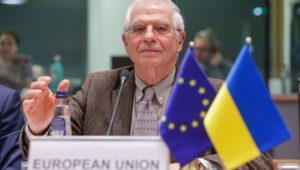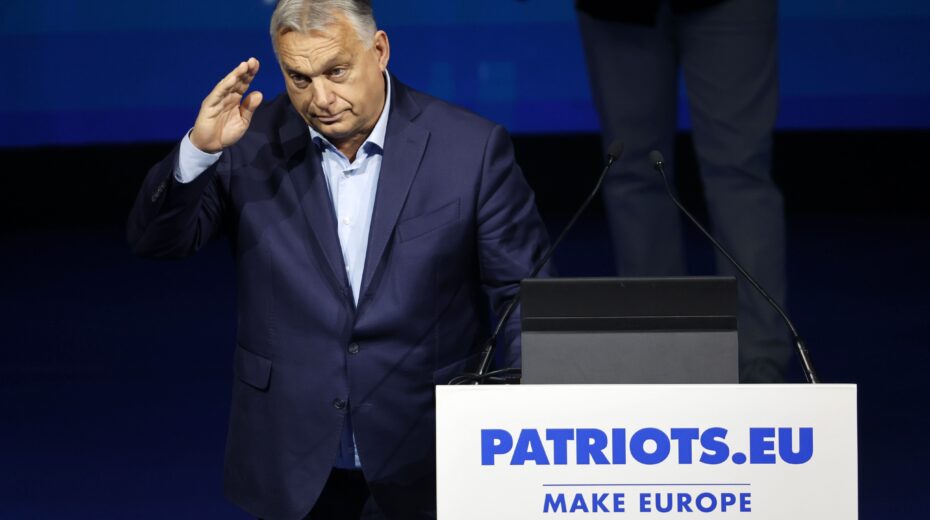

After the political change in Hungary, several EU states are once again trying to push forward proposals against Israel that had previously been blocked—a development likely to increase political pressure on Jerusalem.
For years, Viktor Orbán had positioned himself as one of Israel’s most reliable partners within the EU. Time and again, Budapest blocked initiatives aimed at sanctions or diplomatic measures against Jerusalem. In a system where foreign-policy decisions can only be made unanimously, that was more than symbolic politics—it was an effective protective mechanism.
With Orbán voted out of office, that balance is now shifting. In Brussels, there is now open discussion about whether previously unsuccessful moves against Israel should be placed back on the agenda. Diplomats are quietly saying that “an obstacle has been removed.”
This is not about a single resolution, but about a broader question: How will Europe position itself toward Israel during a period of ongoing tension in the Middle East?
In several EU member states, willingness has been growing for months to exert political pressure on Israel—whether in connection with the Gaza war, the situation in Judea and Samaria, or domestic political developments. Various instruments are being discussed, ranging from diplomatic statements to economic measures in the framework of existing agreements between the EU and Israel.
But anyone expecting a rapid policy shift is likely underestimating the dynamics within the EU.
Hungary was indeed a central factor—but not the only one. Other member states have also shown caution in the past when it came to concrete sanctions against Israel. Behind the scenes, not only politics but also strategic calculation plays a role: for many European countries, Israel remains an important partner in security matters, technology, and intelligence cooperation.
In addition, it is still unclear what course the new leadership in Budapest will actually take. Closer alignment with the EU is considered likely—but a radical break with Hungary’s previous Israel policy is by no means certain.
The current debate in Brussels is therefore less an immediate turning point than a signal: the willingness to discuss pressure tools against Israel is increasing. Whether that leads to concrete steps will still depend on the EU’s internal cohesion—and that is precisely where it has repeatedly failed in the past.
For Israel, this means: the diplomatic headwind in Europe could grow stronger. A unified sanctions policy, however, remains unlikely for the time being.
Want more news from Israel?
Click Here to sign up for our FREE daily email updates