(JNS) Over the past three weeks, a wave of protests has swept across all 31 provinces of the Islamic Republic and threatened to extinguish the flame of Khomeini’s revolution. At first, the strike of the merchants at Tehran’s Grand Bazaar seemed a natural expression of frustration with Iran’s collapsing economic position, but these minor civil disturbances quickly flared into an all-out political revolt, drawing broad international attention and bringing out millions of people into the streets.
The current round of protests is the second time in the past year that the Islamic Republic approached its breaking point. In June, during the “12-day war,” Israel’s blistering aerial and intelligence campaign had many pundits predicting the fall of the mullahs’ regime was drawing nigh.
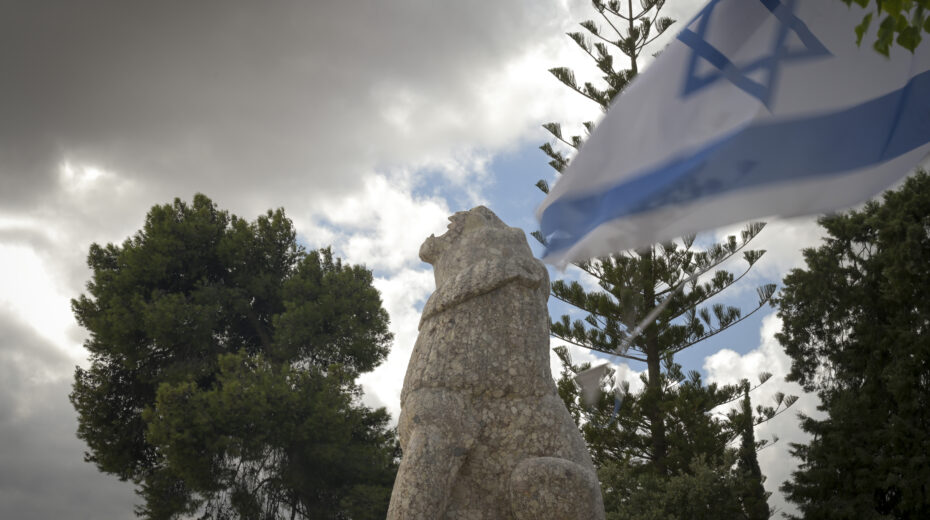
Iran is famously prone to revolution, having undergone five nondemocratic regime changes during the 20th century. This historical tendency, combined with broad dissatisfaction with the mullahs on the Iranian street, led many to expect the immense pressure of the IDF’s “Operation Rising Lion” would create ideal conditions for yet another revolution.
“Rising Lion” indeed featured a major psychological warfare component aimed at inciting domestic unrest. On June 18, 2025, at approximately 10:30 p.m. Tehran time, the Iranian state broadcaster (IRIB) was briefly hijacked. Regular programming was interrupted by footage of women’s rights protests (reminiscent of the “Woman, Life, Freedom” movement), and a direct text call in Farsi urging the public to “take to the streets and finish the job.”
The hack also featured the logo and text of a “Rising Lion” (or Bidari-ye Shir), in Farsi. The TV breach was widely attributed to a coordinated Mossad/IDF Unit 8200 cyber effort.
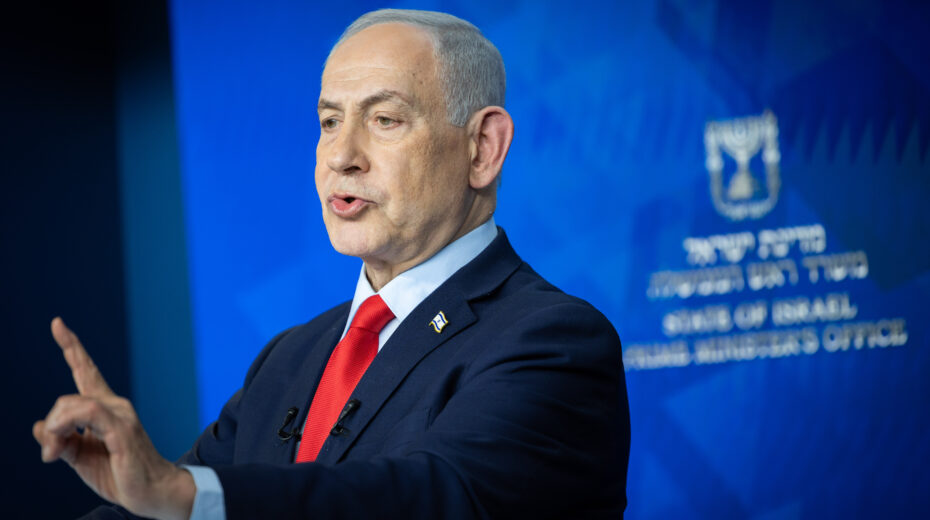
Prime Minister Benjamin Netanyahu publicly called for protests during the campaign, saying in a message to the people of Iran, “The regime … has never been weaker. This is your opportunity to stand up and let your voices be heard.”
Despite these efforts, the revolt of June 2025 did not materialize and the accepted narrative quickly developed that under the strain of foreign attack, the Iranians were more likely to “rally to the flag then to oppose their government. However, the exposure of the Iranian regime broadly and the IRGC specifically as a paper tiger did indicate that the Islamic Republic was weaker than ever before and that while the rising lion did not deliver the killing stroke, it might catalyze a revolt in the near future.
Defense Minister Israel Katz famously remarked on June 24, 2025, that “Operation Rising Lion” was merely the “promo.” He argued that the decapitation strikes were intended to leave the regime “paralyzed and naked” before its own people. Likewise, the Institute for National Security Studies (INSS) at Tel Aviv University published a report stating that while the military strikes achieved 100% of their kinetic goals (nuclear/missile degradation), they were specifically designed as “target-set preparation for a domestic uprising.”
“‘Rising Lion’ was not a regime-change operation in the traditional sense; it was an operation to prove to the Iranian street that the Basij and IRGC can no longer protect their own commanders, let alone the borders. It creates the psychological prerequisite for a 2026 revolt,” the report went.
Hollow out the regime’s authority
In this context, when protests began in the last week of 2025, rumors about Israeli intelligence involvement in spurring the nascent movement toward revolution spread like wildfire. Comments and statements rolled in from Iranian, Israeli and U.S. officials, implying or outright claiming that Israel was behind or heavily involved in the protests. Iranian opposition, both inside and outside Iran, amplified this narrative.
While Israeli intelligence support for the protests is difficult to trace, some hard evidence is available. The most concrete evidence of involvement comes from the Israeli intelligence community itself. On Dec 29, the Mossad’s official Farsi X (Twitter) account posted: “We are with you. Not only from a distance and verbally. We are with you in the field.”
This post served as an addendum to Mossad Director David Barnea’s statement following the June 2025 strikes, warning that Israel “will continue to be there [in Iran], as we have been there.”
Furthermore, Brig. Gen. (res.) Amnon Sofrin, former head of the Mossad’s Intelligence Directorate, explained in a recent briefing for the International Institute for Counter-Terrorism (ICT) that while the 2026 protests currently lack the “critical mass” necessary to topple the government, current intelligence efforts are focused on a strategy of “sustained attritional pressure” to hollow out the regime’s authority until a structural breaking point is reached.
Beyond these direct statements from the intelligence bodies, Netanyahu, while staying short of admitting direct involvement, has indicated a policy orientation in support of the protests.
During a Cabinet meeting on Jan. 11, Netanyahu expressed “awe” at the “heroism of the citizens of Iran” and expressed hope for future relations once the country is “freed from the yoke of tyranny,” while maintaining that the IDF is “closely monitoring” the situation.
Beyond statements by the Mossad and Israel’s political echelon, recent reports indicate a significant level of Mossad involvement. A recent Channel 13 report revealed that the Mossad has transitioned from passive observation to active “technical facilitation.”
The “ramped-up technical support” provided by the Mossad focuses on a sophisticated cyber-physical ecosystem designed to neutralize the IRGC’s “digital blackout.”
According to the Jan. 11 Channel 13 leak, this involves the deployment of a clandestine firmware update to Starlink terminals that utilizes advanced frequency hopping to bypass military-grade GPS jamming, which had initially caused an 80% data packet loss.
Beyond software, Israeli intelligence has reportedly leveraged “gray market” infiltration routes to distribute concealable hardware such as the Starlink Mini while providing activists with “software bridges” to establish secure, neighborhood-wide mesh networks that reduce the visible footprint of satellite dishes in Iran.
To protect these nodes from the regime’s “satellite hunters,” technical protocols now facilitate burst-transmissions, allowing large-scale video uploads in high-speed intervals that evade triangulation. Defensively, Israeli cyber units have allegedly initiated “reflector” attacks and targeted DDoS (distributed denial-of-service) operations against Iranian jamming centers, a counter-measure designed to “blind the blinder” by overwhelming the local servers and power grids that fuel the regime’s electronic warfare apparatus.
Furthermore, the use of high-end encrypted communications and compartmentalized cell structures suggests that key protest sectors are utilizing intelligence-grade operational security and “stay-behind” network tactics to evade state repression
Israel is also allegedly involved in operations aimed at crippling the Iranian regime directly. During the January 2026 protests, several concrete instances of on-the-ground interference have been linked to the Mossad’s active networks. In Tehran, local activists and Iran International documented a series of tactical failures where IRGC surveillance drones “inexplicably” crashed or performed “automated emergency landings” directly over crowded protest sites, suggesting the activation of localized jamming.
This was corroborated on Jan. 13, 2026, when Iranian Foreign Minister Abbas Araghchi announced the seizure of advanced “electronic equipment” in Mashhad and Rasht, claiming these tools were being used to “blind” tactical drones such as the Ababil and Mohajer series by hijacking their GPS signals.
Furthermore, on Jan. 10, 2026, a mobile radar station in Isfahan suffered what state media called an “electrical fire,” but a recently leaked report indicated that the incident was actually a “targeted small-scale drone strike launched from within the city limits” designed to disable the station’s antenna.
Narrative of Israeli involvement
Despite the reports of high-tech sabotage and direct intelligence messaging, several experts suggested that the narrative of deep Israeli involvement might be more a product of strategic posturing than operational reality.
One primary argument was that the claims of Mossad intervention were likely a calculated manipulation by the Islamic Republic to delegitimize the uprising and provide a pretext for violence.
Attorney Sagiv Asulin, a former Mossad senior officer and an expert on Iran at the Jerusalem Center for Security and Foreign Affairs (JCFA), characterized the reports of heavy foreign involvement as “well-organized propaganda from the regime,” noting that “this is a rehearsed narrative that they are all repeating.”
Asulin told JNS that this was “the regime’s way of shifting the focus from the problems that they have with their own people and claiming that the real issues are coming from manipulations from outside.”
Ultimately, Asulin explained that the regime was primarily using this specific narrative to “justify massacring protestors by claiming they are terrorists and foreign agents.”
He further said that while the 2026 protests appeared more formidable and coordinated than those of previous movements, this evolution was a product of internal maturing rather than external intelligence support. Asulin noted that the protesters were “more formidable and coordinated than they were in 2009 during the Green Movement or during the 2022 protests,” but he attributed this shift to “two main factors: better-organized leadership and larger international support.”
He clarified that “these two factors largely didn’t exist in previous protest movements” and concluded that, at this point, he did not see “any evidence of serious physical support from the outside beyond the political statements.”
Only the Iranian people
From an Israeli strategic perspective, direct intervention in a volatile domestic uprising carried risks that likely outweighed the rewards.
Maj. (res.) Alexander Grinberg, an expert on Iran at the Jerusalem Institute for Strategy and Security (JISS), told JNS that it was “very dangerous and very unlikely that Israel would be pursuing direct action in a situation that is so unpredictable.”
He argued that “the trajectory and success of the protests are deeply uncertain,” and while Israel might want to increase the pressure, “it is unlikely that there is a direct plan to push the protests into full regime change.”
Grinberg said that “open and direct involvement is also unwise to some degree,” because a new regime would face the same “internal social issues” and an economy that “won’t magically improve.”
He warned that “if Israel or the US had their fingerprints directly on the toppling of the old regime, then many of these problems would be blamed on them.”
Asulin added that in his view, “only the Iranian people will bring down the regime, it needs to be led by them, and they would not want to have it any other way.”
Finally, the experts suggested that the perception of involvement was often fueled by the interests of various actors rather than hard evidence.
Grinberg noted that “there is an incentive for everyone to say that the Mossad is involved,” explaining that “the Iranians want to blame foreign enemies, the opposition wants to say it has powerful friends, and Israel has an interest in encouraging the protests.”
He cautioned, however, that this “doesn’t mean anything about what Israel is actually doing.”
Want more news from Israel?
Click Here to sign up for our FREE daily email updates