
The Israeli parliamentary election on October 27 has already begun – at least for some Israelis living abroad. On Friday, early voting at Israeli diplomatic missions worldwide came to a close. An exceptionally high voter turnout was recorded.
According to the Central Elections Committee, 4,218 out of a total of 4,863 eligible voters cast their ballots. This corresponds to a turnout of 86.7 percent. In the last Knesset elections in November 2022, voter turnout at diplomatic missions had stood at 69.6 percent. This represents an increase of 17.1 percentage points.
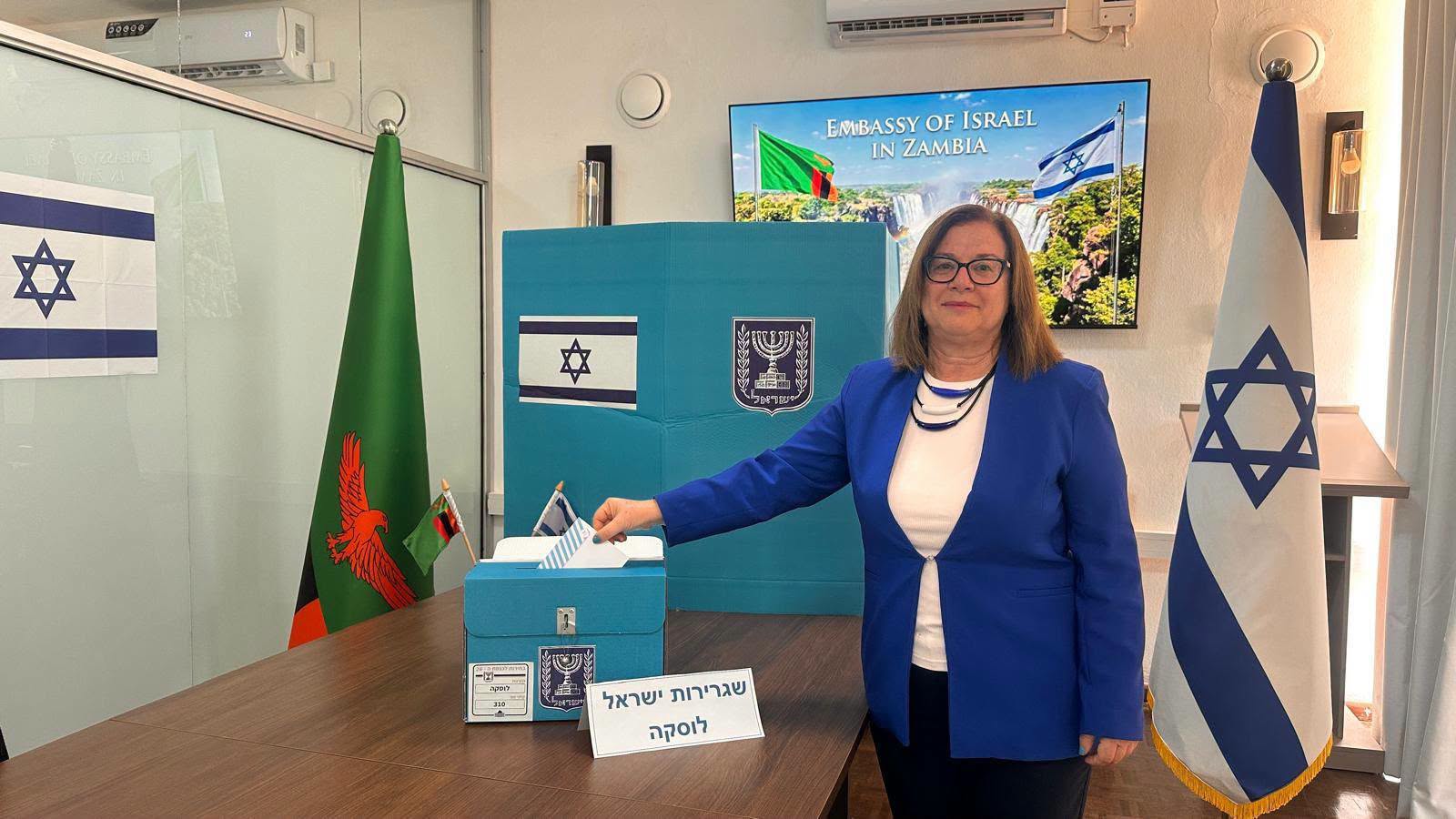
As Ynetnews reports, the vote took place at a total of 101 ballot boxes in 99 Israeli diplomatic missions abroad. Those eligible to vote included not only diplomats but also employees of government institutions, government representatives, military attachés, and their eligible family members.
The first votes were cast at the Israeli Embassy in Wellington, the capital of New Zealand, where voting began as early as Wednesday evening at 11 p.m. Israeli time. Shortly afterwards, the ballot box at the Israeli Embassy in Fiji also opened. From there, voting continued around the globe in accordance with the various time zones.
The last polling stations closed on Friday morning at Israeli missions in Los Angeles and San Francisco. In total, voting spanned approximately 30 hours. The largest polling station was located at the Israeli Consulate in New York, where more than 700 people were eligible to vote.
A celebration of Israeli democracy! 🇮🇱
Today, Amb. @Ofir_Akunis officially opened the polling station at the Consulate General of Israel in New York ahead of Israel’s October 27, 2026 elections, casting the first ballot alongside his wife, Adi.
Amb. Akunis stated:
“Throughout the day, nearly 1,000 people will exercise their democratic right to vote.Israel is the only democracy in the Middle East.”
📷: Lev Radin
— Israel in New York (@IsraelinNewYork) October 15, 2026
The organization of the worldwide vote was carried out jointly by the Israeli Ministry of Foreign Affairs and the Central Elections Committee. This included training polling staff, distributing voting materials, and coordinating the vote across various countries.
In a joint statement from the Foreign Ministry and the Elections Committee, it was emphasized that the vote would be conducted according to uniform security and oversight procedures to ensure a proper electoral process.
Following the close of voting, the sealed ballot envelopes will be brought to Israel, where the votes are to be counted as part of the tally for the 26th Knesset elections.
The high turnout does not, however, mean that all Israelis living abroad were able to participate in the election. Under Israeli electoral law, ordinary citizens who are temporarily or permanently residing abroad are generally not permitted to vote outside of Israel. An exception applies in particular to officially posted civil servants and their eligible family members.
Israeli citizens living abroad who do not fall under this exemption must therefore travel to Israel in order to cast their vote.
The high turnout among eligible voters at diplomatic missions was also welcomed positively in Israeli politics. The chairman of Israel Beiteinu, Avigdor Liberman, praised voters abroad and expressed hope that a similarly high turnout would be achieved within Israel itself on October 27, as N12 reported.
Whether the significantly increased voter turnout at diplomatic missions is an indication of an overall higher turnout in the upcoming Knesset elections remains to be seen. The number of eligible voters there is small relative to the total Israeli electorate. Moreover, this is a distinct voter group whose participation cannot be readily extrapolated to the general population.
On October 27, Israeli citizens are called upon to elect the 120 members of the 26th Knesset.
Want more news from Israel?
Click Here to sign up for our FREE daily email updates