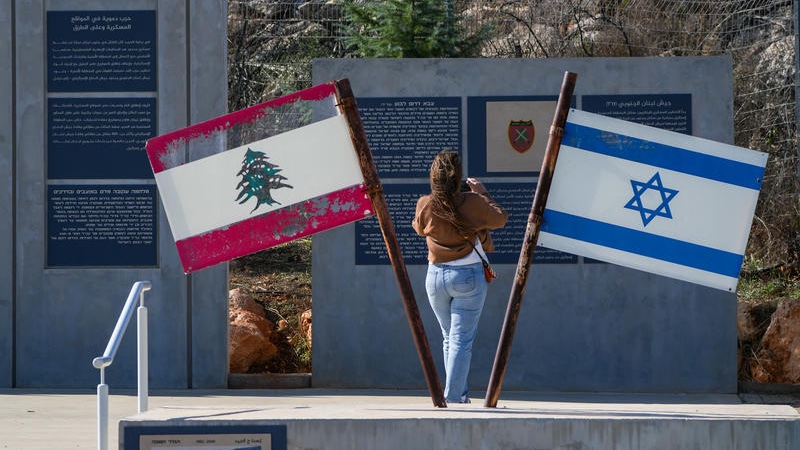

Israel is preparing to open direct talks with Lebanon, with one objective placed squarely at the center: disarming Hezbollah.
Prime Minister Benjamin Netanyahu said Thursday that Jerusalem intends to begin direct negotiations with Lebanese counterparts as soon as possible, framing the move as a response to repeated requests from Beirut and as part of a broader effort to change the security reality on Israel’s northern front.
“In light of Lebanon’s repeated requests to open direct negotiations with Israel, I instructed at the Cabinet meeting yesterday to open direct negotiations with Lebanon as soon as possible,” Netanyahu said in a statement.
He added: “The negotiations will focus on the disarmament of Hezbollah and the establishment of peaceful relations between Israel and Lebanon. Israel appreciates the call made today by the Prime Minister of Lebanon to demilitarize Beirut.”
The announcement lands at a moment of sharpened Israeli pressure on Hezbollah. Israeli and American officials have both made clear in recent days that the ceasefire with Iran does not apply to Israeli military operations against Hezbollah in Lebanon. In other words, whatever pause now exists on one front does not extend automatically to Tehran’s Lebanese proxy.
White House Press Secretary Karoline Leavitt:
Lebanon is not part of the ceasefire; that has been relayed to all parties involved in the ceasefire. pic.twitter.com/gfKYusnsGc
— Tabz (@TabzLIVE) April 8, 2026
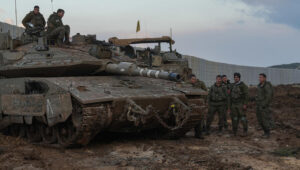
Hezbollah entered the current war on March 2, launching rockets and suicide drones at Israel after the targeted killing of Iranian Supreme Leader Ali Khamenei in the opening phase of Operation Roaring Lion, known on the American side as Epic Fury. Israel responded by escalating its campaign against the group, citing Hezbollah’s violation of the US-brokered ceasefire reached on November 27, 2024. Since then, Jerusalem has expanded its aerial campaign and pushed forces deeper into parts of Southern Lebanon to stop cross-border attacks.
On Wednesday, the Israeli Air Force carried out what it described as its largest coordinated strike wave against Hezbollah targets since the start of the current campaign. The operation hit command centers, headquarters, and military infrastructure in Beirut, the Beqaa Valley, and Southern Lebanon.
Netanyahu, pointing to the scale of the operation, said Hezbollah had absorbed “the greatest blow since the pagers,” referring to the September 17–18, 2024 attacks in Lebanon that wounded thousands of Hezbollah operatives.
“We attacked 100 targets in 10 minutes, in places Hezbollah was certain were immune,” he stated.
As long as Hezbollah continues to threaten our civilians, we will continue to operate against them. pic.twitter.com/TD5VOGLcNO
— Israel Defense Forces (@IDF) April 8, 2026
Israel’s Foreign Ministry reminded the Lebanese leadership why their country is still being attacked even as the Trump administration pushes peace talks with Hezbollah’s sponsors in Tehran.
“Lebanon’s president and prime minister have no shame in attacking Israel for doing what they should have done,” read a ministry post on X. “After thousands of attacks on Israel from their territory, they offer no apology – and rather come with demands. They did not disarm Hezbollah. They did not and do not prevent it from firing on Israel. They lied when they claimed they had demilitarized the area up to the Litani.”
Lebanon’s president and prime minister have no shame in attacking Israel for doing what they should have done: striking Hezbollah.
After thousands of attacks on Israel from their territory, they offer no apology – and rather come with demands.
They did not disarm Hezbollah.…
— Israel Foreign Ministry (@IsraelMFA) April 8, 2026
UN Security Council Resolution 1701 passed in 2006 obligated Lebanon to remove Hezbollah armed forces from the area between the Israeli border and the Litani River. It failed to do so.
The ceasefire reached in November 2024 again obligated Lebanon to remove Hezbollah forces from the south of the country and to disarm the terrorist militia operating from its soil. It failed to do so, despite claims that it had.
Israel’s Foreign Ministry said it no longer has any confidence that Lebanon is capable of or willing to confront and remove Hezbollah and exert real sovereignty over its own territory. So Israel must.
Lebanon must be freed from the stranglehold of the Iranian regime, it must not be tightened further! pic.twitter.com/fruX8pINKU
— Israel Foreign Ministry (@IsraelMFA) April 9, 2026
The message from Jerusalem is increasingly blunt: Lebanon now has a choice. It can continue allowing Hezbollah to operate as an Iranian terrorist proxy army embedded inside its territory, or it can move toward a different arrangement entirely. Israel is signaling that it is willing to test both tracks at once — diplomacy with Beirut, and force against Hezbollah.
In Israel there is muted optimism, and only a sliver of hope that Lebanon will finally do the right thing.
Want more news from Israel?
Click Here to sign up for our FREE daily email updates