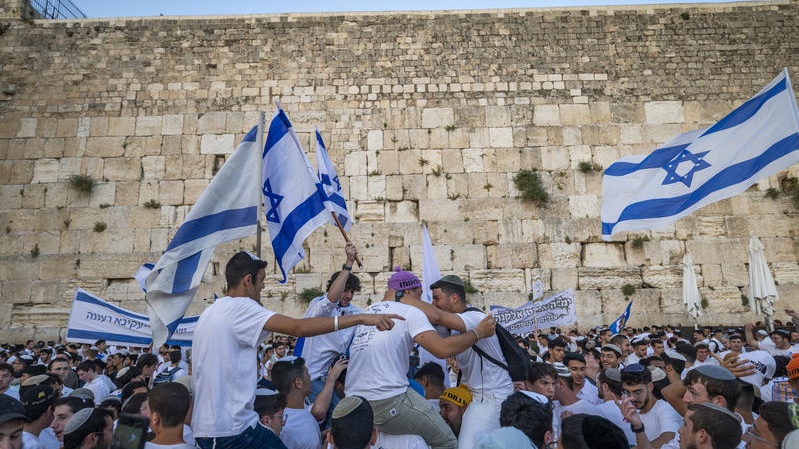

At a special Cabinet meeting marking Jerusalem Day, Prime Minister Benjamin Netanyahu announced a series of new government projects aimed at strengthening Jerusalem’s infrastructure, heritage, and public spaces.
The meeting was held at the Knesset Museum in downtown Jerusalem — the capital of the Jewish people not for a generation, not for a political season, but for 3,000 years.
Netanyahu put it plainly: few peoples can point to the same capital today that they had three millennia ago. Fewer still lost that capital, lost sovereignty, lost the land itself — and then returned to rebuild all three in the same place.
That’s not just history. It’s covenant.
Among the projects announced is a special budget to fortify the Western Wall area against possible missile attacks, improve infrastructure, and continue archaeological excavations. The irony, of course, is that Israel must protect the most visible remnant of Jewish antiquity from enemies who insist Jews are somehow foreign to Jerusalem.
The government will also invest in the Shalva National Center in Bayit VeGan, which serves people with disabilities and functions as a major cultural venue. Another plan will rehabilitate the ancient Mamilla Pool, long neglected, into a renewed public water space for Jerusalem’s residents.
Netanyahu also highlighted the heritage center being built in Atarot, north of the city, which will tell the story of aviation and Zionist pioneering.
Contrary to the howls of Israel’s foes, Jerusalem is not being “Judaized.” It is Jewish. Israel is not inventing a connection to the city. It is uncovering, restoring, and defending what was always there.
Want more news from Israel?
Click Here to sign up for our FREE daily email updates