(JNS) Prime Minister Benjamin Netanyahu this week addressed reports of a strategic shift in Riyadh’s foreign policy.
When asked, during a press conference in Jerusalem on Tuesday, about Saudi Arabia’s recent pivot toward Turkey and Qatar, Netanyahu responded with uncharacteristic firmness regarding future ties with the kingdom.
“We expect from anybody who wants normalization or peace with us that they not participate in efforts steered by forces or ideologies that want the opposite of peace,” he said. He characterized these ideologies as those that “reject the legitimacy of the State of Israel” and “nurture all kinds of forces that attack the State of Israel.”
The current chill in Jerusalem-Riyadh relations stands in stark contrast to the optimistic era of 2020. After the signing of the Abraham Accords, the Middle East was viewed through a binary lens—a unified “Sunni Monolith” led by Saudi Arabia, naturally gravitating toward Israel to counter a rising Iran.
Analysts then described the United Arab Emirates’ normalization as a trial run for Saudi Arabia, assuming a regional alliance was a matter of when, not if. However, in the aftermath of the Oct. 7, 2023, Hamas-led massacre, the Middle East is increasingly fractured.
In place of the simple geopolitical map of 2020 is a more complex web where the “Gulf Monolith” has shattered; a rising block of radical Sunni states is ascendant, and Iran’s coalition is in pieces, leading to wild card regimes in Lebanon, Syria and Iraq.
Among all this instability, Saudi Arabia is increasingly positioning itself as a “middle power” rather than a vanguard for Western-led integration.
The Saudi pivot away from Israel
Riyadh’s drift toward the Turkey-Qatar axis has shifted from quiet diplomacy to formal strategic alignment through massive infrastructure and military commitments.
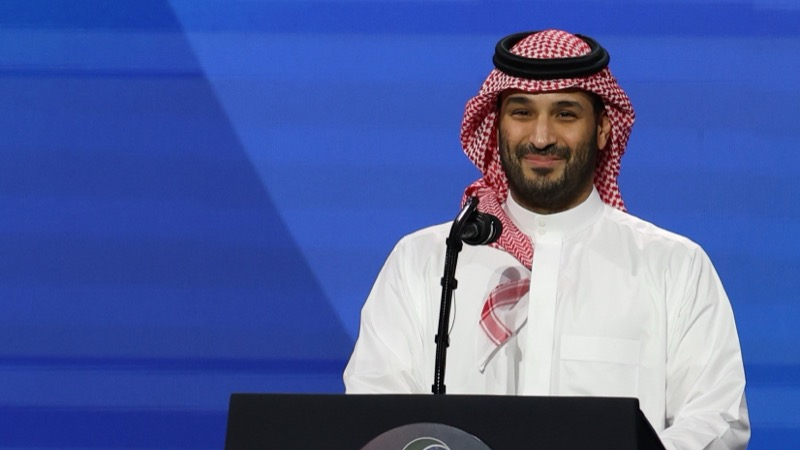
In late 2025, Saudi Crown Prince Mohammed bin Salman (MBS) and Qatari Emir Tamim bin Hamad Al Thani signed a series of landmark defense and intelligence-sharing agreements, effectively burying the animosity of the 2017 blockade era.
Additionally, Riyadh and Doha finalized a landmark agreement to construct a 785-kilometer (488-mile) high-speed electric rail link connecting the two capitals, a project expected to generate over $30 billion in economic impact.
This infrastructure is underpinned by an explosion in bilateral trade, which surged over 600% between 2021 and 2024. This economic tethering is mirrored by a fundamental recalibration of Saudi military strategy.
In September 2025, Riyadh signed a Strategic Mutual Defense Agreement with nuclear Pakistan, a pact that utilizes collective-defense language to signal that an attack on one is an attack on both.
By this year, discussions had moved toward a trilateral security framework to include Turkey, effectively creating an “Islamic security alternative” that bypasses Israeli- and American-led architectures.
This pivot includes major procurement contracts with Turkish defense giants such as Baykar for advanced drone production, alongside collaborations with Qatar’s Barzan Holdings to finance and develop indigenous naval platforms and sensors intended to decouple regional defense from traditional American supply chains.
On the diplomatic front, the Saudi rhetoric regarding Iran has also taken a startlingly conciliatory turn. Rather than maintaining the role of the Islamic Republic’s primary regional antagonist, Saudi officials have issued a series of very public, supportive statements toward the Iranian regime, emphasizing “neighborly cooperation” and joint stability.
During the Arab League summit this month, the Saudi Foreign Ministry explicitly praised the “resilience” of the Iranian state. The recent pattern of behavior indicates that MBS, who once called Iran’s Ayatollah Ali Khamenei “the new Hitler of the Middle East,” believes that the common threat of the “Iranian Axis” is no longer enough to drive Riyadh into Israel’s arms.
The prospect of normalization is now in deep freeze, characterized by a significant hardening of the Saudi public line. While earlier negotiations under the Biden and Trump administrations hinted at transactional security guarantees, Saudi leadership has since moved the goalpost.
This month, Foreign Minister Faisal bin Farhan Al Saud stated that diplomatic relations are “not on the table” without the “irreversible” establishment of a sovereign Palestinian state with east Jerusalem as its capital.
This sentiment echoed MBS’s statements during his November 2025 meeting with US President Donald Trump, where he insisted on a “clear and time-bound roadmap” as a nonnegotiable prerequisite.
This diplomatic shift is mirrored in state-aligned Saudi media outlets such as Al-Sharq al-Awsat and Okaz, which have transitioned from discussing the “benefits of regional integration” to publishing scathing critiques of Israeli military “unilateralism” and framing the current Israeli government as a source of regional instability.
The factors preventing normalization
The traditional logic of the “common enemy” has been fundamentally reshaped by the internal and external fracturing of the Iranian regime.
Following Israel’s 12-Day “Operation Rising Lion” against Iran last June, and subsequent domestic instability in Tehran, the regime’s capacity for sustained regional aggression has significantly diminished. The fall of the Assad regime in late 2024 and the significant degradation of Tehran’s proxies Hezbollah and Hamas have effectively dismantled the “Axis of Resistance,” reducing the threat that once made Israeli security cooperation an urgent necessity for Riyadh.
Asher Fredman, executive director of the Misgav Institute for National Security, explained in a recent report that as this immediate existential pressure recedes, the Saudi calculus for public normalization has shifted. Instead of pursuing an anti-Iran military pact, Riyadh has adopted a policy of diplomatic containment, a hedging strategy designed to manage regional risks through diplomatic maneuvering.
This reduction in the Iranian threat has introduced a new strategic paradox in Riyadh—the concern that the resulting power vacuum is being filled by a unilateral Israeli military and intelligence preeminence that could sideline Arab interests.
Efraim Inbar, former president of the Jerusalem Institute for Strategy and Security, told JNS that Saudi Arabia increasingly views the current regional architecture as one dominated by Israeli military actions. “Israeli military successes are frightening the Saudis. They don’t want Israel to become the strongest power in the Middle East,” Inbar observed.
Rather than being a primary partner in a new alliance, Riyadh fears being relegated to a weakened role in a new Middle Eastern security framework.
“A lot of Israel’s actions during the war were perceived in Saudi Arabia as Israel becoming a regional hegemon interested in spreading its influence and control,” Fredman told JNS.
The aversion to normalization with Israel and the pursuit of stronger ties in the Sunni world is further driven by a perceived “relevance crisis” stemming from Saudi Arabia’s own lack of success in projecting regional power.
Despite billions in investment, the kingdom has failed to achieve its primary political objectives in multiple theaters, leading to a period of strategic frustration.
“The Saudis haven’t been very influential in recent years. They have failed to push their interests in Lebanon, Iraq, Sudan and Yemen, and they have been largely sidelined on the Gaza issue,” Inbar explained.
This sense of underperformance is exacerbated by the economic headwinds facing the major Saudi development project—Vision 2030.
“Attacking Israel has always been a good fallback to distract from domestic failures,” Fredman noted. As the project enters its “third phase” in 2026, the government has projected a fiscal deficit of 165 billion riyals ($44 billion), with Finance Minister Mohammed Al-Jadaan emphasizing a shift toward scaling back earlier megaproject ambitions.
The waning of Saudi dominance is further exemplified by the fracturing of the once-unified “Sunni Monolith,” as seen in the intensifying competition between Saudi Arabia and the UAE.
This rivalry, marked by open disagreements over oil production quotas, competing economic hubs and diverging interests in regional conflicts such as those in Sudan and Yemen, is a clear indicator of Riyadh’s struggle to consolidate local power.
By distancing himself from the Abraham Accords, MBS can contrast his Arabist policy with the UAE’s close strategic alignment with Israel. In a fragmented Gulf landscape, pulling away from the Israeli security orbit allows Riyadh to reassert its leadership.
“They are not happy that the UAE is getting stronger and emerging as a regional power that is pursuing a more independent and more robust foreign policy that’s not coordinated with Saudi Arabia,” Fredman observed.
According to experts, shifting messages from Washington have also created unfavorable conditions for normalization. The traditional American insistence that Saudi normalization with Israel serves as the primary gateway to a “special relationship” with Washington has been effectively dismantled.
The Trump administration has demonstrated that top-tier strategic benefits are no longer contingent on a peace treaty with Jerusalem. Despite Doha’s open support for Islamist movements and Ankara’s vocal hostility toward the current Israeli government, both remain central to the US regional architecture.
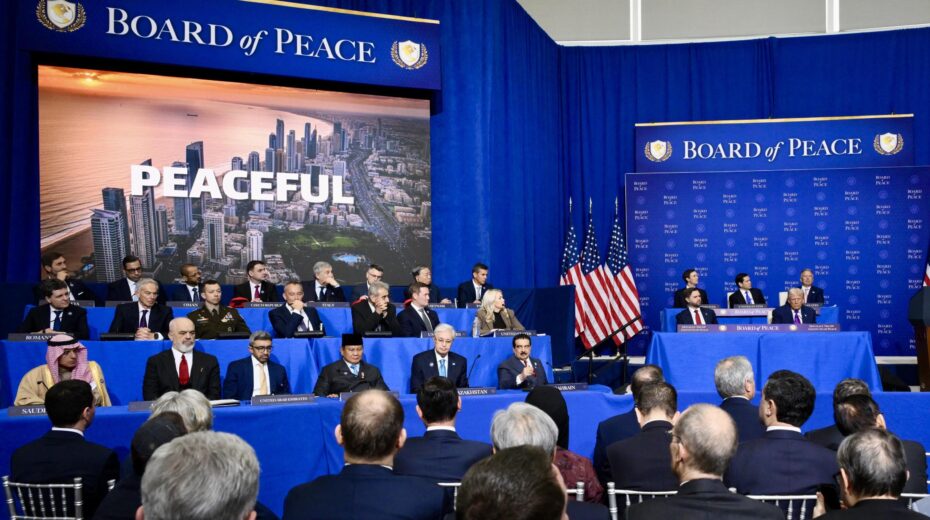
In December 2025, US Secretary of State Marco Rubio affirmed the “enduring strategic partnership” with Qatar, praising it as a “model of peace through strength” while integrating both Qatar and Turkey into the Board of Peace framework for Gaza.
“The Saudis are looking at Qatar and Turkey, and they’re seeing the Americans embrace them without any demand for good relations with Israel, and they don’t see why they should play by different rules,” Inbar explained.
Additionally, the prospect of a US-backed nuclear program for the kingdom has lost its potency as a normalization incentive. While the two nations signed a civil nuclear cooperation deal in late 2025, the US has maintained a rigid standard on nonproliferation. US Energy Secretary Chris Wright confirmed that “uranium enrichment is not included in the deal,” flatly rejecting a core Saudi demand.
With Washington signaling that nuclear concessions are off the table, MBS has less reason to offer the political “grand bargain” of normalization. “The Saudis are disappointed with the lack of success in convincing the US to allow them to develop their nuclear options,” Inbar noted.
“The Americans have clearly shown that they’re not willing to give the Saudis what they want, and the normalization process is partially frozen because of that,” he added.
Future trends
Fredman noted that although multiple factors are currently standing in the way of normalization in Saudi Arabia, there are also significant pressures pushing them away from the radical Sunni bloc.
“I don’t think we should overstate the case. I don’t think that Saudi Arabia is going to enter a long-term alignment with states that have established ties with the Muslim Brotherhood,” he explained.
“They may have tactical alignment with countries like Syria or Turkey, but there’s also deep and long-held suspicion between these countries,” he added.
Fredman went on to say that if he had to project long-term, Saudi Arabia was likely to stay within the “more Western, more moderate wing of the Middle East.”
Regardless of future Saudi disposition toward normalization, he said Israel needed to prioritize security needs. “In the post-Oct. 7 world, Israel needs to first ensure the safety of its citizens.
“The Abraham Accords are very important, and peace with Saudi Arabia would be wonderful, but Israel can’t take major risks or make security concessions even at the price of regional normalization,” Fredman said.
Inbar expanded on this point, noting that the value of normalization with Riyadh should not be overstated. “A Saudi embassy in Tel Aviv is not worth nuclearization. It’s not so terrible to freeze the normalization process if the Saudi demands are too much,” he said.
“In any case, you have business going on under the table, so economic development is ongoing. Israel should be pragmatic and not give more on normalization than what it’s worth,” he said.
Want more news from Israel?
Click Here to sign up for our FREE daily email updates