(Israel Hayom) Israeli officials believe that the head of the Popular Forces militia in Gaza, Yasser Abu Shabab, was killed on Thursday as the result of an internal dispute.
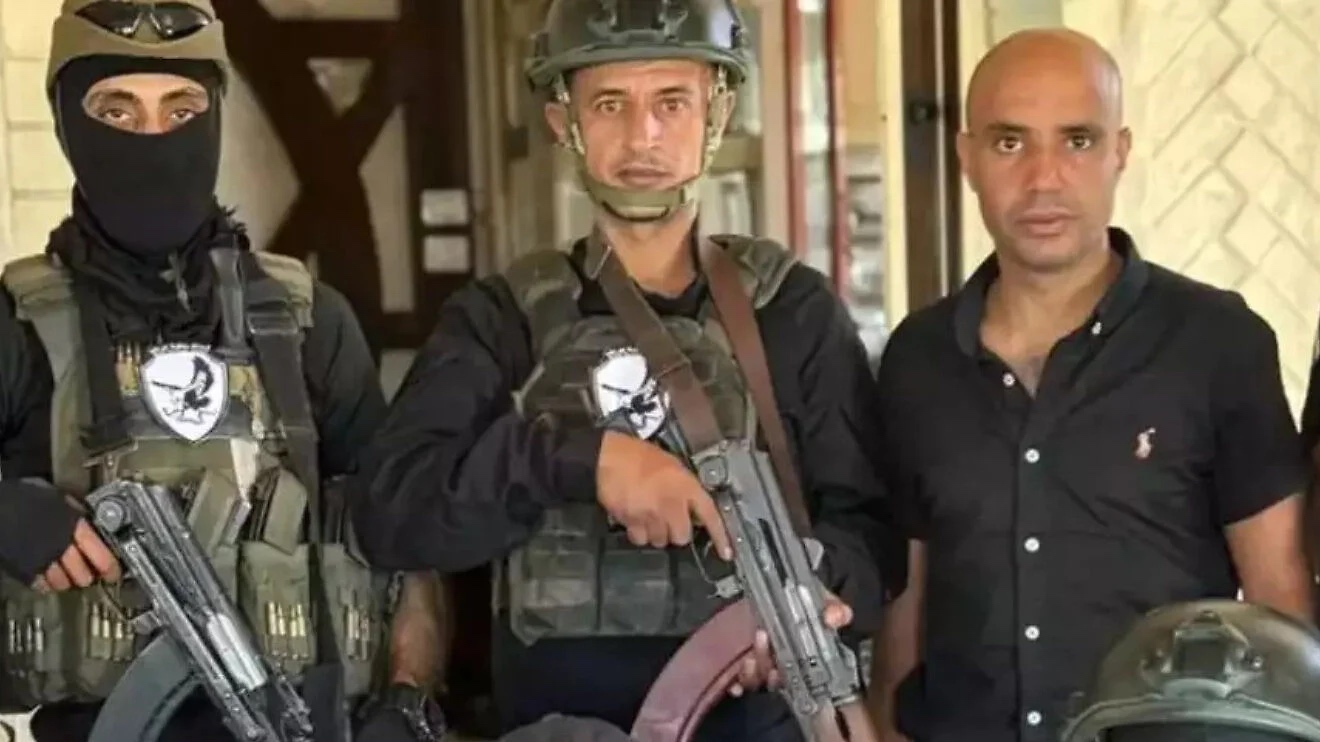
Abu Shabab led the first militia in Gaza established with Israeli support during the war against Hamas. He had two deputies who managed the organization’s main divisions—Rasan Duheyn, responsible for the gunmen and the military infrastructure, and Hamid al-Sufi, overseeing the civilian system. They may now share leadership of the militia following Abu Shabab’s death.
For now, there has been no official announcement, and contradictory reports are circulating in Gaza regarding the circumstances of Abu Shabab’s death. Some claim that a fighter who recently joined the militia was the one who attacked Abu Shabab. Hamas supporters expressed open glee and said this is the “fate of every spy and traitor.”
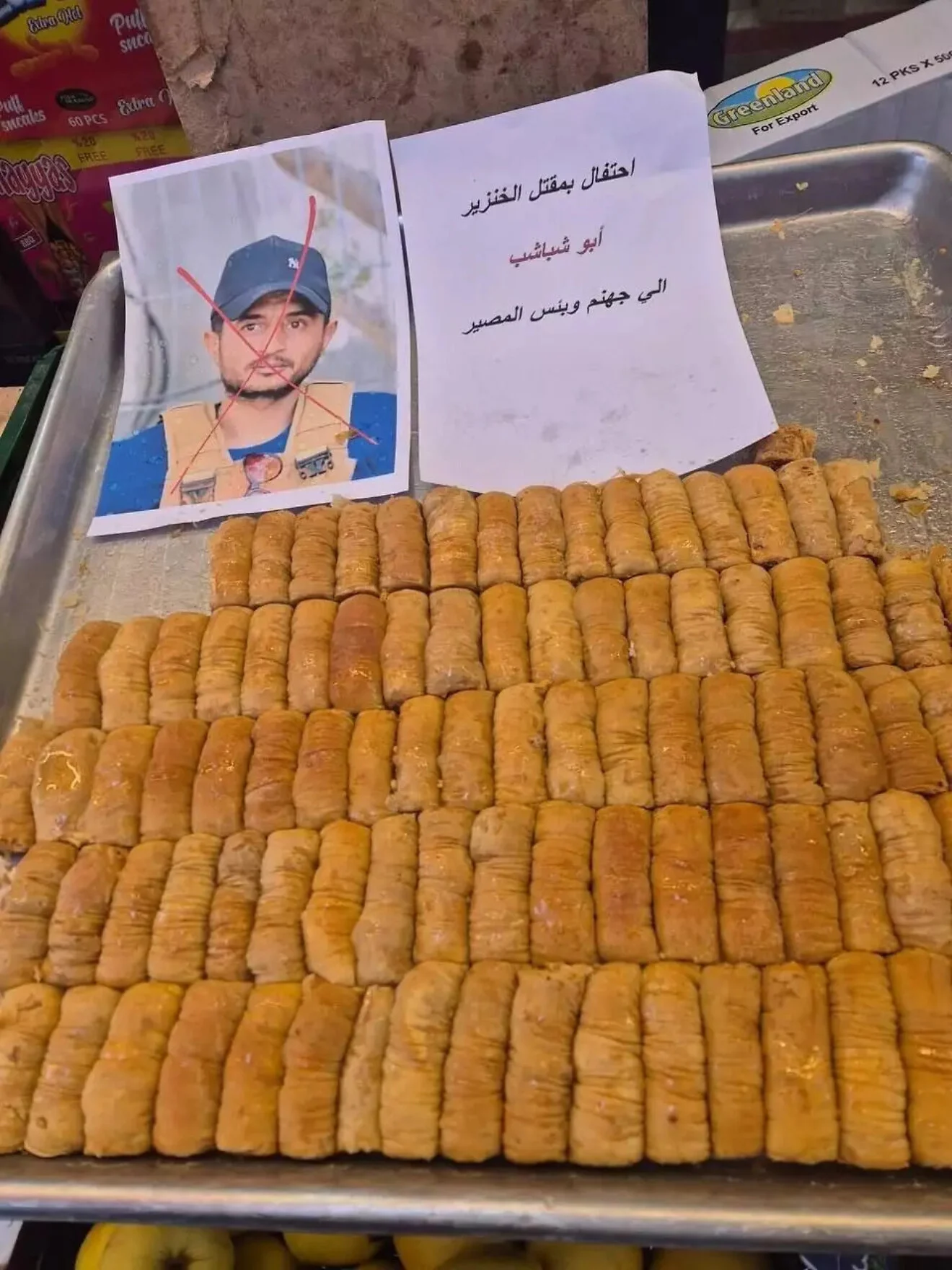
In Ain al-Hilweh in Lebanon, residents distributed baklava to celebrate reports of Yasser Abu Shabab’s death. Source: Arab social media.
In the Palestinian camp in Ain al-Hilweh, near Sidon in Southern Lebanon, residents distributed baklava upon reports of Abu Shabab’s death, saying they were celebrating the “killing of the pig Abu Shabab and his descent to hell and a bitter fate.”
Yasser belonged to the Abu Shabab clan, which is part of the Tarabin tribe, one of the largest Bedouin tribes in the region with tens of thousands of members. Some in the tribe cooperated in the previous decade with the Islamic State terrorist organization in the smuggling industry between Gaza and Sinai, in which Hamas was also a major actor. Abu Shabab himself lived in Rafah and was involved in illegal trade. Because of this background, he was often described as a former drug dealer.
Hamas previously arrested Abu Shabab on suspicion of criminal activity and sent him to prison. During the war, he managed to escape from a Hamas prison and settled in Rafah. There, in cooperation with Israel, he established a militia known as the Popular Forces.
In response to accusations that he had stolen aid supplies, Abu Shabab accused Hamas of seeking the continuation of mass looting. He also boasted that he had succeeded in securing international aid for the area under his control in eastern Rafah.
The militia he created included hundreds of armed men and, in its first months, also set up a civilian infrastructure. This included a school, a mosque and a communal kitchen used by members of the group. Video from the school highlighted efforts to teach students values of peace and tolerance. Abu Shabab often spoke of his desire to establish an alternative government to Hamas.
In recent months at least four additional militias have been formed in Gaza using the same model. They are led by men formerly associated with the security apparatus of the Palestinian Authority.
Originally published by Israel Hayom.