

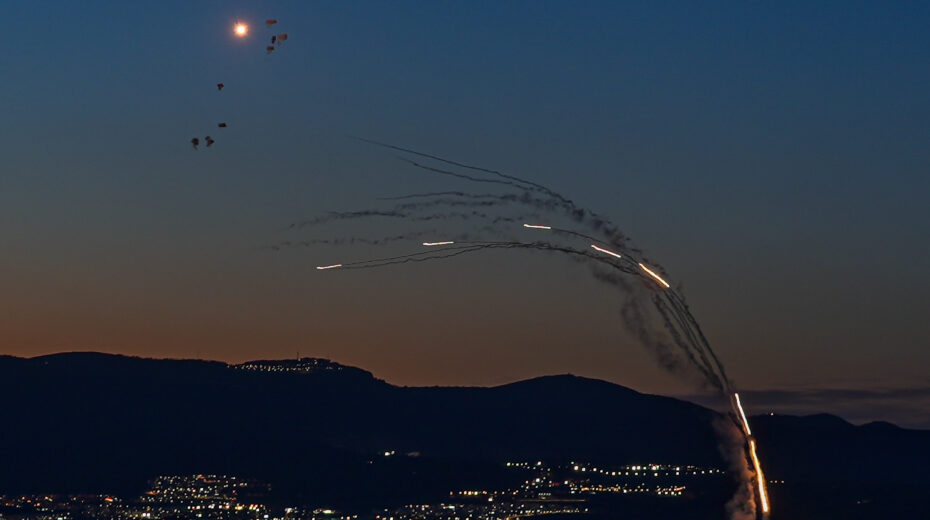

Many Western politicians seem to have lost touch with reality when they believe that conflicts and wars can be resolved purely through diplomacy and endless negotiations. Sometimes it even appears as though they regard the logic of “turning the other cheek” as a splendid foreign policy strategy. When a pope preaches this, it is consistent and understandable—it is part of his mandate. “We humbly raise our prayer to the Lord that the roar of bombs may cease, that weapons fall silent, and that space may open for dialogue in which the voices of the people are heard,” said Pope Leo XIV on the eighth day of the war before thousands of people during the midday prayer in St. Peter’s Square. It is well-intentioned, but it is guaranteed to fall on deaf ears among those who want to destroy Israel—and among Israel itself.
To transfer this attitude one-to-one to security policy decisions is a dangerous oversimplification and biblically incorrect. The sentence from the New Testament—“If someone strikes you on the right cheek, turn the other to him as well”—is a moral imperative for the individual, not a handbook for states that must protect their citizens.
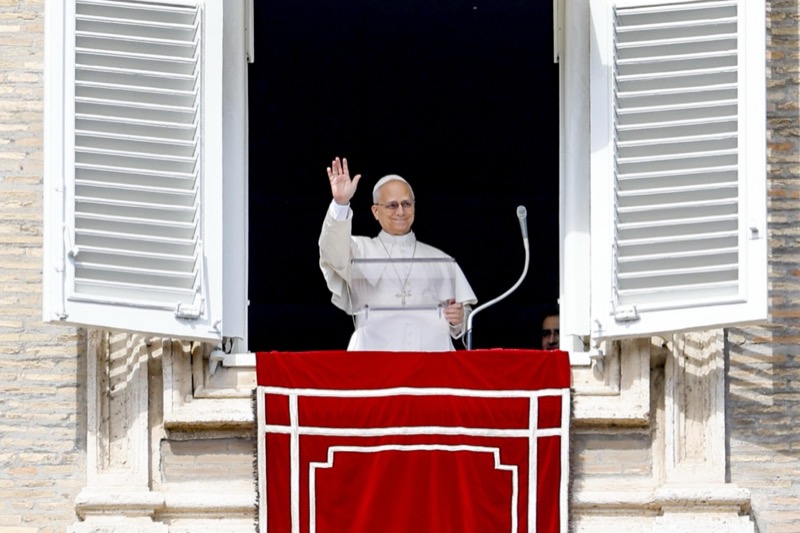
Pope Leo XIV praying the Angelus at the window of his study overlooking St. Peter’s Square in the Vatican, March 8, 2026 – a call for peace and dialogue amidst war. Photo: EPA/Fabio Frustaci.
The notion that a regime like that of the Iranian mullahs or its terror militias could be brought to insight through concessions completely misjudges reality. For such enemies, restraint is not a sign of greatness, but of weakness—and thus an invitation to escalation. You know what? Europe itself is in conflict with Russia. Perhaps it would be appropriate for Europe to show us how this logic works. Should Europe first “turn the other cheek” to Vladimir Putin, and then we’ll follow suit?
“Turning the other cheek is a Christian dogma and therefore completely irrelevant to us.” In the Israeli media, this concept is often met with a mixture of incomprehension and contempt—and for good reason; it is a moral mirage. People say to themselves: Why should we adopt an ethic that its own adherents have never practiced? The history of Christian peoples is a chronicle of crusades, colonies, and wars of annihilation, not of gentleness. Anyone who demands that Israel not return the blow is calling for a moral standard that they themselves have not met a single time in two thousand years. We refuse collective suicide in the name of a virtue that exists in the West only in Sunday sermons, while here we fight for our existence from Monday to Saturday. In recent years, this theme has surfaced repeatedly, as Israel has been repeatedly asked to turn the other cheek to the Palestinians, now to the Lebanese, and to the Iranians as well.
The latest statement by Canada, France, Germany, Italy, and the United Kingdom reveals a familiar problem: They speak of “deep concern” and call for negotiations, but the focus is almost exclusively on Israel. Warnings are issued about an Israeli ground offensive, about its “devastating consequences,” about a “prolonged conflict.” What is equally striking is what is missing: No clear word about Hezbollah’s rocket attacks. No indication that Israel is even under fire in the first place—and on orders from Tehran. What are these clever folks indirectly saying? That Israel should hold back while being attacked. That Israel’s reaction is more problematic than the cause.
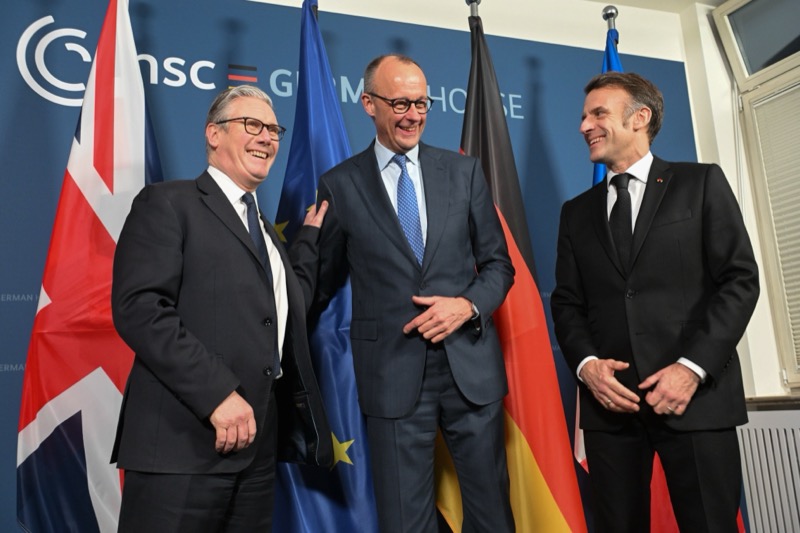
Der britische Premierminister Keir Starmer, Bundeskanzler Friedrich Merz und Frankreichs Präsident Emmanuel Macron beim E-3-Treffen auf der Münchner Sicherheitskonferenz, 13. Februar 2026. Foto: EPA/Thomas Kienzle.
One gets the impression that parts of the West live in a political parallel world where they believe violence can be defeated with a Christian motto. But these standards always apply only to one side—Israel. Why is a democratic state confronted with moral appeals for restraint, but not the Shiite terror militia and the mullah regime actively driving the conflict? Why does the language of de-escalation and restraint almost exclusively target the one defending itself, and not the one attacking? This is precisely where the political and spiritual imbalance of European governments reveals itself.
The Western world, especially Europe, has been spoiled by decades of peace and has apparently declared this state the norm. War is seen as something outdated, as a deviation that can be corrected with words. Entire generations have grown up in peace and in the process have lost a piece of their sense of reality. In addition, many European governments are built on liberal and humanitarian values that have historically been strongly shaped by the New Testament—such as love of enemies, mercy, “turning the other cheek.” These principles have their place in domestic policy and social interaction, but they are increasingly being transferred to geopolitical conflicts. People believed that openness and moral stance could create stability—for example, also in migration policy—carried by the idea of acting like the merciful Samaritan.
But the world does not consist solely of the last 80 years since World War II. History and the present show that wars are not decided by well-meaning ideas. There are no examples of states winning conflicts by turning the other cheek to the aggressor. I also know of no Christian nation that has won wars with sweet words. Who can prove to me that “turning the other cheek” is the best war strategy? And yet this insane idea keeps popping up precisely when it comes to Israel.
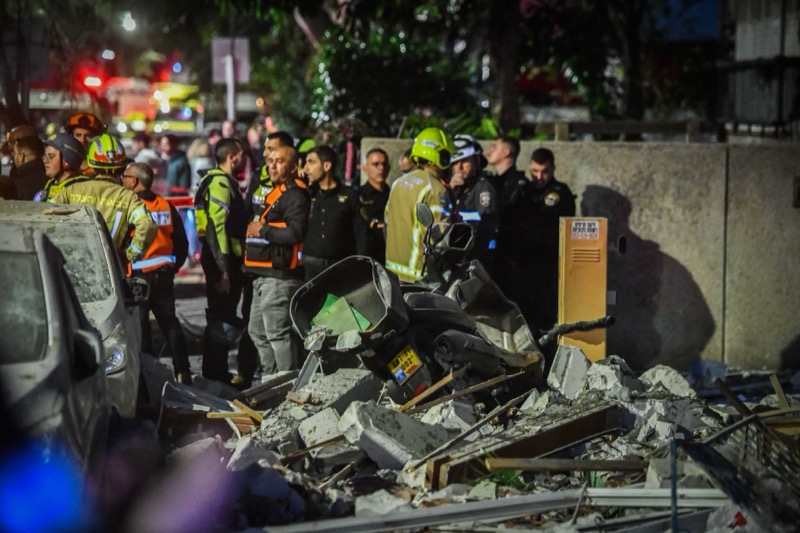
Ramat Gan bei Tel Aviv nach einem iranischen Raketenangriff: Zwei Menschen wurden getötet, Wohnhäuser schwer beschädigt. Foto: Avshalom Sassoni/Flash90.
Europe plays the liberal admonisher, gives speeches about values, and at the same time avoids the risks that would be necessary to defend them. Meanwhile, Israel bears the real, often life-threatening consequences. One can argue about this. I don’t. I view reality through the only lens that counts for Israel: its existence. And at this moment, Israel is defending not only itself but also the biblically shaped values on which the West was once built. Europe, on the other hand, has not only lost the courage to protect these values but increasingly also the understanding of what they actually mean.
In the end, an uncomfortable truth remains: Wars are not decided by fine-sounding words, but by the willingness to acknowledge reality. Anyone who believes that ideologically motivated enemies can be appeased with moral appeals confuses wishful thinking with strategy. “Turning the other cheek” may be a noble idea, but on the battlefield it is not a sign of greatness, but a risk that others pay for with their lives. Moreover, this idea is incorrect in the biblical sense. I often turn the “other cheek” to my neighbor by deliberately reacting differently than he expects—not out of weakness, but out of inner strength and clarity. This, as long as he does not want to kill me. States that want to protect their citizens cannot afford to linger in this illusion.
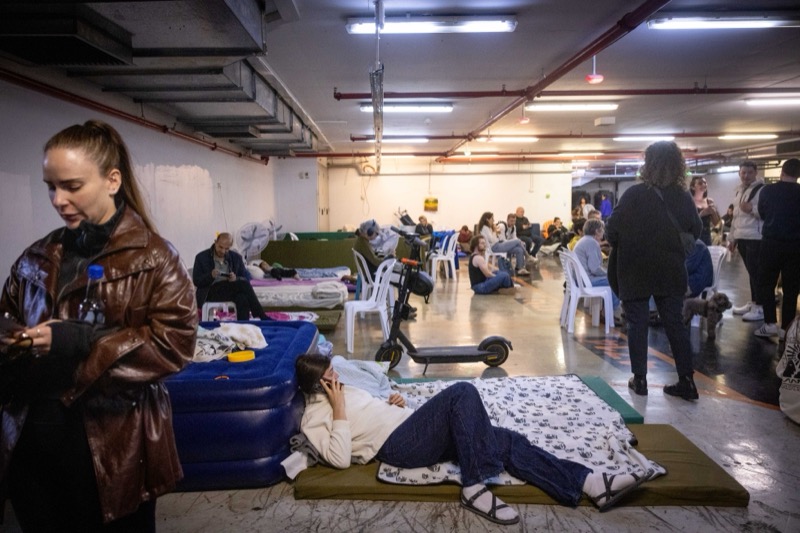
Israelis suchen Schutz in einer Tiefgarage, während Sirenen vor anfliegenden Raketen aus dem Iran warnen – Alltag im Schatten des Krieges, 15. März 2026. Foto: Miriam Alster/Flash90.
Especially in the Middle East, the rule is: Weakness is not read as virtue, but as an invitation. Whoever does not deter will be challenged. Whoever does not react loses the initiative. And whoever believes that violence can be replaced by words will sooner or later be overtaken by reality. Perhaps this is the real imbalance of our time: that parts of the West are trying to apply a moral language to a world that has long since returned to the old rules: power, deterrence, and survival. The decisive question, therefore, is not whether one believes in peace. But whether one is willing to create the conditions under which peace is even possible at all.





I absolutely agree. In fact, the Bible says that when Jesus returns in the end times he will dissolve entire armies with a word. He is not exactly the pacifist that he is portrayed to be usually. A book I read recently, Understanding the Difficult Words of Jesus by Biven and Blizzard, argues that the “turn the other cheek” teaching had to do with personal relations and not to law enforcement or war. In addition, the commandment not to murder was mistranslated as “do not kill”, leading to an unhealthy dichotomy in Christianity where the people who protect people like the Pope (law enforcement, military, etc.) don’t go to heaven but just do the dirty work to protect the elites. Maybe that is why Islam is over-running Europe and the United States, to a lesser degree. Maybe the ivory tower types should consider that Jesus was physically descended from King David who was a man after God’s heart but was a very successful warrior. I believe Israel is doing exactly what God wants them to do by defending themselves with his help.