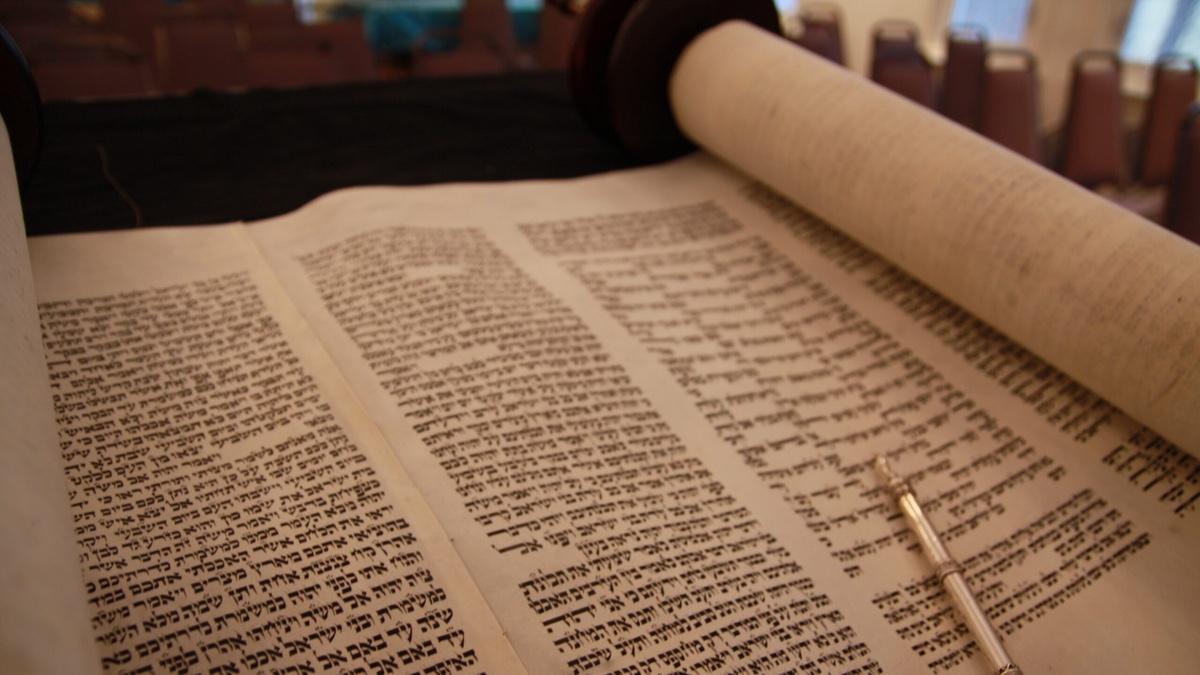
On the road to Emmaus, Yeshua met with two of His disciples and, beginning at Moses and all the Prophets, He expounded to them in all the Scriptures the things concerning Himself. (Luke 24:27). For our Torah studies this year, therefore, week by week we will seek to discover how all of Torah prepared the way for the coming Messiah.
6th December 2025 (16 Kislev)
Vayishlach (And he sent): Genesis 32:3-36:43
As we consider Jacob’s struggles in this portion of Scripture, it is important to remember the context. Human history had only gone forward five to six hundred years since the Great Flood at the time of Noah The first clear stage of the covenant purposes of God were revealed when the sign of the rainbow was given to Noah – God would no longer judge the world in the same way. The nature of human beings was not changed but a plan of redemption began. It should not be a surprise that Jacob struggled in many ways on his journey through life.
Human history is short. The time from the Flood to our day, is only a few thousand years. We too should not be surprised at continuing struggles for all who live in this world which has suffered the consequences of the Fall of Adam and Eve. There is, therefore, much for us to learn from Jacob’s walk that helps us to understand our own walk.
After Laban had pursued him from Padan Aram, there was no way back, following the covenant made between Jacob and Laban at the rock named Galeed. The way forward was also filled with potential peril, because Esau would soon appear with four hundred men to carry out the threat to Jacob’s life, made before Jacob left his home to travel to Padan Aram just over twenty years previously. Jacob was at a crisis, and if that was not enough, God took the opportunity to send an angel to wrestle with him through the night at Peniel.
A victory was declared in Jacob’s life. He had struggled with God and with men and prevailed (Genesis 32:28). Jacob recognised that this was an encounter with God. It may not seem like a great blessing in human terms when, from then on, he was to walk with a limp, but this was a major milestone in his walk of faith. It was necessary for his responsibility relating to God’s continuing covenant purposes. From now on his new name, Israel, defined the character of both him and his children that would soon grow into a great nation, denoting one who struggles with God and who is a prince with God.
As it happened, the feud with Esau dissolved away and the brothers were reconciled, later burying their father Isaac together, then going on to dwell in different areas of the country.
Nevertheless, Jacob’s struggles did not end with the wrestling near the brook Jabbok at Peniel. The way his daughter Dinah was treated by Shechem the son of Hamor the Hivite, which provoked Jacob’s sons Simeon and Levi to slaughter all the males in Hamor’s city, heaped trouble on trouble. Jacob also lost his beloved wife Rachel during the birth of her second son, Benjamin. One may be chosen by God for His covenant purposes but this does not necessarily lead to an easy life on the journey through this troubled world.
There is an important theme in our study this week which is easy to miss. Horrendous though the slaughter of Hamor’s community was, a problem was averted that has arisen many times over in the life of the nation, Israel. Either by resisting assimilation with other nations or through warfare, there has been a constant struggle to retain identity. Shechem’s fascination for Dinah, at that time, was potentially the beginning of a seduction that would have caused intermarriage between Jacob’s family and the tribes of Canaan at that very early stage of God’s purposes. This would have ended their distinct call to be the identifiable covenant nation that God intended – a struggle that has beset every generation of Israel since then.
In this context, it is interesting that we have an entire chapter devoted to the family of Esau. Thankfully, Esau did not inherit the covenant blessing given by his father Isaac. He took wives from the surrounding nations and was all too ready to sell his birthright. That would surely have resulted in assimilation of Isaac’s family, if Esau had become the head of the covenant family.
In this world, such has been the continuing nature of the struggle for Israel’s identity. In all of the conflicts we can find imperfection from Israel in the struggle but that is the nature of this fallen world. The sadness for Israel’s constant suffering is echoed in Jeremiah 31. This is the chapter which contains God’s compassion for Israel and the heart-rending passage which recalls Rachel’s sorrow:
A voice was heard in Ramah,
Lamentation and bitter weeping,
Rachel weeping for her children,
Refusing to be comforted for her children,
Because they are no more. (Jeremiah 31:15)
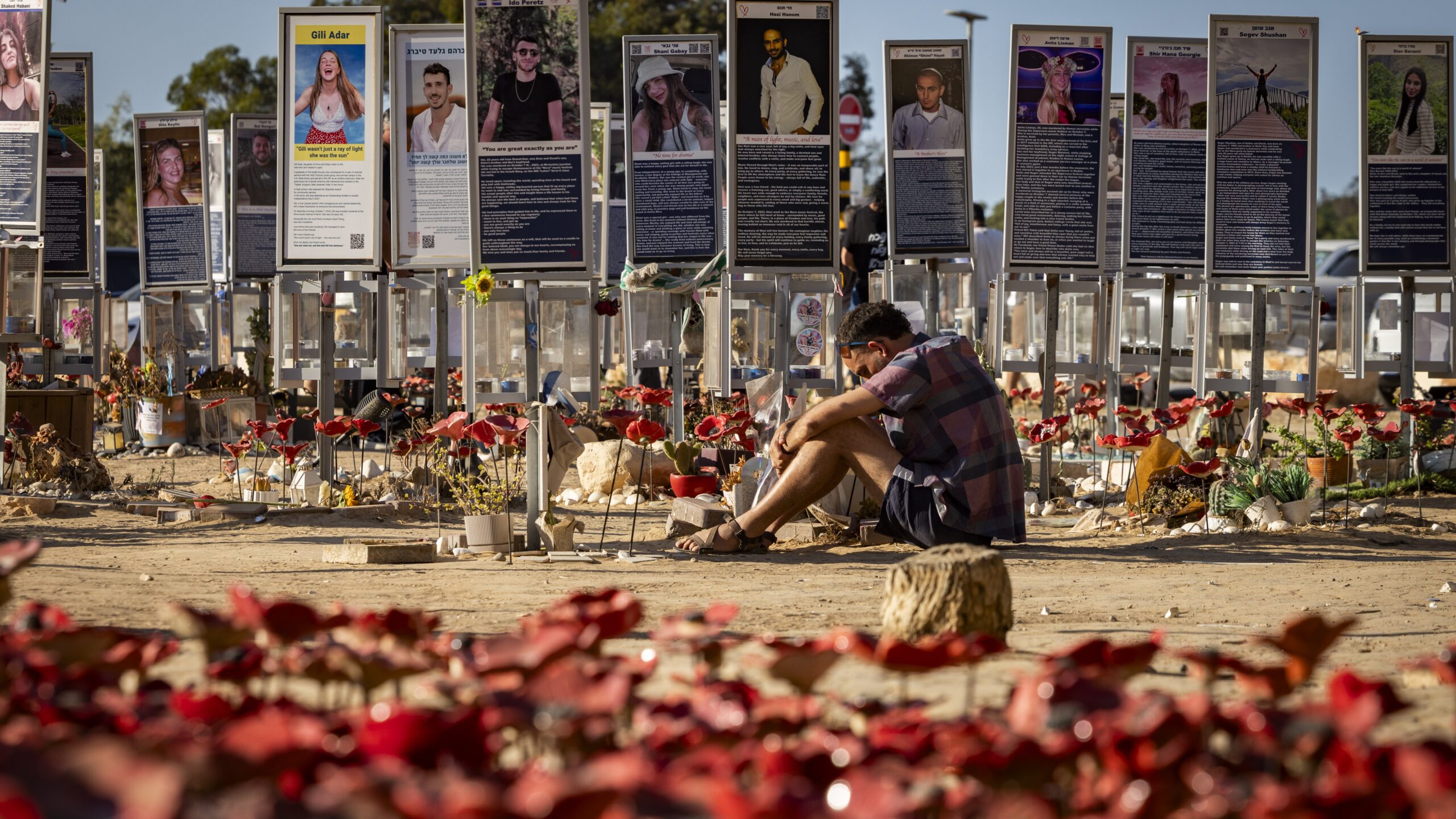
That was loud lamentation indeed, for the sound to be carried from her tomb in Bethlehem to Ramah, in the hills where Samuel lived. That weeping also echoes through the centuries of struggle even to the present day, with still recent remembrance of the horrific holocaust. Yet, God’s faithfulness continues to our day through all the wrestlings of Israel’s life. The nation is back in the Land once more, fulfilling God’s promises in Jeremiah 31.
No wonder the modern day song Am Yisrael Chai, עם ישראל חי (the nation of Israel lives) is so meaningful.
Also in Jeremiah 31 is the promise of the New Covenant, whose power was released through Yeshua Hamashiach at His sacrifice, bringing multitudes into the covenant promises of God, now possible for Gentiles as well as natural descendants of Israel. Gentiles, grafted into the Israel of God, now share in the blessings of Abraham (Galatians 3:14).
Yet the struggle goes on. Everything must be tested. We live an Hebraic faith – learning through life’s walk and not through academic theology. Every one of God’s covenant family has his or her times of struggle which can be paralleled with Jacob’s wrestling at Peniel. Jacob would have surely endorsed the Apostle Paul’s understanding of God’s way of both testing and refining our faith:
…we also glory in tribulations, knowing that tribulation produces perseverance; and perseverance, character; and character, hope. (Romans 3:5)
Paul also understood that in the bigger picture there is a massive spiritual battle against an enemy whose sole intent is to destroy God’s people:
For we do not wrestle against flesh and blood, but against principalities, against powers, against the rulers of the darkness of this age, against spiritual hosts of wickedness in the heavenly places. (Ephesians 6:12)
In the physical line of descent from Abraham, Isaac and Jacob came Yeshua the Messiah. In Matthew’s Gospel, Chapter 3, we read of Yeshua coming to the Jordan river to be baptised. As he immersed Himself in the waters for baptism, He fully identified with those who were immersing themselves as repentant sinners in seeking cleansing and hoping for a place in the eternal Kingdom of God. By His identification, Yeshua committed Himself to the path before Him through to His sacrifice on the Cross and beyond. This was to enable the redemption of the Israel of God and all others from the nations who would be grafted into this nation through faith.
Jacob fulfilled His purpose before God to bring the physical nation into existence through his sons, holding fast to the covenant promise despite the difficulties and struggles on the journey. Yeshua came to fulfil the promise, yet He too was subjected to testing and wrestling with the spiritual powers. In Matthew Chapter 4, we read how immediately after His baptism He was led up by the Spirit into the wilderness to be tempted by the devil. And when He had fasted forty days and forty nights, afterward He was hungry. Now when the tempter came to Him…..
Three times satan came to Yeshua to challenge Him with a clever but distorted use of Scripture, which Yeshua countered with the truth. The final temptation came when satan took Him up on an exceedingly high mountain, and showed Him all the kingdoms of the world and their glory. And he said to Him, “All these things I will give You if You will fall down and worship me.”
Esau’s birthright comes to mind, sold so cheaply, as does by contrast, all with which the Nation Israel has ever struggled in order to retain their identity and not be lost among the nations who serve false gods. Jacob was once victorious to retain God’s covenant purpose. Yeshua’s victory was greater still, when He dismissed the evil one with a word:
Away with you, Satan! For it is written, ‘You shall worship the Lord your God, and Him only you shall serve.’
What a Saviour!