
(Israel Hayom) Saudi Arabia is reentering the fold and offering to supervise reforms within the Palestinian Authority as a stepping stone toward it assuming responsibility for governance in the Gaza Strip.
The Saudis had recently distanced themselves from the Gaza issue. Riyadh previously announced it would refrain from involvement—including the deployment of troops—as long as Hamas remained in power.
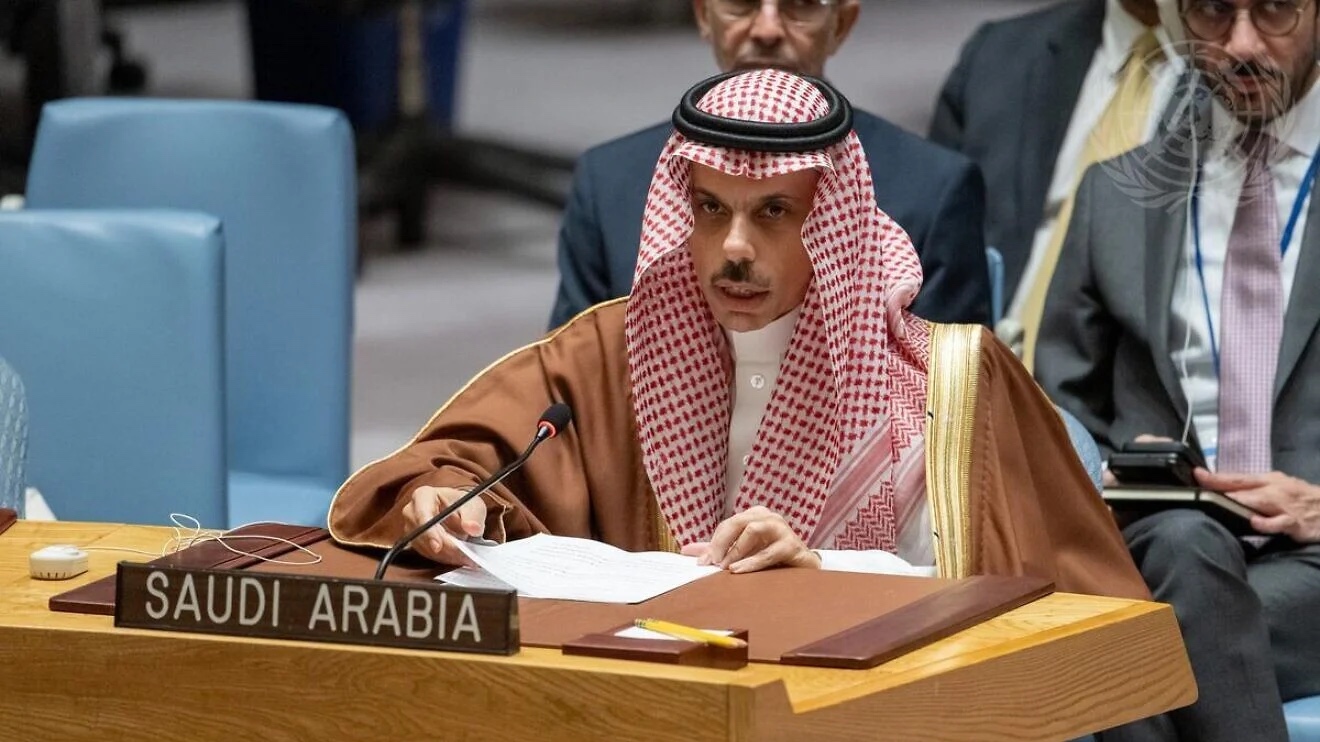
However, that stance is now shifting. Foreign Minister Prince Faisal bin Farhan Al Saud met on Wednesday night in Washington with US Secretary of State Marco Rubio to present a proposal for Saudi engagement in a different mold—accepting responsibility for supervision, or effective patronage, over the PA to ensure it completes necessary reforms.
These reforms are a prerequisite demanded by Israel and the US, as well as Saudi Arabia and the United Arab Emirates, for the PA’s return to Gaza and potentially for the resumption of negotiations.
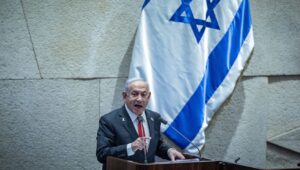
During a press conference at Mar-a-Lago on Dec. 29, Prime Minister Benjamin Netanyahu told Israel Hayom that as long as the Authority fails to meet these benchmarks—which are also outlined in President Donald Trump’s 20-point plan—Israel will oppose its restoration to power in Gaza.
There is another dimension to this maneuver—Saudi Arabia‘s desire to help bring the war in Gaza to a full conclusion and implement the Trump plan. Achieving this would remove one obstacle to the kingdom joining the Abraham Accords.
However, according to Saudi and American officials, such a move has zero chance of success given the composition of Israel’s governing coalition.
The Saudis, notably, were the ones who originally demanded these reforms from the PA. This applies to structural changes—including mechanisms to prevent corruption and streamline operations—as well as measures to distance the body from terrorism, such as the de-radicalization of the education system and mosque preachers.
Pay for slay
Israel and the Americans have demanded the cessation of stipends to terrorists and their families, known as “pay for slay”—payment in exchange for murder. The PA claims it is undergoing a process of change in this area, but it has merely transferred these payments to an external body while ensuring the cash flow continues.
According to an investigation by Lt. Col. (res.) Maurice Hirsch, a senior fellow at the Jerusalem Center for Security and Foreign Affairs, the PA increased payments to terrorists in 2025 despite economic collapse, slashed revenues and international pressure.
The data reveals that while the Authority paid approximately $144 million to terrorists and their families in 2024, it has already committed to $214 million in 2025—and the fiscal year is not yet over. These funds are distributed to the families of imprisoned terrorists, operatives injured while carrying out attacks, and the families of “shahids” (“martyrs”)—terrorists killed during attacks.
Reports surfaced during 2025 that the PA tweaked the payment structure to alleviate international pressure, including shifting some funds to a welfare system based on socioeconomic criteria. Yet payments from the Authority’s budget continue, partially through bypass channels.
Israel seized the estimated value of these terror stipends from the tax revenues it collects on behalf of the Authority, a deduction that exacerbates Ramallah’s budgetary crisis.
According to diplomatic sources, the Saudi proposal addresses this deadlock. The plan suggests that as reforms are implemented in this sector and others, Israel would begin releasing portions of the withheld funds, while the Saudis would provide an incentive grant to help the Authority balance its budget.
Senior PA official Hussein al-Sheikh, the deputy to Palestinian Authority chief Mahmoud Abbas and his potential successor, visited several Gulf states last month, including Saudi Arabia, to present the reform plan.
He warned of the Israeli trend toward “settlement” expansion and requested Saudi assistance on this matter.
The Saudi initiative, which follows the meetings with al-Sheikh, is designed primarily to untie a knot stalling the rehabilitation of the Strip—the governance vacuum.
Currently, there is effectively no agreed-upon governing body, but rather a list of Palestinian candidates slated for senior positions in a new administration. Most are professionals, bureaucrats and white-collar workers, many of whom were previously employed by the PA. Israel Hayom has reported that these lists were transferred to Israel for security vetting to verify they are not linked to terrorist organizations in the Strip.
Egypt, Turkey, and Qatar are promoting the PA’s entry into the Strip even before reforms are enacted. The Egyptians, among others, have declared that Authority personnel, including security forces, will operate the Rafah crossing on the Palestinian side. Cairo argues there is no other body with the legal authority and practical capacity to do so.
Furthermore, the Egyptians are advancing a proposal where Hamas would hand over its weapons to PA forces under the principle of “one government—one gun.” In the Egyptian view, this would also solve the problem of demilitarizing the Strip.
Israel opposes integrating the Authority at this early stage prior to reforms. Jerusalem also rejects any scenario where Hamas weapons are handed over to PA personnel.
The position of the United Arab Emirates is noteworthy. It does not support the Saudi move, primarily because the implementation of reforms appears particularly distant. The Emirati leadership has refused to provide an incentive grant to the PA at this stage, conditioning any aid on the rapid advancement of reforms—specifically regarding payments to terrorists and changes to educational curricula.
The UAE leadership continues to pursue a policy distinct from the rest of the Arab states—and also from Saudi Arabia, with which it has recently experienced friction in several sectors, mainly in Yemen.
Originally published by Israel Hayom.