



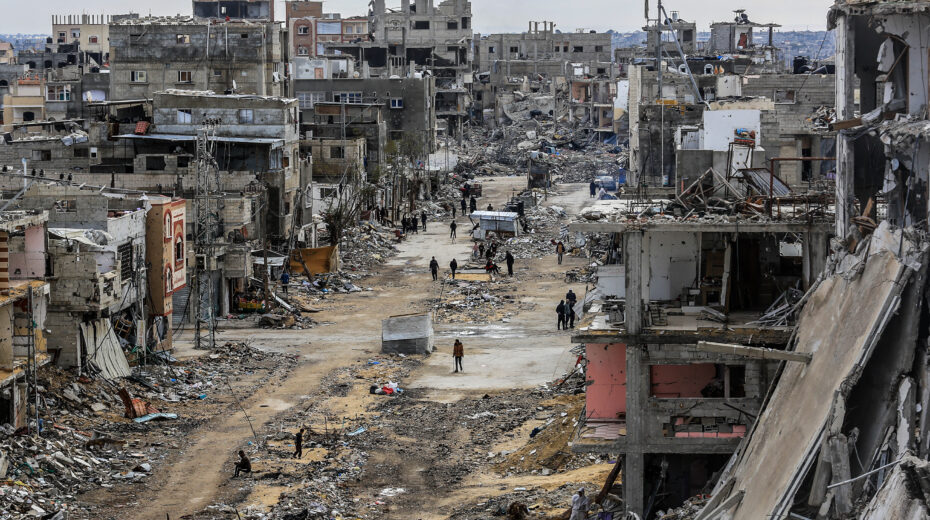
Tensions flared at Israel’s Cabinet meeting on Sunday night as multiple ministers sharply criticized the government’s approval of a partial reopening of the Rafah Crossing—part of a broader American-backed plan to transition Gaza governance without dismantling Hamas by force.
The fiercest rebuke, according to a report by Israel’s N12 news portal, came from National Security Minister Itamar Ben-Gvir, who accused US envoys Jared Kushner and Steve Witkoff of indulging in “naivety.”
“We did great things like killing tens of thousands of terrorists,” Ben-Gvir said during the meeting. “But we have not yet completely destroyed Hamas, and we must dismantle and disarm it. Enough with the naivety of Kushner and Witkoff—if the Rafah crossing is opened, it will be a big mistake and a very bad message.”
Finance Minister Bezalel Smotrich echoed the concern, warning that any governance plan that does not include full Israeli military control would effectively lay the groundwork for a Palestinian state in Gaza. “If we do not control there with military rule—the meaning is that we will get a Palestinian state,” he warned.
Minister Orit Strook issued a stark moral challenge to the room: “We are handing Gaza over to the Palestinian Authority with the blood of our children. This cabinet will ultimately make a decision to send our soldiers to fight Hamas because no one else will do it—and then what will we tell them?”
Transportation Minister Miri Regev reinforced the point: “Correct, we must ensure that the rule in Gaza is neither Hamas nor the Palestinian Authority.”
Despite the heated objections, the Prime Minister’s Office later confirmed the cabinet had agreed to partially open the Rafah Crossing “with full Israeli supervision,” framing the move as part of President Donald Trump’s 20-point plan for Gaza’s stabilization.
A senior US official said the crossing would begin limited operations by the end of the week.
But ministers close to the ground remain skeptical that any paper plan—however well-meaning—can succeed without facing the brutal reality: Hamas will not disarm voluntarily, and no external actor is willing to remove it by force.
The question hanging over the cabinet is no longer diplomatic. It is operational: If Israel doesn’t finish the job in Gaza—who will?
Want more news from Israel?
Click Here to sign up for our FREE daily email updates











Obey God! Amalek does not belong within the God given borders of Israel!