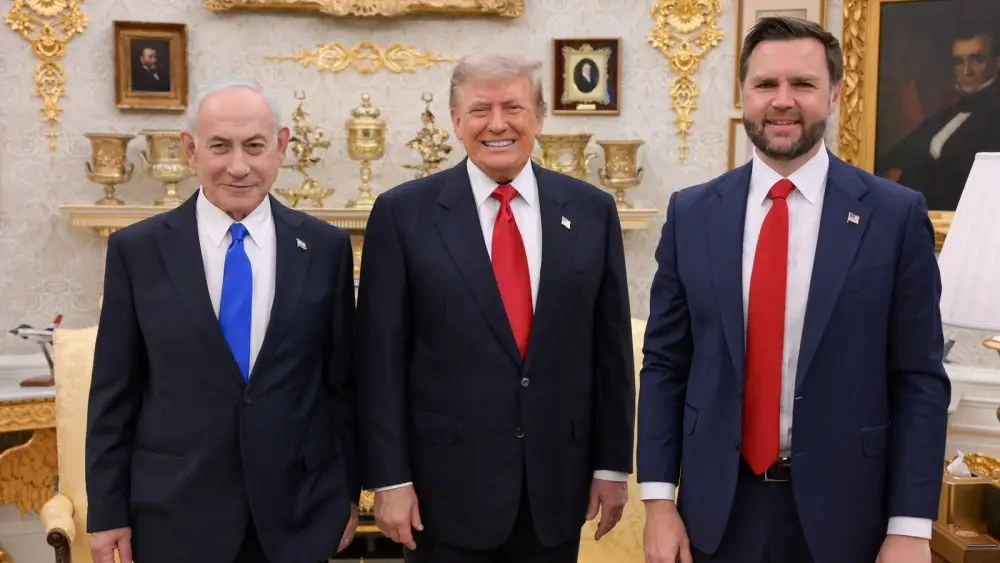
(Israel Hayom) As American forces gather in the Middle East, US President Donald Trump is keeping his threats deliberately ambiguous.
Last week, he said “Iran needs new leadership.” According to reports, he also instructed his team to prepare a “decisive military plan” and was presented with a range of options by the US Department of Defense.
While it is as yet unclear whether such an operation will take place and what its consequences would be, it is possible to identify a target bank among the senior ranks of the Iranian regime. These are primarily the heads of the Islamic Revolutionary Guard Corps and the Basij militia, who have been under Western sanctions for years. Alongside them are several strategic sites that represent vulnerabilities for the Islamic Republic.
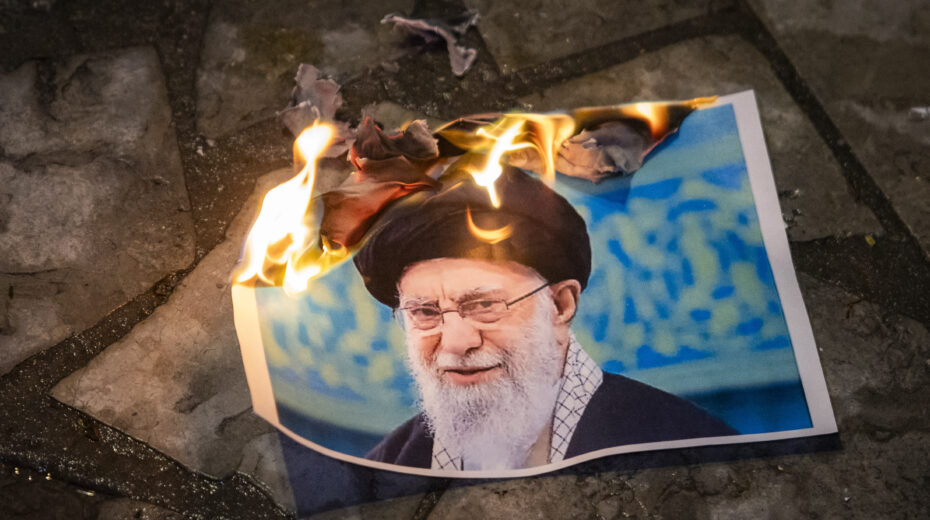
The No. 1 target is Supreme Leader Ayatollah Ali Khamenei, who is responsible for the killing of thousands of civilians. At 86, he has ruled the country for 36 years, dictating its course on the nuclear program, support for terrorist organizations in the Middle East, and the repression of his own people.
The Revolutionary Guards’ top echelon
Despite the façade of a government, parliament and judiciary, Khamenei rules the Islamic Republic through appointments, militias and various other bodies. Even during Iran’s 12-day “Rising Lion” war with Israel in June, he reportedly feared being assassinated, hiding in a bunker in northern Tehran.
On Tuesday, the opposition outlet Iran International reported that he had returned to a shelter in the capital. His assassination would be a major blow to Tehran and could trigger chaos at the top of the regime.
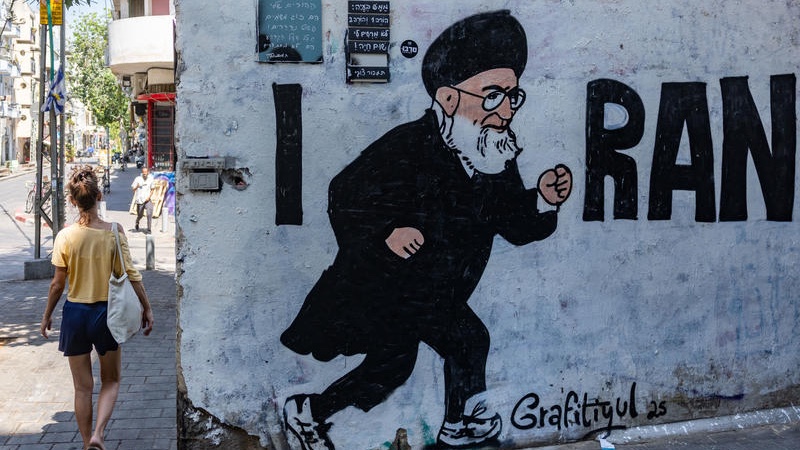
Israeli graffiti in Tel Aviv mocks Ayatollah Khamenei. Photo by Chaim Goldberg/Flash90
However, as far back as the previous decade, reports spoke of a “secret list” of successors from among senior clerics. Time will tell whether such a move materializes and whether another ayatollah takes the reins in the coming years. Many Iran experts assess that it is more likely a military figure from the Revolutionary Guards would rise to power.
Another key target is likely the new commander of the Revolutionary Guards, Maj. Gen. Mohammad Pakpour. Just last week, he warned that his organization had its “finger on the trigger” and cautioned the US and Israel against miscalculation.
The Guards are the central pillar of the regime and number about 190,000 troops. Pakpour was appointed to lead it after the elimination of Iran’s military leadership in “Operation Rising Lion.”
It can be assumed that if he were killed, a replacement would be found, but such a move would deal a moral and tactical blow that would hamper the organization’s ability to respond in the immediate term. At the time, Israeli assessments held that the assassinations at the start of “Rising Lion” prevented a large-scale attack.
Alongside Pakpour are, of course, other senior figures in the Revolutionary Guards and the Islamic Republic of Iran Army (which together comprise the Iranian Armed Forces) who are personally loyal to Khamenei.
These include Maj. Gen. Ali Abdollahi Aliabadi, head of the Khatam al-Anbiya Central Headquarters—the unified combatant command headquarters of the Iranian Armed Forces—appointed after his two predecessors were killed; Army commander-in-chief Maj. Gen. Amir Hatami, who rose through the Basij and was integrated into the military by Khamenei, and Maj. Gen. Abdolrahim Mousavi, chief of staff of the Iranian Armed Forces. Here, too, these are appointments made by the supreme leader.
The man in charge of repression
If the Trump administration is looking to strike the regime’s main instrument of repression, one target is Basij militia commander Brig. Gen. Gholamreza Soleimani. He is not related to Qassem Soleimani, the Quds Force commander who was killed by a US drone at Baghdad International Airport in January 2020.
Gholamreza Soleimani is also under Western sanctions. Since 2019, he has led the civilian militia that is primarily used for the brutal suppression of protests. He previously boasted that his militia has long operated beyond Iran’s borders, with its members deployed to Lebanon, Yemen, Iraq and Syria.
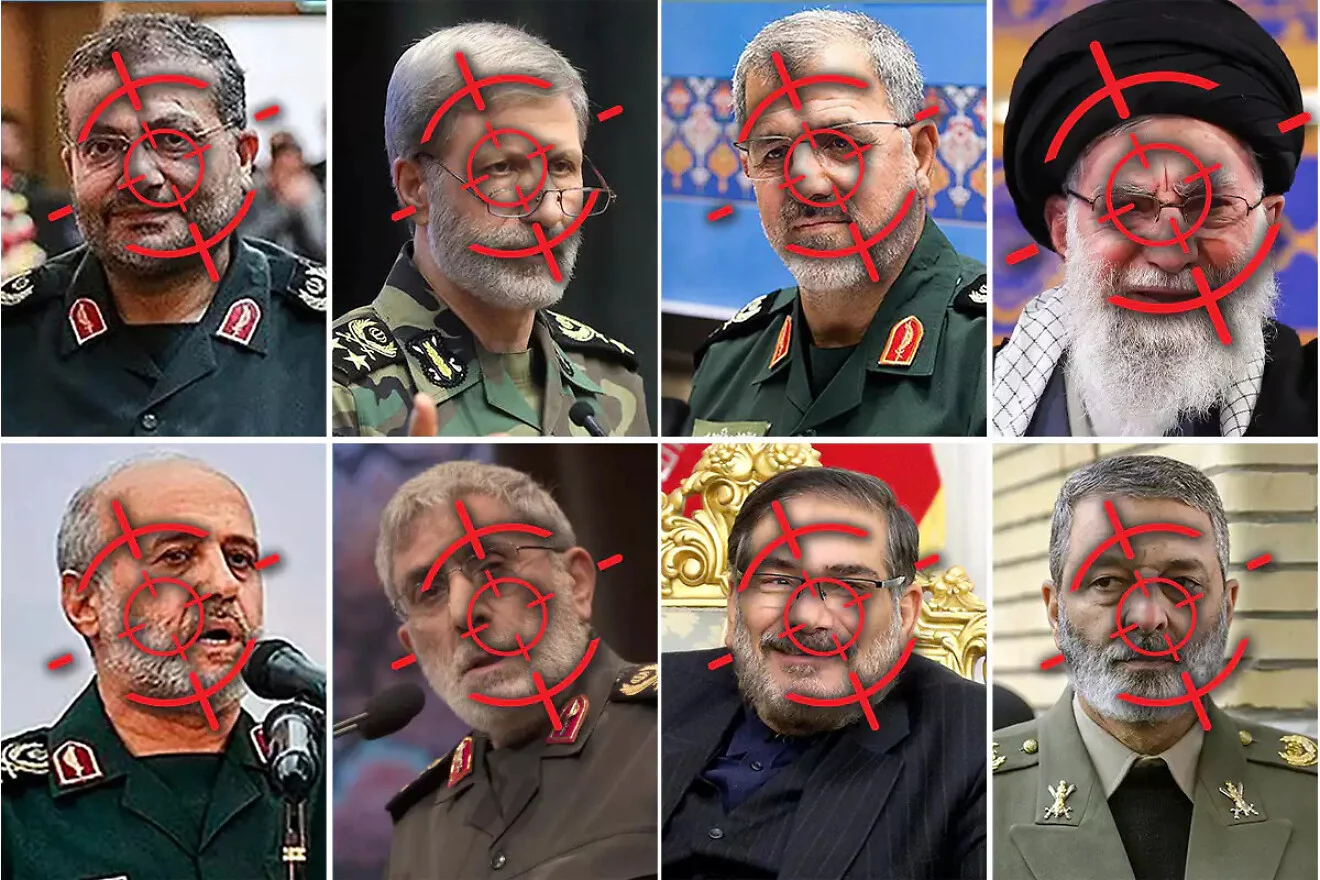
The target bank. Source: Arab networks via Israel Hayom.
Another potential target is Quds Force commander Brig. Gen. Esmail Qaani. He is apparently behind the recruitment of Shi’ite militia operatives from Iraq to suppress protests. Foreign media recently reported that thousands of gunmen crossed eastward over the border to assist the regime. Sometime earlier, Qaani visited Baghdad and apparently held discussions on the matter with militia leaders.
Another figure is Ali Shamkhani, who is described as the head of the nuclear file and one of Khamenei’s closest advisers. He previously served as navy commander and later as the defense minister. During “Operation Rising Lion,” he was wounded in a strike but survived.
Strategic sites as well
There are a number of strategic sites that the US could strike. At the top of the list are government institutions in Tehran, including the headquarters of the Supreme National Security Council, the Basij headquarters, the police headquarters, the Iranian intelligence headquarters and the headquarters of the National Iranian Oil Company.
In addition, there are oil reserves, most of which are located in the west of the country, in Khuzestan Province near the Iraqi border. A highly extreme scenario involving damage to infrastructure could cause the collapse of Iran’s economy, which is already in deep crisis.
Militarily, Iran has in recent months been developing its ballistic missile array and attempting to rehabilitate nuclear sites. During “Rising Lion,” the Israeli Air Force struck a number of launch sites in western Iran.
In recent months, the Washington-based Institute for Science and International Security published satellite images indicating that the regime is carrying out engineering work at a military base in Parchin, about 20 miles southeast of Tehran. The site has, over the years, been linked to the development of the triggering mechanism for a nuclear bomb.
The institute also published a report stating that while Tehran has carried out repairs and maintenance at nuclear sites at varying levels, it is facing difficulties in restoring capabilities.
Still, The New York Times reported this month that the Pentagon presented Trump with an option for a broad and thorough strike on nuclear sites, compared with the strike carried out in the summer. The American official who spoke to the newspaper said that ballistic missile sites are also in the crosshairs.
Originally published by Israel Hayom.