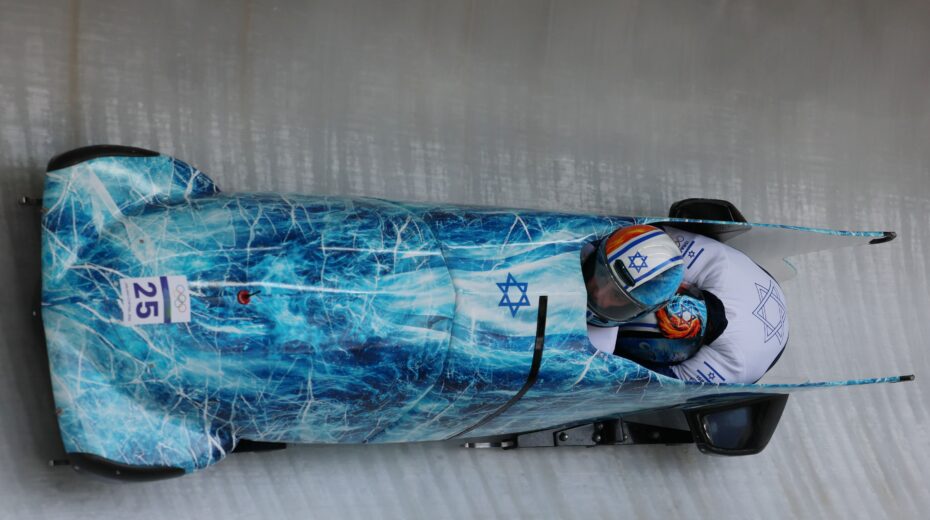

It was just one run down the ice channel in Cortina. Two athletes in the bobsled. Starting signal. Acceleration. Curves. Finish. 26th place after two runs. Sportingly unspectacular. And yet this very moment became a political stage.
During the live broadcast by the Swiss broadcaster RTS, Israeli bobsledder Adam Edelman suddenly found himself in the spotlight not because of his time, but because of a grave political attribution. The commentator literally stated that Edelman had posted several entries on social media “in favor of the genocide in Gaza.” To provide context, he added that “genocide” was the term used by a UN investigative commission for the region. This was no casual remark. It was a massive accusation. At the same time, the commentator quoted a previous statement by Edelman about Israel’s war: It was “the most morally just war in history.”
Edelman publicly stands behind Israel. That is his position. And he expresses it without mincing words. But since when does an Israeli athlete become the subject of a political legitimacy check during an Olympic race? And why does this happen specifically with Israel? In this context, the commentator referred to IOC rules applied after Russia’s attack on Ukraine. Athletes who actively supported that war were accordingly not eligible to participate. The implicit parallel was obvious.
Commentator Stefan Renna on Swiss public broadcaster RTS sparked controversy during Israeli captain AJ Edelman’s second bobsleigh run at the 2026 Winter Olympics in Milan-Cortina, bringing up Edelman’s past social media posts supporting Israel’s genocide in Gaza, including one… pic.twitter.com/TenlLtbRiw
— Drop Site (@DropSiteNews) February 17, 2026
Here lies the core of the problem. It was not the athletic performance being judged, but the political legitimacy of an Israeli athlete. While he was racing down the ice channel in his bobsled, he was effectively dragged into a moral debate about the Gaza war. RTS later removed the segment from its media library and stated that the comment was inappropriate in the context of a sports broadcast. The International Olympic Committee clarified that statements by individual journalists did not reflect its position. Israel’s Minister of Culture and Sports, Miki Zohar, demanded a clear condemnation of the remarks.
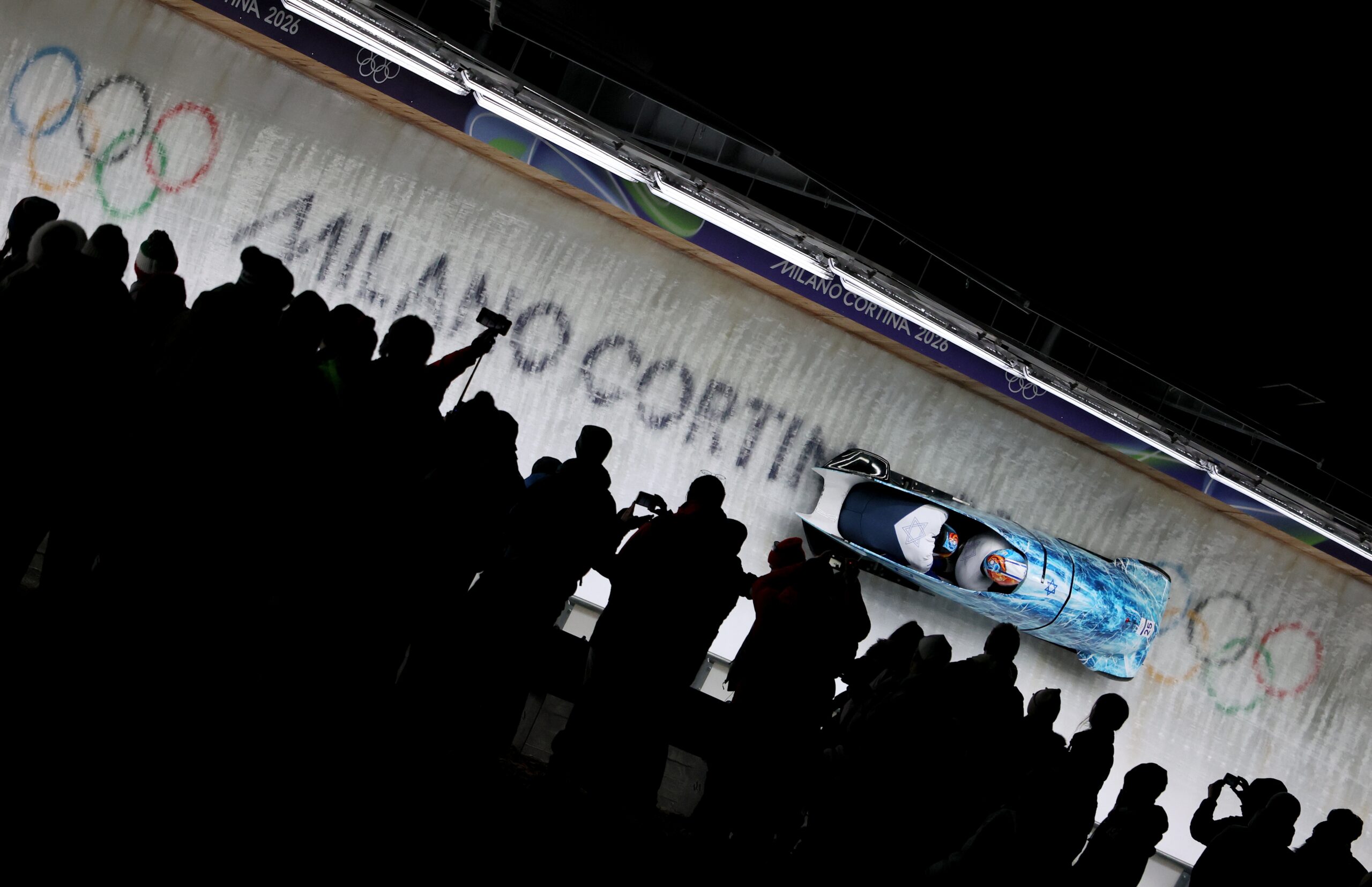
26th place after two runs. Unspectacular from a sporting perspective – but the focus wasn’t on his time in the ice track, but rather the political debate surrounding the Israeli athlete. Photo: EPA/Andrea Solero.
The incident raises a fundamental question: Why is it enough for an Israeli athlete to publicly stand behind his country to trigger a debate about his participation? Why is his stance immediately politicized, while athletes from other nations are primarily perceived as athletes? Sport has never been free of politics. But there is a difference between political reality and political labeling. When the term “genocide” is used during a competition and attributed to an athlete as support for it, the framework of sporting commentary is abandoned.
The ice channel in Cortina is calm again. The race is recorded. The Olympic Games are meant to connect. But connection requires fairness. And it is precisely here that it will become clear whether sport can still be sport—or whether Israel will be declared a special political case even there.
Want more news from Israel?
Click Here to sign up for our FREE daily email updates