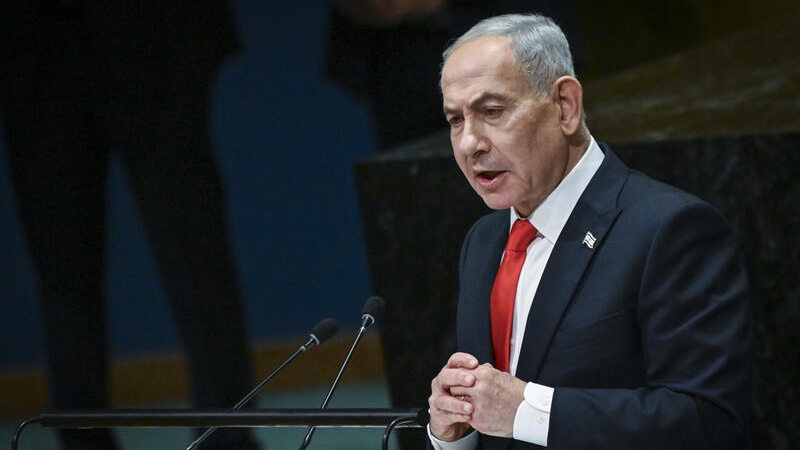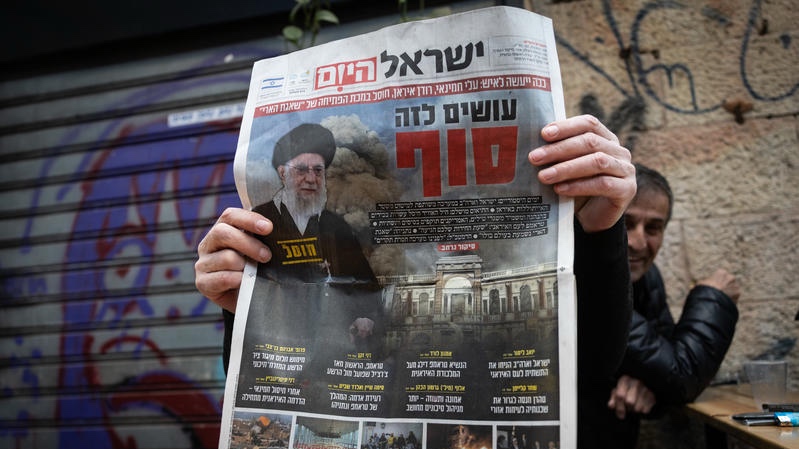

A broad swath of Western governments signaled support—directly or indirectly—for the joint US-Israeli strikes on Iran on Saturday, framing the operation primarily through the lens of preventing Tehran from acquiring nuclear weapons and countering its regional activities. But Norway challenged the legality of Israel’s action, while Spain and Russia condemned the strikes outright.
The European Union’s top diplomat, Kaja Kallas, delivered her first public reaction to the strikes with an unusually pointed rebuke of Iran’s leadership, calling the situation in the Middle East “perilous” while placing responsibility on Tehran.
“Iran’s regime has killed thousands,” Kallas said, arguing that Iran’s ballistic missile and nuclear programs—along with its support for regional terror groups—constitute “a serious threat to global security.” Notably, Kallas did not criticize the United States or Israel for carrying out the strikes and did not call for a ceasefire.
European Council President Antonio Costa echoed Kallas’s emphasis on restraint, urging “all parties” to protect civilians and “fully respect international law,” without repeating her specific accusations about Iran. But he likewise did not call for a cessation of hostilities.
In contrast, French President Emmanuel Macron issued a blunt call for de-escalation, warning that the widening confrontation carried grave implications beyond the region. “The ongoing escalation is dangerous for all. It must stop,” Macron wrote on X. While his statement stressed the risks posed by a “war between the United States, Israel, and Iran,” he did not blame Washington or Jerusalem for the outbreak and emphasized measures France was taking to protect its national territory and interests in the Middle East.
The outbreak of war between the United States, Israel, and Iran carries grave consequences for international peace and security.
At this decisive moment, every measure is being taken to ensure the security of our national territory, our citizens,…
— Emmanuel Macron (@EmmanuelMacron) February 28, 2026
Outside Europe, Canada and Australia placed their statements even more firmly in the nuclear-prevention frame—signaling alignment with Washington’s strategic rationale and, at times, the broader argument that Iran is a driver of regional instability.
Canadian Prime Minister Mark Carney said Canada supports the US action to “prevent Iran from obtaining a nuclear weapon and to prevent its regime from further threatening international peace and security.” Carney described Iran as “the principal source of instability and terror throughout the Middle East,” and did not call for a ceasefire. His statement did not mention Israel.
Australian Prime Minister Anthony Albanese similarly said Australia “supports the United States acting to prevent Iran from obtaining a nuclear weapon,” and added that his country stands with “the brave people of Iran” as they “struggle against oppression.” Albanese did not refer to Israel, but he sharply criticized Iran’s long-running military programs and regional footprint, describing Tehran as a “destabilising force” through its missile and nuclear efforts and its support for armed proxies.
Albanese also pointed to alleged Iranian-linked activity inside Australia, saying the regime “directed at least two attacks on Australian soil in 2024” targeting the country’s Jewish community—incidents he described as intended to “create fear, divide our society and challenge our sovereignty.”
The government of UK Prime Minister Keir Starmer issued a more cautious statement through a spokesperson, telling Reuters that London did not want to see the conflict spread but reiterated a long-standing red line: “Iran must never be allowed to develop a nuclear weapon.” The spokesperson said the UK has “continually supported efforts to reach a negotiated solution,” and did not explicitly endorse the strikes. “We stand ready to protect our interests,” the statement added.
Norway was an outlier, with Foreign Minister Espen Barth Eide singling out Israel’s action as unlawful, according to an AFP report. In remarks delivered by email, Eide said Israel’s operation was described as a pre-emptive strike but did not meet the threshold required under international law.
“A pre-emptive attack would require the existence of an imminent threat,” Eide was quoted as saying, rejecting Israel’s framing and omitting any mention of the United States.
Russia moved quickly to condemn the strikes and warn of broader consequences. Russia’s foreign ministry highlighted comments from senior diplomat Mikhail Ulyanov, who wrote on X that “the new aggression of Israel and the US against Iran is fraught with the danger of significant deterioration and destabilization in the Middle East.”
Spain was most vociferous in its condemnation, with Prime Minister Pedro Sánchez saying his government “rejects the unilateral military action of the United States and Israel, which represents an escalation and contributes to a more uncertain and hostile international order.”
Geert Wilders, leader of the Netherlands’ Party for Freedom, posted an image depicting Iran’s Supreme Leader Ayatollah Ali Khamenei alongside Hezbollah figure Hassan Nasrallah and Iranian commander Qasem Soleimani, writing: “Almost done.”
Want more news from Israel?
Click Here to sign up for our FREE daily email updates