(JNS) The Israel Defense Forces is destroying the operational linkage between Iran and Hezbollah, military sources stated on Thursday, while stressing that the main effort in the war remains focused on further severely degrading the Islamic Republic’s offensive and defensive capabilities.
As part of this effort, Israel is actively working to sever the connection between Hezbollah and its Iranian sponsors by targeting the Quds Force, the expeditionary arm of the Islamic Revolutionary Guard Corps (IRGC), which coordinates between Tehran and Hezbollah in Lebanon, arming, activating and funding it.
“We put out a warning for them that any Quds Iranian official who is conducting or promoting or directing attacks against Israel from Lebanon, we will find them and carry out strikes against them,” said IDF International Spokesperson Lt. Col. Nadav Shoshani.
Speaking during a briefing to journalists on the 13th day of “Operation Roaring Lion” and the 12th day since Hezbollah joined the conflict, he revealed that most Iranian Quds Force leaders in Lebanon had now either left the country or been eliminated.
On Thursday, the IAF said that, with the guidance of Military Intelligence, it struck and eliminated a commander of the Imam Hussein Division, a force used by the Quds Force to strengthen the Iranian axis and launch attacks on Israeli forces and civilians. It named the commander as Ali Muslim Tabaja.
“The division is composed of thousands of terrorists across the Middle East and it serves as a force-employment method, providing Hezbollah with significant capabilities,” said the military.
“During Operations Roaring Lion [June 2025] and Northern Arrows [September to November 2024], the division took an active part in the fighting, carrying out multiple terrorist attack plans from Lebanese territory in coordination with the Hezbollah terrorist organization. This included the launch of unmanned aerial vehicles (UAVs) and missile fire toward communities in northern Israel.”
Tabaja, it said, was a key figure within the division “for the Hezbollah terrorist organization. He joined the Hezbollah terrorist organization and, over the years, held a series of military roles both within Hezbollah and within the division, including serving as the deputy commander of the division.”
The previous commander of the division was eliminated in 2024. The strike also eliminated several additional terror operatives, including the division’s deputy commander and its drone officer.
The IDF confirmed that on Tuesday, it eliminated a commander in the IRGC’s missile unit within Hezbollah in Beirut, responsible for key coordination efforts between Hezbollah and Iran.
Combined Hezbollah-Iranian attack
In his briefing to reporters, Shoshani described Wednesday night’s combined Hezbollah-Iranian attack against Israel. “Last night, Hezbollah timed a simultaneous attack with Iran, firing rockets and drones at towns and communities across Israel,” Shoshani said.
He noted that the barrage included approximately 200 rockets and 20 UAVs, combined with ballistic missiles fired from Iran.
“These attacks aren’t Hezbollah protecting the people of Lebanon. It’s Hezbollah protecting a terrorist regime that is 2,000 kilometers away, based on a shared conviction that Israel must cease to exist,” Shoshani stated.
Shoshani added that Israeli intelligence had indications of the impending attack, allowing the military to prepare aerial defense systems and the home front. This preparation enabled the IDF to precisely strike more than 50 percent of the launchers used in the first wave, in some cases eliminating the terrorists as they fired.
“Our actions also prevented this attack from being much larger. They fired from 8 p.m. yesterday to this morning, approximately a third of what we estimate that they were planning on firing towards Israel,” Shoshani noted.
The rapid response resulted in minimal casualties in the north of Israel, with only two or three direct hits and a few civilians lightly injured.
Since joining the war, Hezbollah has launched over a thousand UAVs, missiles, and rockets at Israel, according to IDF data. Shoshani highlighted that while Hezbollah’s capabilities have been diminished in recent years, it remains a dangerous terror force requiring decisive action.
“We’ve seen hundreds of [elite] Radwan forces attempt to move south again,” Shoshani warned, referring to Hezbollah’s commando unit. “We’ve seen Hezbollah try to expand its fire towards us. We’ve seen Hezbollah try and send terrorists down towards the border area. And that is why it’s essential that our troops are in the border area for defensive measures, holding the defense lines, preventing any type of attack towards Israeli civilians.”
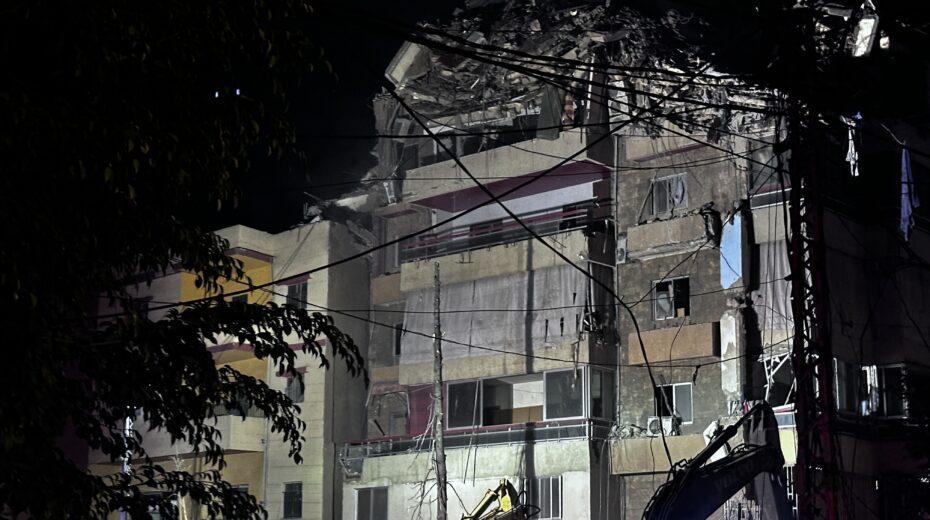
The IDF has responded with intense airstrikes against Hezbollah targets in the Dahiyeh suburb of south Beirut and throughout southern Lebanon.
It said that since March 2, Israeli forces have eliminated more than 100 Hezbollah terrorists and 60 Radwan force command and control centers.
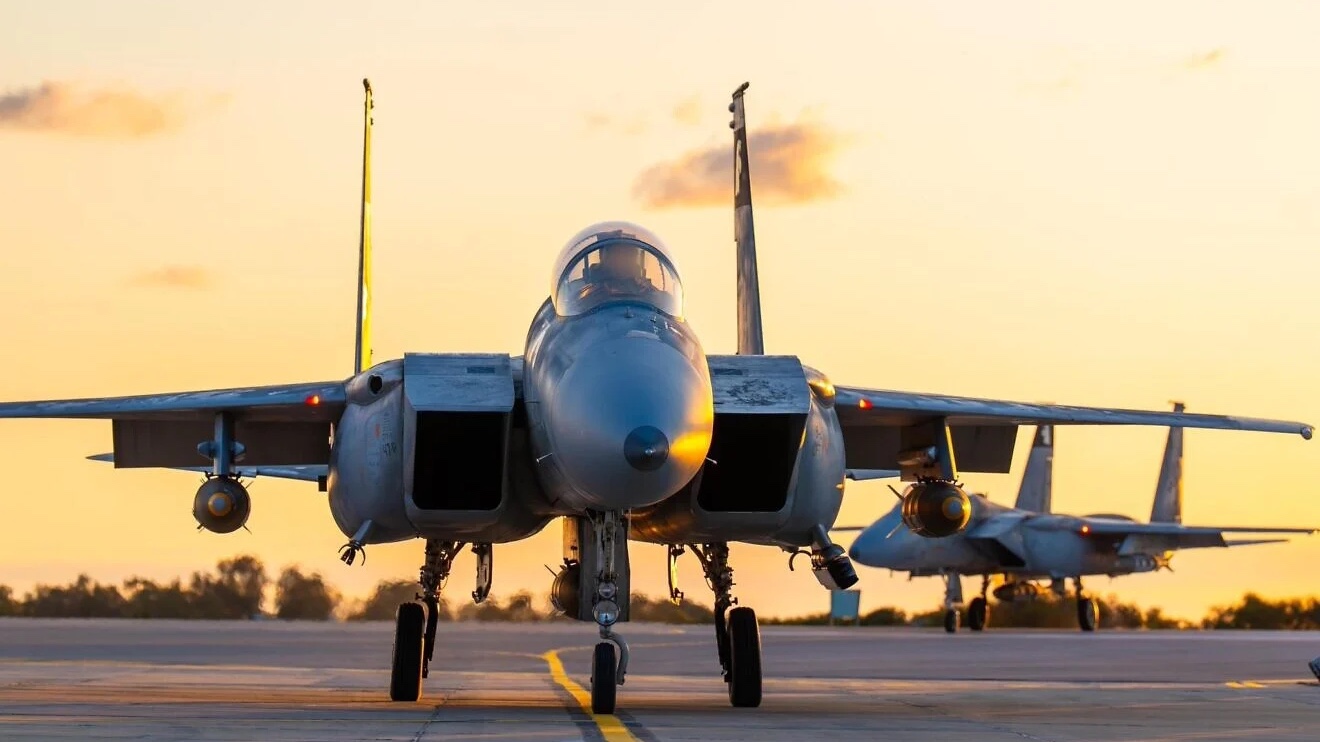
Turning to the primary arena in Iran, Shoshani provided staggering statistics regarding the scale of the ongoing aerial campaign. Over 4,200 sorties have been flown across Iran so far, with Israeli and American aircraft conducting non-stop strikes for 13 days.
Nuclear compound struck
Also on Thursday, the IAF struck the Iranian nuclear program’s Taleghan compound near Isfahan, which was used to advance nuclear weapons production.
“In recent years, the compound was utilized to develop advanced explosives and to conduct sensitive experiments as part of the AMAD project, the covert nuclear weapon development program in the 2000s,” the military said. The site had been struck in October 2024 but has since been reconstituted.
Despite the significant damage inflicted on the Iranian nuclear program in past strikes, “the Iranian regime has continued efforts to advance and develop capabilities required for the development of a nuclear weapon,” the military said. “The strike is a part of the series of operations carried out throughout ‘Operation Rising Lion’ aimed at further damaging the Iranian terrorist regime’s nuclear aspirations.”
According to Shoshani, some 80% of the Iranian regime’s defense systems have been neutralized. “Two-thirds of their ballistic missile launchers [totaling hundreds of launchers] have been neutralized as well,” he stated.
He added that hundreds of unmanned aerial vehicles have been intercepted, and over 550 real-time targets have been struck inside Iran, demonstrating the Israeli Air Force’s ability to generate actionable intelligence and utilize aerial supremacy.
Additionally, over 400 regime targets, including headquarters and command centers, have been destroyed, resulting in the elimination of more than 1,900 Iranian regime soldiers and commanders.
“A lot of our operations have shifted in recent days towards production sites, making sure that our achievements are not just taking out capabilities right now, but preventing them from restoring those capabilities at a fast pace when all of this is done,” Shoshani said.
Meanwhile, Iran has continued to target the Israeli home front using cluster munitions, which Shoshani noted is widely considered a war crime as they break apart mid-flight to hit civilian population centers. These munitions recently killed two civilians in the central Israeli city of Yahud.
“Our objectives have not changed,” Shoshani stressed. “The most urgent and important one is to guarantee the security of the people of Israel, to stand at the borders, [and] to act against threats that are emerging against our civilians and to remove them. That’s what we’re doing against this Iranian regime. That’s what we’re doing against this terror group, Hezbollah.”
Eight times more targets struck
According to military data, 12 days into “Operation Roaring Lion,” eight times more targets have been struck in Iran compared to the 12 days of “Operation Rising Lion” in June 2025.
There have also been significantly fewer launches from Iran in this war, with relatively smaller volleys rather than the barrages of dozens seen in the previous operation.
Furthermore, the current Israeli strikes are reaching more distant targets and previously untargeted areas, such as the coastal strip and southern Iran, with an increased focus on striking regime targets.
Want more news from Israel?
Click Here to sign up for our FREE daily email updates