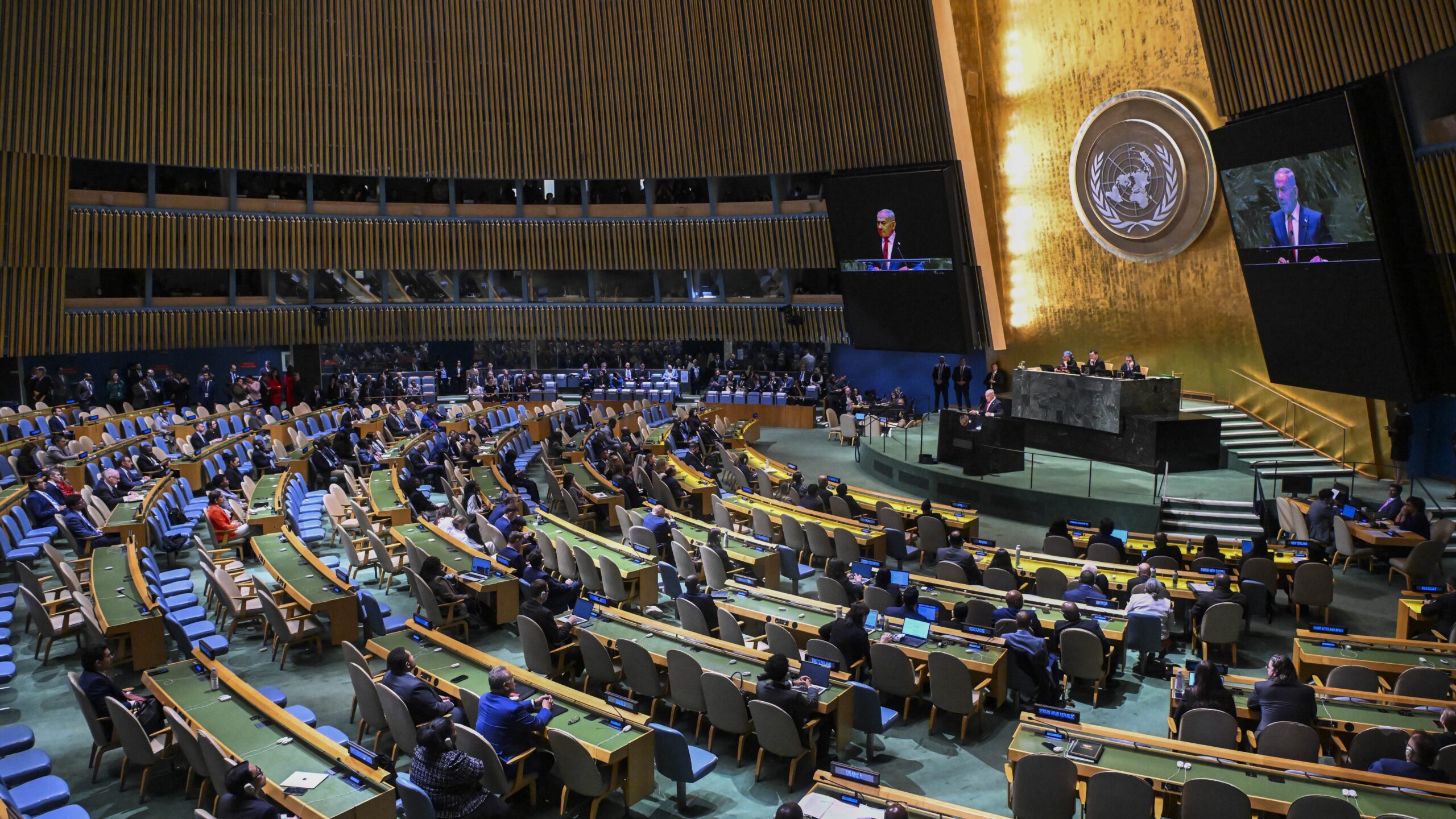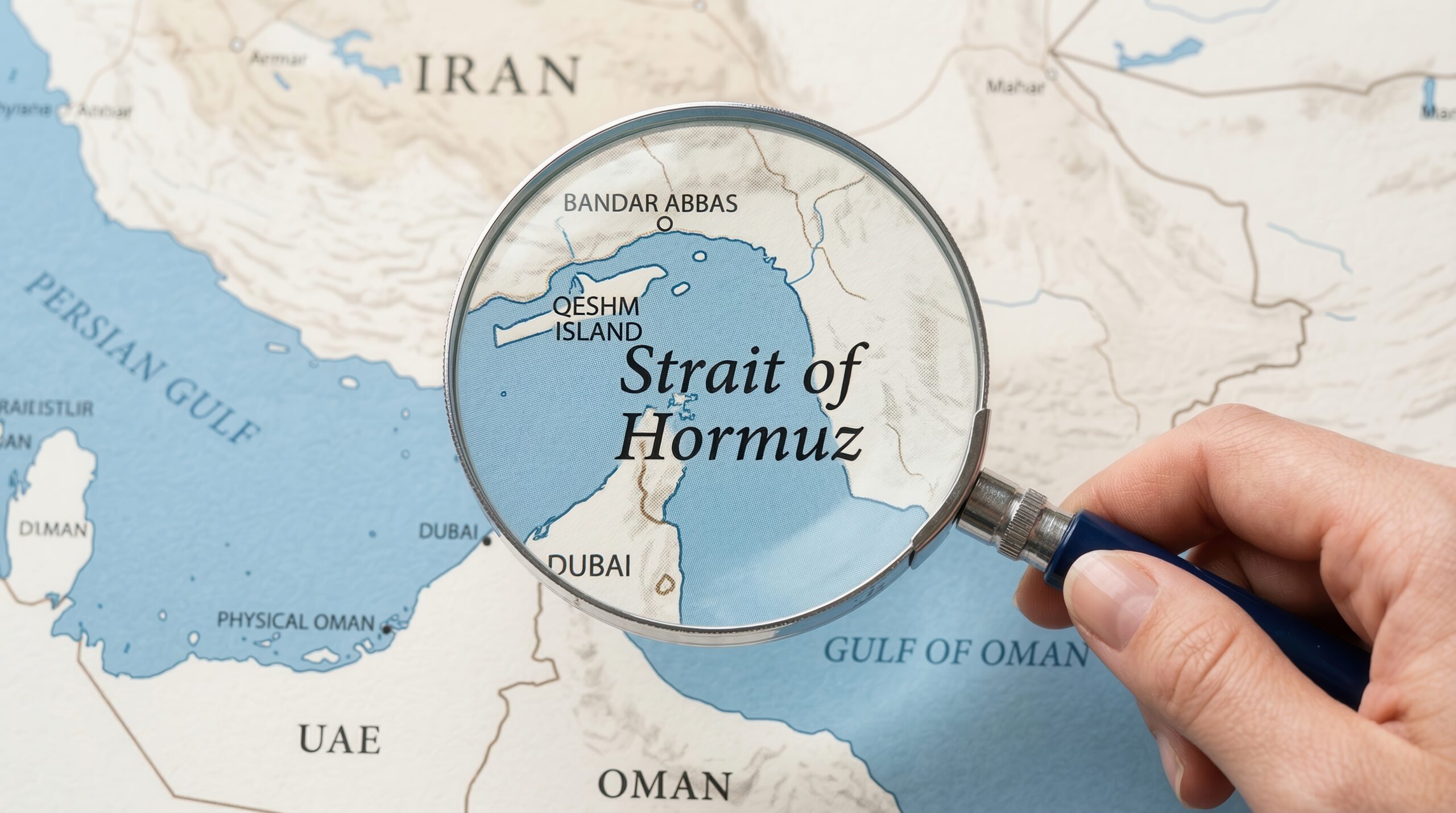
(JNS) At Bahrain’s behest, the United Nations Security Council held a debate about maritime security amid an Iranian blockade of the vital Strait of Hormuz, which has resulted in a retaliatory US blockade.
“The world’s critical waterways are not bargaining chips that belong to any one country,” Mike Waltz, the US ambassador to the global body, said on Monday.
“They are too vital. They are too important to all of us collectively as a global community to be choked off, to be mined, to be weaponized, to be attacked like two-bit pirates,” Waltz said. “Because when they are, the entire world pays the price.”
The US envoy described the global impact of Iran’s actions, which have led to surging oil, liquified natural gas and fertilizer prices. The stoppage of the strait has hit Gulf states, which rely heavily on the waterway, particularly hard.
“It is absolutely clear. It’s unambiguous that, as a matter of international law, this strait is not, despite Iran’s foreign minister’s claims—this strait is not Iran’s to wield like its own moat and drawbridge,” Waltz said.
The Islamic Republic has said in recent weeks that the strait is to be treated as Tehran’s territorial waters, despite a record-setting 136 UN member states signing on to a Security Council draft resolution calling for an end to the regime’s blockade.
Waltz called for a “coalition of like-minded partners to step up and step in with real capabilities and help.” He also decried China and Russia for vetoing the resolution and instead choosing what he said is a “radical religious regime for its partner,” ignoring “not only the plight of our Gulf countries but the global economy.”
Moscow hit back, with its envoy to the global body, Vassily Nebenzia, accusing European countries of “blatant robbery at sea” while speaking of a “rules-based order.”
The Strait of Hormuz crisis is a consequence of “unprovoked” aggression by the United States and Israel, which has “spawned large-scale consequences for the global economy,” according to Nebenzia.
Abdullatif bin Rashid al Zayani, the Bahraini foreign affairs minister, echoed Waltz.
“Does anyone have the right to close a strait used for global trade and cause suffering to so many?” he said.
The Iranian regime interprets silence from the international community as permission for its aggression, according to the Bahraini diplomat.
“The need for maritime security has never been more urgent than it is today,” he said. “Freedom of navigation is a cornerstone of international law and international peace.”
Lewis Garseedah Brown II, the Liberian envoy to the United Nations, said that “the map of global insecurity is being increasingly drawn at sea.”
Iran damaged and seized a Liberian-flagged ship last week, the envoy noted.
“What happens in the narrow straits is now felt in distance markets and fragile economies, in distant kitchen tables from the south to the north and from the east to the west,” he said.
The Liberian diplomat referred to the blockade as “the creeping normalization of disruption as leverage.”
Panama, which controls the critical Panama Canal, also criticized Iran. Carlos Arturo Hoyos, vice minister for foreign affairs, decried the Islamic Revolutionary Guard Corps for intercepting and detaining the crew of a Panamanian-flagged merchant ship.
“No critical maritime route must ever be threatened or used as an instrument of pressure or coercion” he said. He urged Iran to release the people it has detained.
Want more news from Israel?
Click Here to sign up for our FREE daily email updates