
Shavuot is one of the three pilgrimage feasts in the Bible.
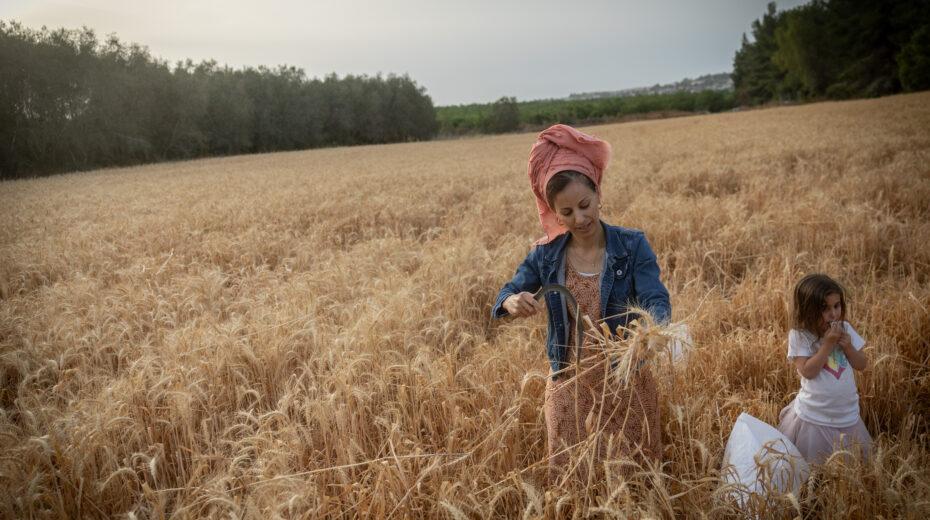
Originally, it was an ancient agricultural holiday, the Feast of Harvest and Firstfruits, a time when the first fruits of the harvest were brought to the Temple as a sign of gratitude for the abundance. Over the years, the holiday has taken on an additional connotations: According to traditional calculations, it is also the day on which the Torah was given at Mount Sinai.
During Shavuot, the Book of Ruth is the text we traditionally read. This is not a story about kings or great miracles, but a very human story about two women who lost almost everything. The Book of Ruth opens precisely with a lack – Famine in the land, uprooting from home, death, loss. The two women, Naomi and Ruth, are left with almost nothing.
Without men to protect them in the ancient world.
Without meaningful possessions and without a clear future.
Naomi returns to Bethlehem and says a very difficult sentence: “I went out full, and the Lord has made me return empty.”
It is a very human moment, a moment when she looks around and sees no sign of abundance. Neither outside, nor inside. But precisely from this empty place, redemption begins to grow. It happens slowly.
Without great miracles.
Without a sea that parted.
Without fire from the sky.
The abundance in the Book of Ruth does not come all at once, but rather begins with a small step of loyalty and a choice not to despair. Ruth, the foreign woman, does not bring money or strength with her. She brings an open heart and a willingness to keep going even when the path is unclear. She goes out to glean a few ears of grain in the field; and from this small, daily action, the entire House of David is ultimately born. Perhaps this is one of the profound insights of Shavuot.
True abundance does not always begin with excess; sometimes it begins precisely from emptiness. From scorched earth, and from a situation where we have almost nothing to lean on. Because abundance is not just what we have. Abundance is the ability to keep moving even when we don’t yet see the result. To believe that even from a period of loss, new life can grow. The Book of Ruth reminds us that fields are not filled in a day. Neither is the soul. Sometimes one sheaf of wheat is enough.
One outstretched hand.
One small choice not to close oneself off from life.
And from there, slowly and gradually, abundance begins to return. Ruth and Naomi were privileged to see this.
Happy Holidays.
Want more news from Israel?
Click Here to sign up for our FREE daily email updates