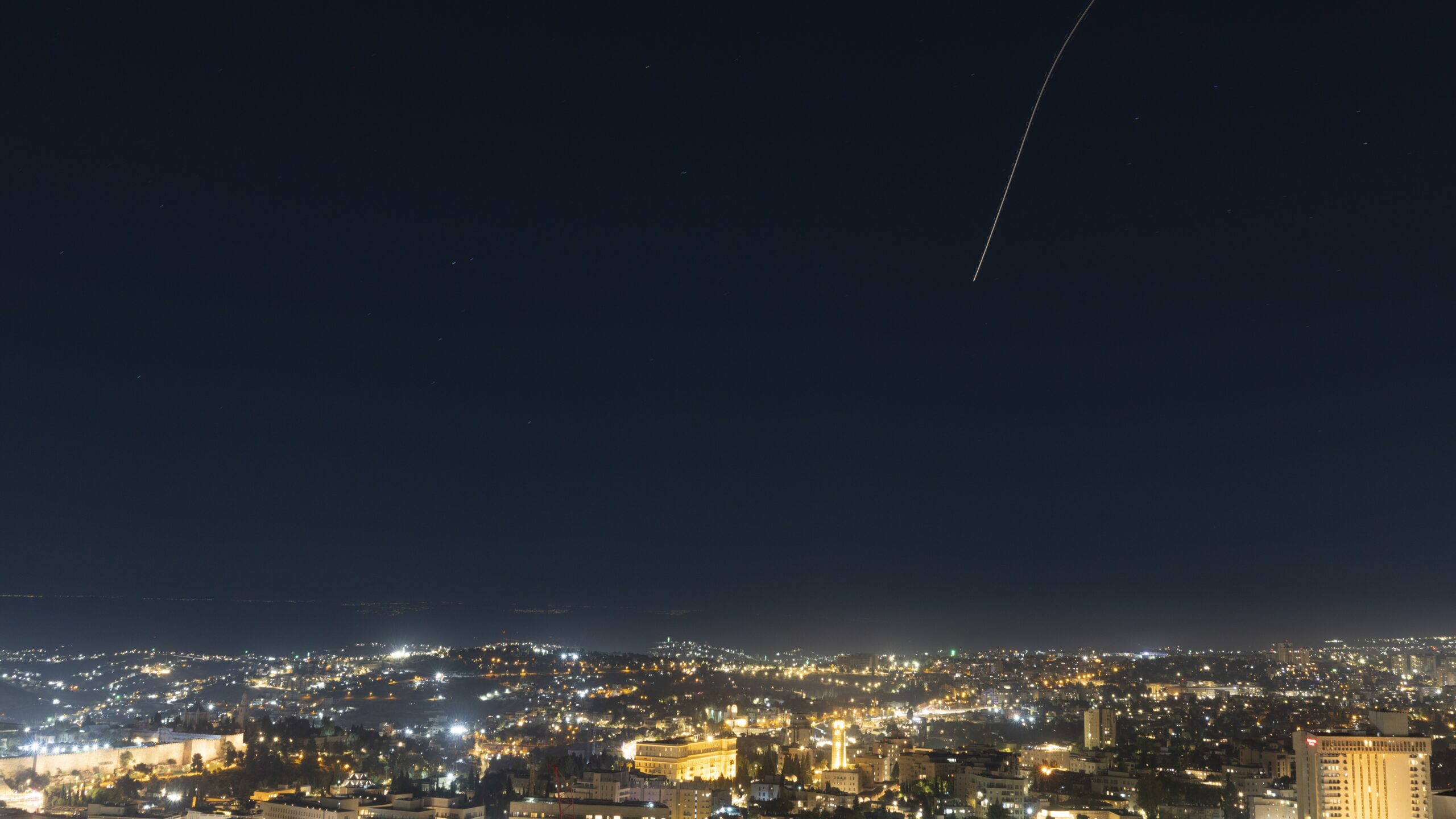
Iran launched four missile barrages at Israel on Sunday night, shattering a fragile ceasefire that had been in place since April 8.
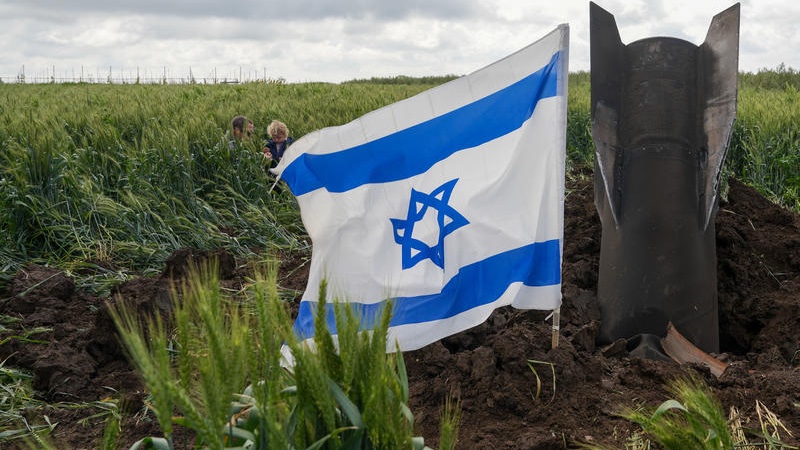
Some 10 ballistic missiles were fired at northern Israel over the course of an hour, beginning at 10 p.m. local time.
The Israel Defense Forces said the projectiles were intercepted or struck open areas, with no reports of damage.
The Magen David Adom emergency service said paramedics treated two people who were injured while rushing to protected spaces.
A senior Israeli official told Channel 12 that Israel would “respond forcefully” to the Iranian attack.
According to the report, Israeli Prime Minister Benjamin Netanyahu was set to hold security consultations with top military commanders and senior government officials.
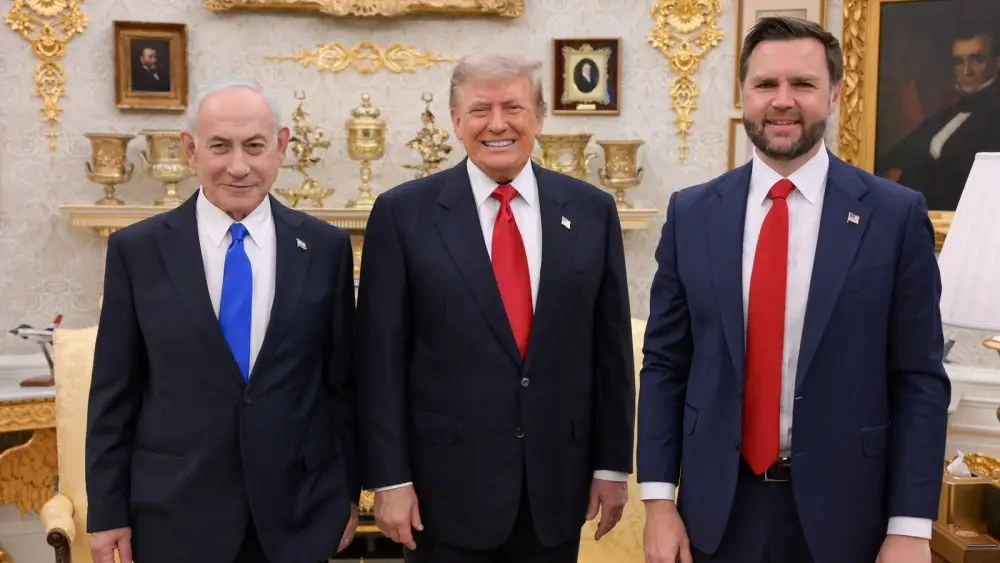
Channel 12 journalist Barak Ravid reported that U.S. President Donald Trump would call Netanyahu later on Sunday night to urge him not to respond.
Shortly thereafter, Trump told Fox News that the development was “certainly not going to help negotiations,” adding, “What I would suggest to Iran: You’ve shot your missiles, that’s enough, get back to the table and make a deal.”
Meanwhile, National Security Minister Itamar Ben-Gvir called for a strong retaliation, writing on X: “Tonight, Tehran must burn.”
IDF Spokesman Brig. Gen. Effie Defrin stated on Sunday that Chief of Staff Lt. Gen. Eyal Zamir was conducting an assessment and “approving plans for the future.”
“The Iranian terror regime made a grave mistake,” Defrin said.
He confirmed that the military was prepared for the possibility of additional launches.
“Continue to act responsibly and calmly as you have done so far,” Defrin said. “We are already experienced. We are taking all necessary steps to ensure public safety. The IDF is ready.”
Transport Minister Miri Regev said Israeli airspace remained open for the time being.
Earlier on Sunday, the IDF targeted the Iranian-backed Hezbollah terrorist organization in Beirut’s southern suburbs.
“The IDF struck a Hezbollah terror infrastructure site in the area of the Dahiyeh,” the military stated.
Netanyahu and Defense Minister Israel Katz said they ordered the strike “in response to Hezbollah’s firing toward Israeli territory.”
Hezbollah has continued near-daily rocket and drone attacks on Israel despite a separate U.S.-brokered truce between Jerusalem and the Lebanese government.
Tehran had warned that it would target the Jewish state if the IDF hit Hezbollah’s stronghold in Beirut.
Israel and the United States launched a joint military operation against Iran on the morning of Feb. 28, including the targeted killing of Supreme Leader Ayatollah Ali Khamenei.
Over the following six weeks, Israeli and U.S. forces struck targets across the Islamic Republic, with a focus on degrading the regime’s nuclear and ballistic-missile capabilities.
Since the April 8 ceasefire, intermittent military exchanges had taken place across the region, without any direct engagement between Jerusalem and Tehran.
On Friday, U.S. forces intercepted several Iranian ballistic missiles and drones launched toward Gulf nations and the Strait of Hormuz, the U.S. Central Command said.
In total, the Islamic Republic fired seven ballistic missiles toward Kuwait and Bahrain, hours after CENTCOM downed four Iranian one-way attack drones that were fired toward the strait, the statement read.
In response, U.S. forces struck Iranian coastal surveillance radar sites in Geruk, east of the strait, and on Qeshm Island in the northern part of the waterway as a defensive measure.
Trump told NBC News’ “Meet the Press” on Friday that one reason Tehran is not rushing to reach an agreement with Washington to end the conflict is that it “has been getting away with whatever [it] wanted” for 47 years, since the 1979 Islamic Revolution.
He added that the Iranians are “strong, they are proud; there are things they never thought they’d be doing that they’re going to have to do … they’ve got no choice. And it takes a little while.”
Want more news from Israel?
Click Here to sign up for our FREE daily email updates