The council was established in 1970 in response to rising cross-border tensions. In the late 1960s, Palestinian terrorists entered Southern Lebanon, leading to the area being called “Fatahland.”
The south began suffering frequent retaliatory Israeli military strikes. Hard-hit southern Shi’ite citizens demanded state protection and financial aid. This prompted the government to create a dedicated, autonomous public fund.
Legally, the council is a public institution reporting directly to the Council of Ministers. It was created to bypass slow bureaucratic ministries and deliver rapid aid to the south. Its mandates include providing immediate compensation to civilians suffering harm or property damage from Israeli military actions, funding emergency relief and reconstruction (such as rebuilding homes, schools, roads and water networks), and carrying out long-term infrastructure projects in the neglected southern border governorates.
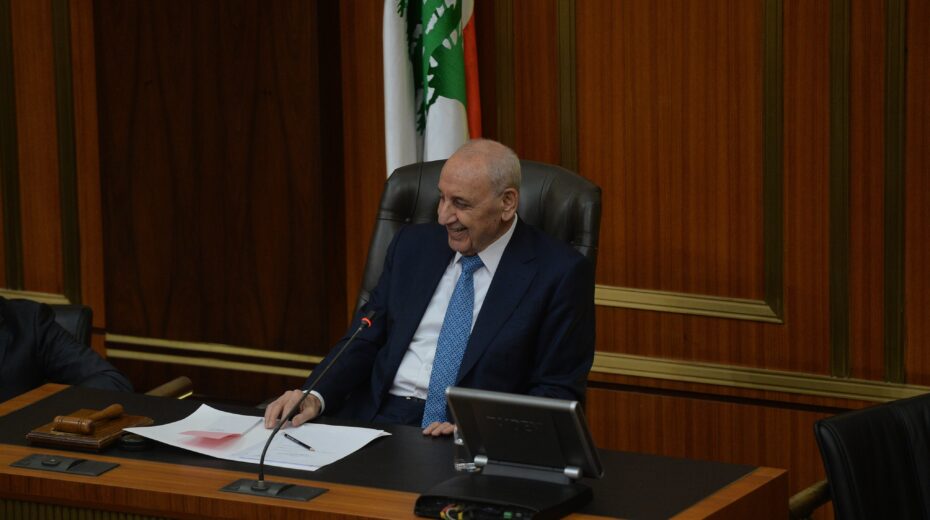
While it is technically a state organ financed by the Lebanese treasury, the council has been entirely controlled by Speaker of Parliament Nabih Berri and his Amal Movement since the end of the Lebanese Civil War in 1990.
In Lebanon’s confessional system (Taif Agreement, 1990), public institutions became political fiefdoms among sectarian warlords. The Council for South Lebanon became Amal’s primary cash cow and domestic patronage tool.
For decades, a multi-billionaire businessman, Kabalan Kabalan, a senior Amal official and member of parliament with close ties to Berri, has headed the council. Through him, the council dictates who receives construction contracts, which villages get infrastructure development, and who qualifies for cash payouts.
This control allows Amal to maintain a deeply loyal voter base in the south using state-funded resources. During the 1980s civil war, Amal and Hezbollah fought a bloody war for the soul of the Shi’ite community (the “War of the Brothers”).
During that era, the Council for South Lebanon was used by Amal to counter Hezbollah’s rising, Iranian-funded social services by offering competing state-funded aid. However, after realizing neither could eliminate the other, they formed an ironclad political alliance. Under this pact, a division of labor was established according to which Hezbollah dominates the military confrontation and security apparatus, while Amal handles the capture and distribution of state administrative resources.
Through this alliance, Hezbollah relies on Amal’s control of the council to foot the bill for its conflict infrastructure:
- Subsidizing “martyr” payouts: Hezbollah uses the Amal-run council to secure state compensation of $20,000 per casualty for its combatants’ families, protecting its own funds.
- Reconstructing war damage: When military operations destroy villages or logistics corridors in the south, the council serves as the state’s checkbook for rebuilding infrastructure. These projects inevitably support the same towns and networks where Hezbollah stores and launches tactical hardware.
By operating through Berri’s administrative shield, Hezbollah reaps the financial and structural benefits of a multi-million-dollar state fund while maintaining total plausible deniability from direct administrative audits.
As absurd as it may sound, the Lebanese state is paying compensation for each Hezbollah combatant killed in the conflict with Israel (and earlier during the civil war in Syria), the same Hezbollah the state is trying to convince to disarm.
Seen from that perspective, Rudolph Heykal, the Lebanese army chief, answered an inquiry by the late US Senator Lindsey Graham, by saying that Hezbollah is not considered a terrorist organization in the Lebanese context.
One should not omit the fact that when Hezbollah fighters are wounded, or their families require complex medical procedures, they are almost exclusively sent to Hezbollah’s private healthcare network.
This is where the political capture of the Lebanese Ministry of Public Health pays dividends. For years, Hezbollah has prioritized placing its own bureaucrats or close political allies at the helm of the Health Ministry. Under their direction, the ministry expands its public coverage contracts and billing caps specifically for Hezbollah-affiliated hospitals. Whenever conflict escalates, the Health Ministry issues official directives ordering that all war-related injuries be treated entirely at the Lebanese state’s expense.
This reality aligns with the assessment that Hezbollah manages the hospitals, while Lebanese taxpayers bear the costs. Acting as administrative middlemen, the Shahid and Jarha foundations ensure families receive elite, streamlined and free access. The actual payments for intensive surgery, pharmaceuticals and long-term care are drawn from the public treasury via Ministry of Health transfers.
This allows Hezbollah to achieve its ultimate political goal—it appears to its core base to be a benevolent provider. It protects its own cash reserves (and Iranian subsidies) from being drained by massive medical bills. It forces the bankrupt Lebanese state to subsidize the medical costs of a private war.
Ultimately, it makes the Lebanese government look like a bad joke; that same government, which is trying to get rid of the octopus’s tentacles that strangle it, is paying for the Hezbollah fighters who die in the war with Israel, and carrying the medical costs for that same organization, which is trying to topple the Lebanese regime.
Originally published by the Jerusalem Center for Security and Public Affairs.