Three years after October 7, 2023, the Middle East is still living with the consequences of that terrible morning.
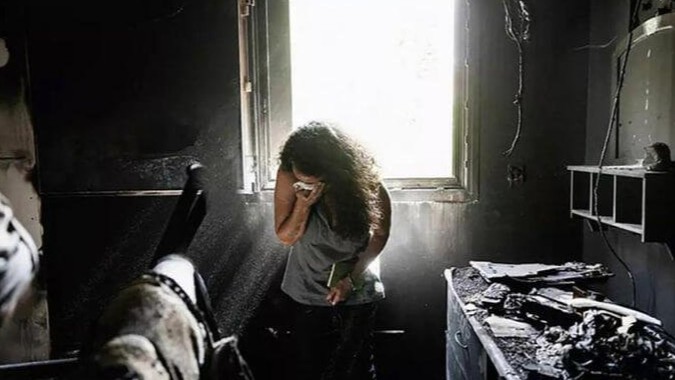
For Israelis, October 7 is not an abstraction in the language of geopolitics. It is a national and deeply personal trauma: families murdered, communities attacked, young people killed at a music festival, and men, women, children and elderly people taken hostage.
Such an anniversary demands remembrance. It demands moral clarity about the deliberate murder and abduction of civilians. But it should also demand something more difficult from all of us: a serious answer to the question of what comes next.
Our belief is that the strongest long-term response to October 7 is to do precisely what terrorism seeks to prevent.
We must build trust between the peoples of the region, create relationships across borders and religions, and unite around a shared future rather than surrender another generation to inherited conflict.
Terrorism seeks more than casualties. It seeks separation.
Its political objective is to make Israelis believe that Arabs are permanent enemies, and to make Arabs believe that engagement with Israelis is betrayal. It seeks to destroy trust before trust can develop, to make dialogue look naïve, and to convince societies that coexistence itself has failed.
That is why the answer to October 7 cannot be only military or security-based, there must also be a political and human answer.
That answer is connection.
The most consequential defeat that can be inflicted upon extremism would be a Middle East in which Israelis, Iraqis, Palestinians, Arabs, Jews, Muslims, Christians and others increasingly encounter one another directly—not only through the accumulated images of war, propaganda and historical grievance, but through relationships, commerce, education, culture, faith and common interests.
The terrorists sought division. Our answer should be greater connection. They sought fear. Our answer should be greater trust. They sought to make coexistence appear impossible. Our answer should be to make cooperation increasingly normal.
This is not sentimental idealism. It is a strategic proposition about how societies break the cycle through which conflict reproduces itself from one generation to the next.
For Iraq, this question has particular importance. Iraq and Israel do not have diplomatic relations. The political and legal barriers between them remain formidable, and it would be unserious to pretend otherwise. Yet the absence of formal relations does not mean that the two peoples must remain strangers forever.
Iraq must eventually ask what role it wishes to play in the Middle East that is now emerging. Will it remain confined by conflicts inherited from the twentieth century? Or can it become an important participant in a region increasingly shaped by technology, energy, water scarcity, climate pressures, trade, transportation and economic interdependence?
This is not an argument for Iraq to surrender its identity, its Arab character or its heritage. It is an argument for Iraqi confidence and Iraqi sovereignty. A strong Iraq should be capable of speaking with everyone. A sovereign Iraq should be able to determine its relationships according to Iraqi interests, rather than allowing armed factions, foreign powers or ideological movements committed to permanent confrontation to dictate the boundaries of national debate.
Iraq’s future should ultimately be decided by Iraqis. And a confident country should not fear dialogue.
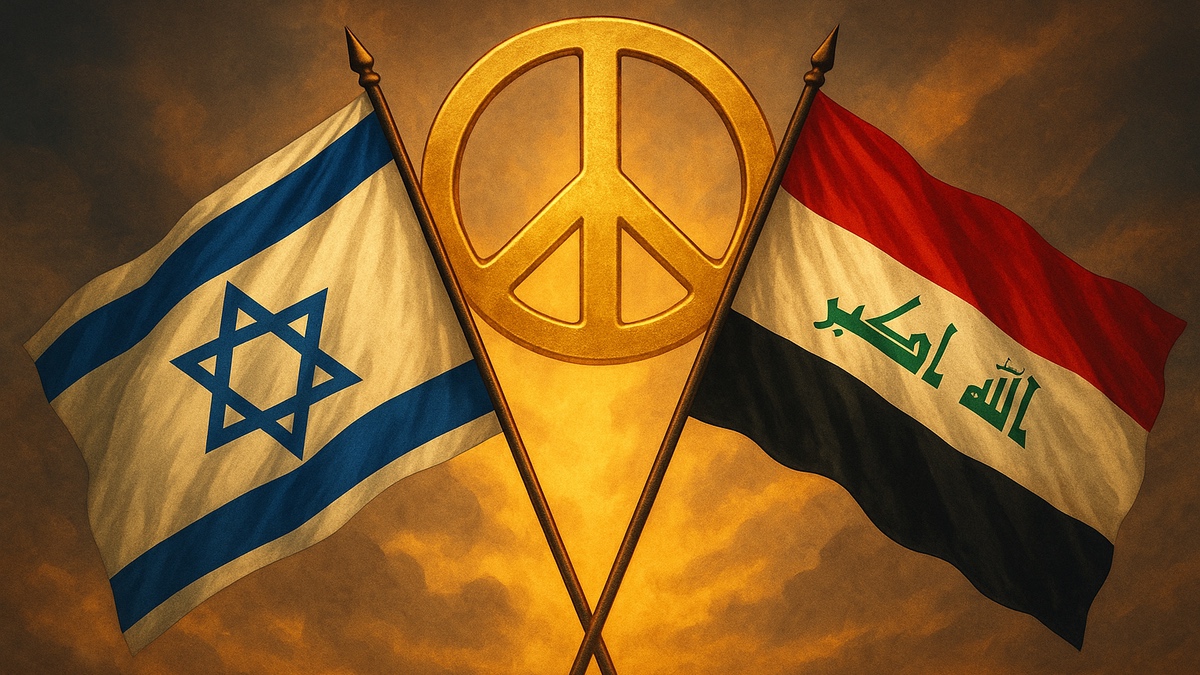
This conviction is one reason why The Virtual Embassy of Iraq in Israel and the Abrahamic Movement have recently joined their efforts around a common purpose: to begin preparing the civic, intellectual and human ground for the day when formal diplomatic relations between Iraq and Israel may become possible. We are under no illusion that such a day is imminent.
Diplomatic relations are established by sovereign governments, not by civic initiatives. Political conditions must change, public debates must evolve, and profound disagreements must be addressed. But official diplomacy does not begin with the opening of an embassy. It begins much earlier. It begins when people are allowed to speak. It begins when scholars meet, when religious leaders establish trust, when journalists learn about one another’s societies, when businesspeople identify shared interests and when citizens discover that the people whom politics has taught them to fear are human beings with families, ambitions and memories much like their own.
Our partnership seeks to cultivate precisely that space.
The Virtual Embassy of Iraq in Israel operates in the field of independent diplomacy, creating a channel for dialogue, policy thinking and people-to-people engagement between Iraqis and Israelis. The Abrahamic Movement approaches the same challenge through another door: faith, heritage, interreligious dialogue and the belief that the shared Abrahamic inheritance of the region can become a foundation for coexistence rather than another arena of competition.
Together, we want to help prepare the ground on which future diplomacy could one day stand.
There is historical logic to this effort, Jews are not strangers to Iraq. For centuries, Jewish communities were an integral part of Iraqi society. They participated in commerce, scholarship, music, language, culture and public life. Baghdad was once one of the great centers of Jewish civilization in the Middle East. Most Iraqi Jews left the country during the upheavals of the twentieth century. Their departure, however, did not erase their place in Iraq’s history. Their heritage remains Iraqi heritage.
Many Israeli families today carry memories of Baghdad, Basra and other Iraqi cities. Their food, music, language and family histories contain fragments of an Iraq that politics separated from them.
Recognizing this does not settle the contemporary Israeli-Palestinian conflict. Nor does it eliminate the profound differences that exist between the political positions of Iraq and Israel. But it reminds us that the separation between our peoples is neither ancient nor inevitable.
History contains estrangement. It also contains connection. The Abrahamic tradition takes that connection further still. Judaism, Christianity and Islam all look toward Abraham. For Iraq, this heritage carries particular resonance because ancient Mesopotamia stands near the beginning of the Abrahamic story. That inheritance should be more than symbolism.
The Abrahamic idea acquires political meaning when it helps us rediscover an important principle: peoples do not need to become identical in order to share a future. Muslims need not become Jews. Jews need not become Muslims. Arabs need not surrender their identity. Israelis need not surrender theirs.
A shared future does not mean a uniform future. It means building a regional order in which differences are no longer automatically transformed into existential conflicts. That principle must also extend to Palestinians.
A Middle East that can recognize only one people’s suffering will remain trapped in conflict. A new Middle East should include all parties in the region towards a bright future. This is why we believe that trust is not merely a moral aspiration. It is a strategic asset.
Societies that know one another are more difficult to manipulate. People who have worked together are harder to convince that the other side consists only of enemies. Business partners acquire an interest in stability. Academics and scientists create professional communities that cross borders. Religious leaders who know one another personally possess channels through which they can intervene when tensions rise.
Young people who encounter one another directly are less dependent on inherited caricatures. Trust does not abolish political disagreement. It changes the environment in which disagreement takes place.
For decades, the Middle East has invested enormous resources in what might be called the infrastructure of conflict: armies, militias, missiles, fortified borders, ideological networks and political narratives organized around permanent enemies. Far less has been invested in an infrastructure of trust. That must change.
The region needs more connections between universities, businesses, researchers, cultural institutions, religious communities, entrepreneurs, journalists and civil society. It needs people-to-people diplomacy alongside state-to-state diplomacy.
Governments can sign agreements. People make those agreements durable. For Iraq and Israel in particular, there are also practical reasons to look beyond inherited hostility. The challenges that will shape the coming decades do not respect political taboos. Water scarcity does not distinguish between an Iraqi and an Israeli. Climate change does not ask a farmer which religion he follows.
Desertification has no ideology. Food security, artificial intelligence, medicine, renewable energy, agriculture, infrastructure and technological development increasingly require knowledge to travel across borders.
A serious regional strategy should therefore ask not merely whom we have historically opposed, but where our interests may eventually converge. This does not require pretending that all political disagreements have disappeared. It requires understanding that disagreement and cooperation can exist simultaneously.
The Abraham Accords demonstrated one version of this principle: relationships once considered politically impossible can become possible when leaders and societies conclude that permanent estrangement no longer serves their future.
Iraq need not imitate the path of any other Arab country. Its history, society and geopolitical circumstances are distinct. If Iraq one day establishes relations with Israel, the Iraqi path will necessarily be an Iraqi one. But before governments can make such decisions, societies need the intellectual freedom to discuss them. That is why preparing the ground matters. We should create more relationships than extremists can destroy.
One conversation between an Iraqi and an Israeli may appear insignificant compared with decades of conflict. One academic partnership may seem insignificant beside a missile. One interfaith encounter may appear insignificant beside the political forces invested in keeping peoples apart. But societies are changed by accumulation. A conversation becomes a relationship. Relationships become networks.
Networks become constituencies. And over time, constituencies can change what governments consider politically possible.
This is how a different Middle East begins—not with the sudden disappearance of every disagreement, but with enough human connections that disagreement no longer automatically means enmity.
October 7 demonstrated the opposite principle with horrifying clarity. Fear overwhelmed trust. Violence overwhelmed dialogue. Human beings were transformed into targets.
The appropriate response cannot be to abandon the project of regional reconciliation because terrorists attacked it. If terrorism destroys dialogue, terrorism wins twice. If terrorism convinces Israelis and Arabs that coexistence is impossible, it acquires political victories long after the killing has ended. If it convinces another generation that inherited enemies must remain enemies forever, then violence has succeeded in governing the future. We should refuse it that victory. Israelis should never be asked to forget October 7. Iraqis should not forget what terrorism, extremism, sectarianism and proxy conflict have done to their own country.
But memory should be a warning, not a prison. The challenge before our generation is to transform memory into responsibility. For Iraq, that means strengthening sovereignty and reclaiming the freedom to define its own regional interests. For Israel, it means recognizing that enduring security ultimately requires relationships as well as deterrence. For Palestinians, it means a political future in which their interests and agency are not subordinated either to endless armed movements claiming permanent war as the only strategy. And for the wider region, it means beginning to understand security and prosperity as increasingly shared interests.
Three years after October 7, this is therefore the message we believe should endure. The best response to those who sought to divide the peoples of this region is to bring those peoples closer. The best response to those who sought to make Arabs and Israelis fear one another is to build trust between them. The best response to those who imagine the Middle East as a permanent battlefield is to build relationships that make another future possible. And the best answer to terrorism is to create a generation more connected than the one terrorism sought to divide.
This will demand patience. It will demand difficult political choices. It will require honest discussion of Israeli security and Palestinian aspirations, stronger sovereign states, weaker armed factions, greater economic interdependence and thousands of human encounters that may never make headlines. But this is how the future is built.
The people who carried out October 7 demonstrated how much hatred can destroy in a single day.
Our answer should be measured not only by what is destroyed in response, but by what we are capable of building afterward. More trust. More relationships. More understanding. More cooperation. And eventually, a shared regional future strong enough to survive the extremists who will continue trying to destroy it.
That would be more than a response to October 7. It would be the beginning of a Middle East in which October 7 does not determine the destiny of the generations that follow.
Want more news from Israel?
Click Here to sign up for our FREE daily email updates