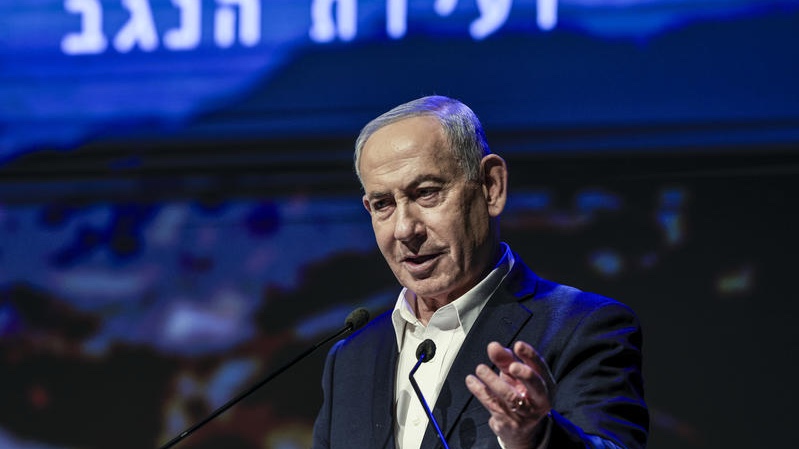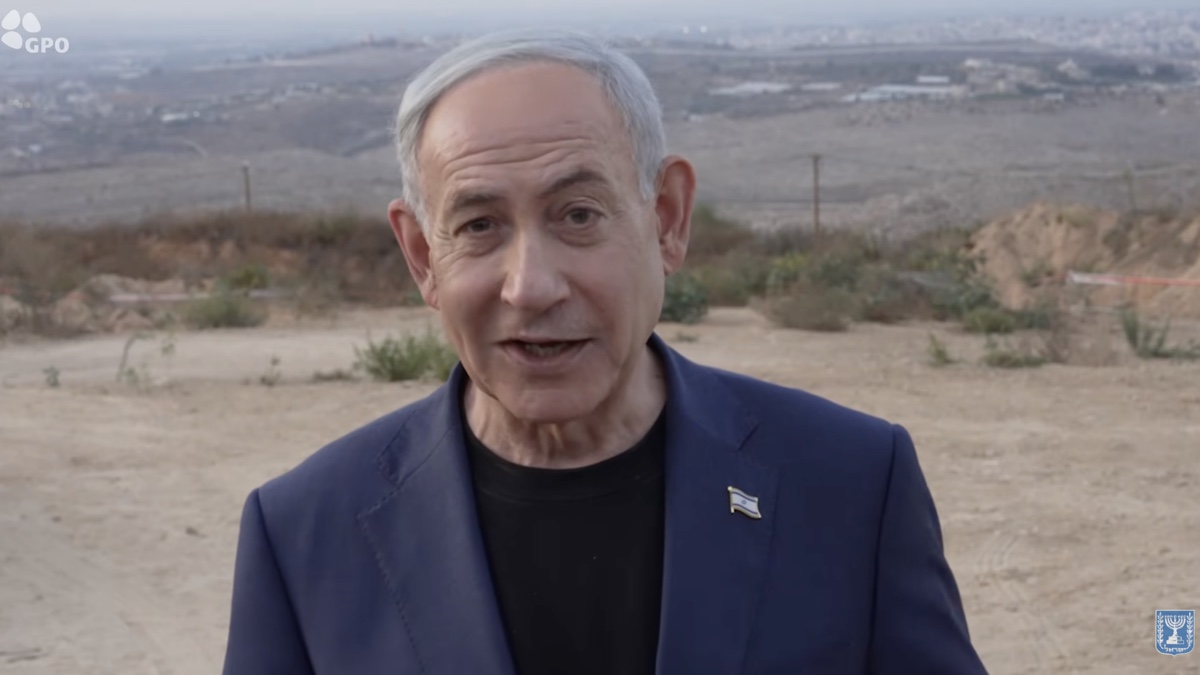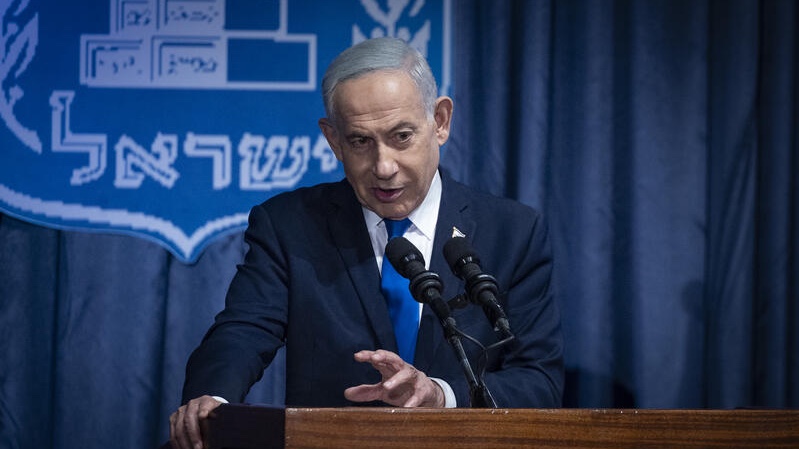

Days before the election, Prime Minister Benjamin Netanyahu gathered diplomatic correspondents at the Prime Minister’s Office to present his national security policy, which includes 11 core principles:
- Military superiority – The State of Israel must always be one step ahead of its enemies. It must avoid merely containing enemy attacks and enemy force buildup, must ensure a superiority in capabilities over all its enemies, and must not rely on the intentions of enemies and friends, which may change.
- Preventing nuclear weapons – including through preemptive offensive action.
- Deterrence – establishing a credible threat by maintaining the capacity for precise and massive firepower, and the ability to thwart and disrupt military and civilian systems.
- Early warning – obtaining and maintaining a continuous and effective intelligence picture of the enemy’s capabilities and intentions, in a way that prevents surprise.
- Initiative, stratagem and a critical approach – cultivating these principles in the IDF and all the security services, including readiness for a surprise preemptive strike. Netanyahu cited as examples the pager operation against Hezbollah and the elimination of Hassan Nasrallah.
- Defense – stopping invasions at the borders, maintaining buffer zones as needed, defending the home front against attacks from within and without, providing a response to surprise attacks and the drone threat, and constant readiness for war.
- Alliances – leveraging Israel’s value as an asset to advance regional and international alliances. Netanyahu stressed that, in light of Israel’s achievements in the war, various countries in the region and beyond want to forge alliances with Israel. In this context, he said US President Donald Trump is right that the Abraham Accords are back on the table. “You hear about one or two countries, but that’s just the tip of the iceberg.” Netanyahu declined to say how Israel had helped the Saudis against the Houthis. “There are several countries in the Middle East reaching out to us. I won’t go into detail. But one thing will not happen: we will not establish a Palestinian state. We will not commit suicide to reach an agreement that would bring us to the brink of the abyss.”
- Technology and independent force buildup – reducing dependence on foreign actors; strengthening Israel’s own capacity in force buildup, research and development, and domestic production, and achieving world-power capabilities in critical technologies (quantum, artificial intelligence, space and more); and significantly increasing the defense budget to NIS 450 billion. “We are in an immediate technological race, and we must lead it.” Netanyahu stressed that Israel does not want to again find itself where it was under President Joe Biden and the arms embargo imposed on it.
- The battle for consciousness – developing capabilities, including artificial intelligence, for the cognitive battle against Iran and other enemy states, and fighting anti-Zionism and antisemitism in the international arena.
- Victory – breaking the enemy’s power and its belief in its ability to pose a real threat, by means of all the principles above.
- National spirit – national cohesion and agreement on fundamental principles, first among them: Israel as the nation-state of the Jewish people; democratic government; willingness to fight for the country’s security while striving for victory; encouraging independent thinking; settling the Land of Israel and cultivating Israel’s heritage; maintaining ties with Diaspora Jewry; and encouraging aliyah. Netanyahu stressed that the nation is less divided than people tend to think, and that there is more that unites us.
According to Netanyahu, the October 7 attack forced Israel to fight back. Through continuous fighting, Israel removed the imminent danger of nuclear annihilation and broke the Iranian axis’s stranglehold. The government and the security cabinet made sound decisions, the IDF and the security services struck forcefully, and the civilian home front stood firm.
The War of Redemption, he said, required a refresh of basic principles in the traditional concept of national security, among them: prioritizing prevention and offense over containment and defense, including preemptive strikes to thwart emerging threats; strengthening home-front defense against new threats; establishing Israel’s status as a regional power; building maximum independence in munitions; securing the edge in the most advanced technologies; and intensifying the fight against waves of global antisemitism. At the same time, opportunities have arisen to forge new alliances in our region and beyond.
The threats
Netanyahu presented the main threats facing Israel. In weaponry: nuclear weapons; drones from within and without (meaning drones launched from inside Israeli territory or from Judea and Samaria); precision missiles; cyber, artificial intelligence and quantum (a threat that could paralyze the country); illegal weapons inside Israel; unmanned underwater vehicles and UAVs (Netanyahu even spoke of a new threat of unmanned vehicles that would burrow up through the ground, mole-style); and rapidly evolving weaponry. Netanyahu noted that he has set up a special team to deal with the drone threat.
In terms of arenas, the main threats are: Iran’s Shiite axis and the Muslim Brotherhood axis led by Turkey; a merging of the axes; terrorism and internal security threats; delegitimization and isolation from allies; and the borders – northern, eastern and western. That means sealing all of the country’s borders. “You want to turn Israel into a fortress. You have to control all the borders,” he stressed.
Netanyahu said that three weeks ago the IDF presented him with a plan for dealing with the prospect of Palestinian Authority forces turning their guns on Israel. The essence of the plan is how to answer such a turning of the guns, and forcefully: to conquer and destroy all centers of threat.
Netanyahu also said most countries in the region are very concerned about the axes merging, and that against this backdrop, alliances are being forged in the region at this very moment.
Iran
On Iran, Netanyahu made clear that Israel has eliminated the threat of Iranian atomic bombs, but compared the country to a cancer that spreads metastases.
“Khamenei led a move toward weaponization and the construction of more fortified nuclear sites, so we eliminated more scientists and more of their capabilities, including ballistic missile production. There is no guarantee it won’t rebuild them. Even when this regime is beaten, it has the ability to recover, and it would then rebuild nuclear capabilities and unconventional weapons. Preventing this is a supreme objective. This has been the work of my adult life.”
Netanyahu noted that Iran, Hamas and Hezbollah are deterred and are not attacking Israel, even as Iran attacks every other country in the region. “Deterrence is holding for us, but we can’t build on it,” he said. “That doesn’t mean Iran won’t try to attack us before the election. This is definitely a temporary victory. We will have to live by our sword for many years, and it’s important that it stay sharp. You’re a small country, but you need to be a giant country. Israel is like the honey badger that drives off lions. Israel is the honey badger of the nations.”
He stressed that the current Iranian regime must fall, and that he is committed to that. “The most important thing is to topple the Iranian regime, and then all the proxies will collapse like dominoes. As long as the regime is there, it will try to renew the nuclear program, the missiles and the axis. The economic situation in Iran is very difficult, and there are the first buds of protest. Our plan for toppling the regime is very comprehensive and determined. That is the directive I have given to all the security agencies. We are on the verge of a huge victory.”
Eisenkot and the next two years
In response to questions, Netanyahu attacked his primary election rival, Gadi Eisenkot, claiming he would be unable to take advantage of the window of opportunity presented by President Trump’s remaining two years in office.
“Who will remove the existential threat that remains? Gadi Eisenkot was prepared to let [Hamas leader Yahya] Sinwar leave Gaza and get to Qatar. Who will finish the job? I am anxious. These people are a terrible danger with their weakness. And who will work with Trump during these two years?
“There is a second threat: in two years, a president could come to power who is very hostile to Israel. So during these two years we need to act on the American front and build alliances with other countries, such as India, and with the change in Latin America. We must widen the circle of alliances.”
Judea and Samaria, Gaza and Lebanon
On violence by Jewish rioters in Judea and Samaria and the damage they cause Israel internationally, Netanyahu said: “This is a bad thing that harms the country. That’s why we brought in the Shin Bet, and we will deploy more measures. But this is a propaganda attack against us.”
On Gaza, Netanyahu said no international force has entered the Strip so far, and in his view no such force will. Israel will not allow Gaza to be rebuilt before Hamas is disarmed. “We agreed to an Emirati bubble adjacent to the western part of the security zone and allowed infrastructure work there.”
On Lebanon, and the further meeting between the two militaries expected in the United States this week, Netanyahu said that if the Lebanese army is able to disarm Hezbollah, all the better, but if not, the IDF will do it. “Unfortunately, as of this moment the Lebanese army isn’t prepared to, but there is some change.”
On the flydubai affair and the review team set up at the National Security Council, Netanyahu said the team has reached initial conclusions. “A global fix is needed. Now pilots need to be screened as well. There are always loopholes. It’s a big struggle.”
Trump, Turkey and Putin
On his work with Trump, Netanyahu said: “We have worked excellently together with Trump, and we will continue to do so. The goals I am presenting are not dependent on American consent. The need to eliminate the nuclear threat stands on its own, and if necessary, it will be done independently.”
On tensions with Turkey, Netanyahu said the issue is a point of disagreement between him and Trump. “I stand by my position on Turkey. Turkey wanted to enter northern Syria, and we prevented it. I would be glad if warm relations with Turkey returned, but I don’t think that will happen under [Recep Tayyip] Erdogan, who talks about destroying Israel. I hope we don’t reach a head-on collision.” Without naming a country, he added: “We are preparing for various possibilities, including alliances with countries that see the threat in a similar way.”
On his relationship with Vladimir Putin, Netanyahu said Israel has raised with Russia its concern over the use of bots in Russia against Israel. He noted that following the Ukrainian attack on a data center in Russia, anti-Israel and pro-Palestinian discourse on social media fell by 60 percent.
“Where there is an opportunity to cooperate with Russia, we do it. Russia understands that it has interests that could be harmed, such as a nuclear or Islamist Iran. Iran has insane views about conquering the world, so I certainly try to make the most of the shared interest, and where that isn’t possible, I stand firm on ours.”
Want more news from Israel?
Click Here to sign up for our FREE daily email updates