
The Israeli army has published new findings on Hamas’s use of Nasser Hospital in Khan Yunis in the southern Gaza Strip. According to the information, dozens of Israeli and foreign hostages were held at the medical facility during the war. At the same time, the hospital is said to have served as a military headquarters.
The information was released in connection with an Israeli airstrike on Nasser Hospital in the early hours of Thursday. Among the targets was Muhammad Abu Ismail, the commander of Hamas’s Khan Yunis Brigade.
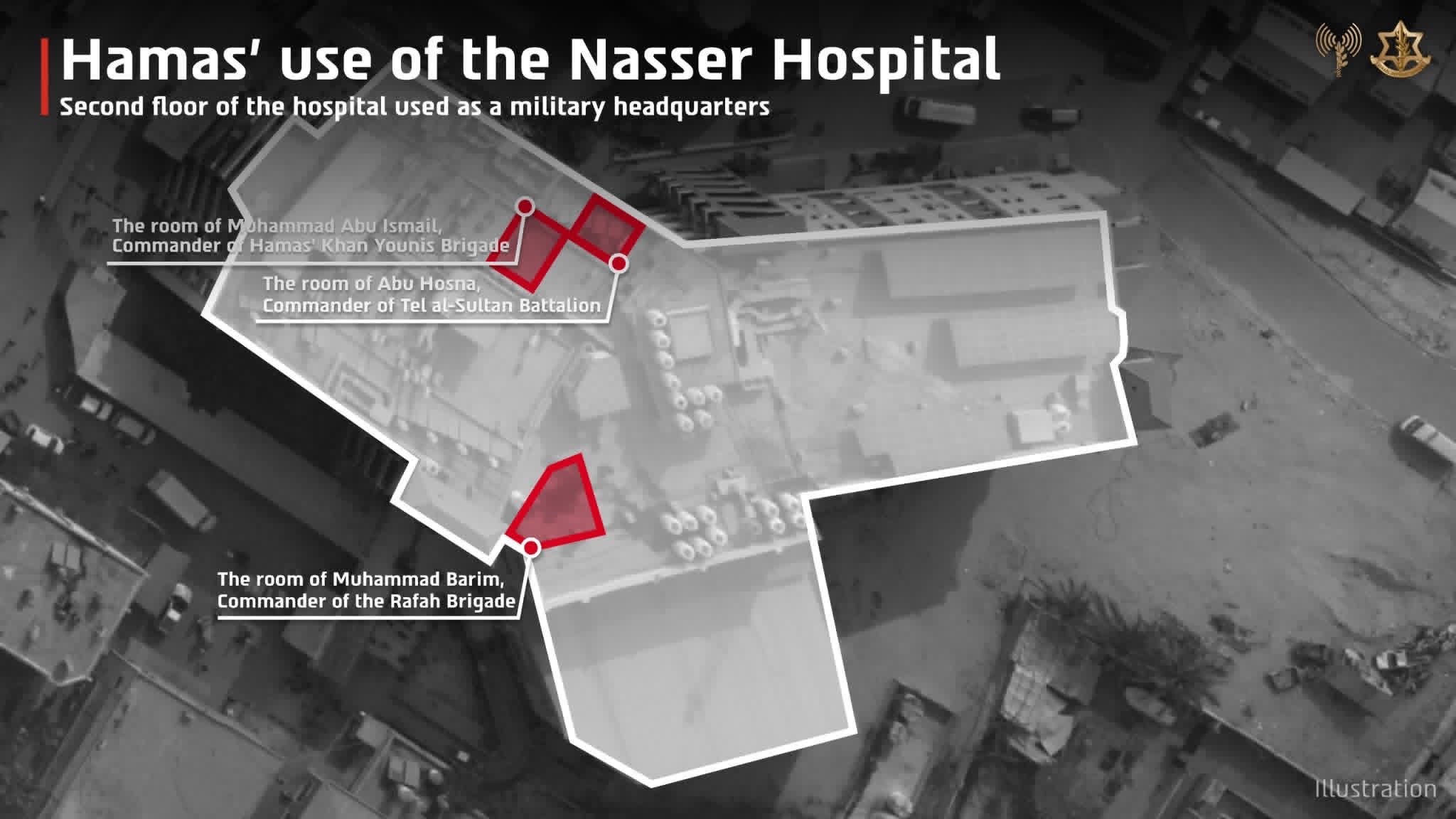
According to the military, the second floor housed a heavily guarded area that was off-limits to civilians. Senior Hamas commanders are said to have coordinated military operations from there.
‼️🏥 Hamas’ exploitation of the Nasser Hospital: The hospital’s second floor serves as a Hamas military HQ, where civilians are not permitted to enter, as it is used by Hamas commanders, including Muhammad Abu Ismail, the Khan Yunis Brigade Commander who was targeted in the strike earlier today.
Dozens of hostages were held captive at the Nasser Hospital, and Muhammad Abu Ismail was responsible for holding numerous of them, including: Nimrod Cohen, Matan Zangauker, Edan Alexander, Avera Mengistu, Colonel Asaf Hamami, Staff Sergeant Oz Daniel & Captain Omer Neutra.
The strike was specifically directed at the room from which the brigade commander & the other terrorist were conducting military activities. Prior to the strike, the IDF warned on several occasions that the military activity at the hospital be halted. Despite these warnings, the activity at the hospital did not cease.
— Israel Defense Forces (@IDF) November 12, 2026
According to the military, the hostages held at the hospital included residents of Kibbutz Nahal Oz, women, children, elderly people, and foreign nationals. Former hostages had previously reported being held at the facility during their captivity.
The military use of Nasser Hospital is not a new allegation. As early as February 2024, Israel Today reported on evidence that Hamas had held hostages there. Former hostage Ilana Gritzewsky later testified before the UN Security Council about being held in a cordoned-off section of the hospital guarded by armed Hamas members. Internal Hamas documents also provided further evidence of the use of medical facilities for military purposes. In February 2026, Médecins Sans Frontières scaled back its operations at Nasser Hospital after the organization reported armed men and suspected weapons movements within the facility.
Hamas commander held responsible for hostage captivity
Abu Ismail is said to have been personally responsible for the captivity of several Israelis, including Nimrod Cohen, Matan Zangauker, Edan Alexander, and Avera Mengistu. The remains of fallen soldiers Assaf Hamami, Oz Daniel, and Omer Neutra are also said to have been under his responsibility at certain points.
Following the killing of the previous brigade commander Muhammad al-Yazouri in September, Abu Ismail had assumed a leading role within Hamas’s Khan Yunis Brigade. Israeli security forces accuse him of having been involved in rebuilding their military capabilities.
The airstrike also targeted Muawad Tawfiq Mahmoud Abu Zarifa, a senior official in a technical unit, and Khaled Osama Abu Anza, who is said to have been responsible for communications within the military intelligence apparatus.
Further allegations against Hamas
The Israeli army and the domestic intelligence agency Shin Bet also accuse the terrorist organization of storing weapons at the hospital, conducting interrogations, and torturing people. Attacks on Israeli soldiers are also said to have been planned from there.
According to security forces, repeated demands to cease military activities at the medical facility went unheeded.
Precision munitions and aerial surveillance were used in the strike in order to minimize civilian casualties and damage as much as possible. According to the Hamas-controlled Health Ministry in the Gaza Strip, six people were killed, including a surgeon and a 13-year-old boy. At least 28 others were injured.
Whether Abu Ismail was killed in the strike was initially unclear.
Hospitals enjoy special protection under international humanitarian law. This protection may be forfeited under certain conditions if a facility is used for military purposes. However, the obligation to protect the civilian population and to ensure proportionality remains in force.
Want more news from Israel?
Click Here to sign up for our FREE daily email updates