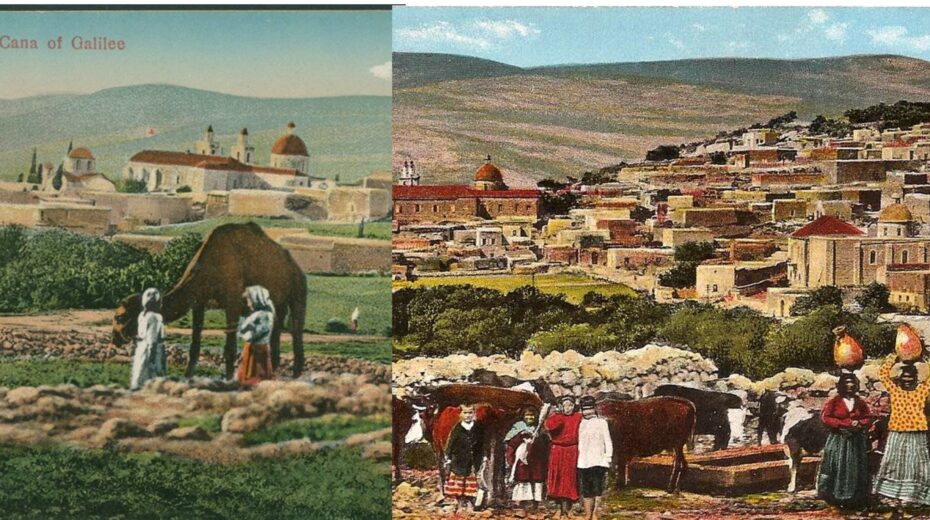

There are at least 100 Muslim towns and ruins across Israel and the so-called “West Bank” whose Arabic names preserve and are derived from the names of ancient Hebrew villages mentioned in the Bible.
It should be obvious. But in a woke world obsessed with the Palestinian narrative, we need to clearly state the obvious.
Muslim armies invaded from Arabia, defeating the Byzantine Christian Empire and local Jews in this land between 630 and 640 AD, and then colonized it. Thus began a process of Arabization of the land and language during which many place names were preserved from Hebrew and simply “Arabized.”
Here are some examples, from north to south:
Cana ⇒ “Kanna” in Arabic This Israeli-Arab town is at the northern outskirts of the Nazareth. “On the third day a wedding took place at Cana in Galilee. Jesus’ mother was there, and Jesus and his disciples had also been invited to the wedding. When the wine was gone, Jesus’ mother said to him, ‘They have no more wine…’” (John 2:1-3). You know what happened at that Jewish wedding next… Today...
Become a Member
-
Read all member content
Get exclusive in-depth reports from Israel.
-
Get exclusive in-depth reports from Israel
Connect with Israel, right from your home.
-
Lift up the voice of truth and hope
Support Jerusalem-based Zionist journalism.

Already a member? Login here.