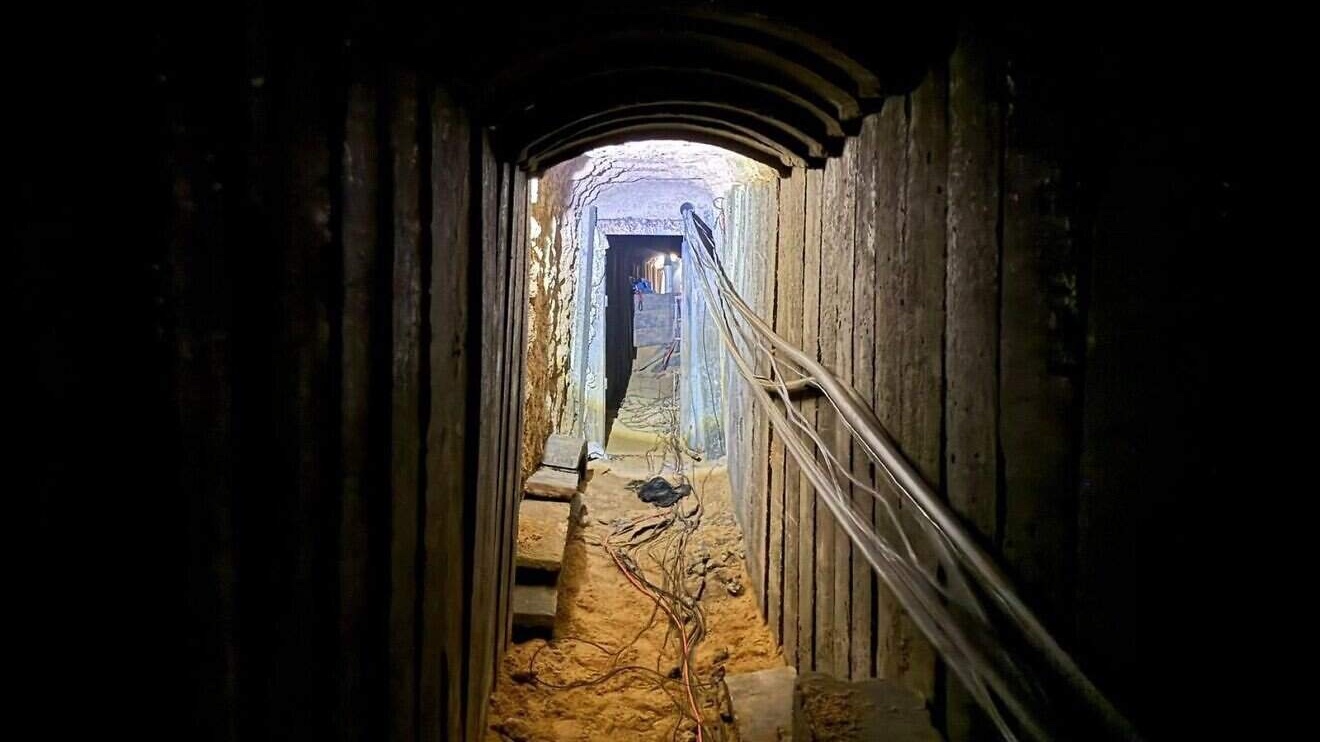

(JNS) Deep in a dark tunnel under Gaza two years ago, a group of six Israeli hostages lit Hanukkah candles and sang the holiday song, “Maoz Tzur.” Watching this unbelievable scene unfold on a recently released video, recovered in Gaza by the Israeli military, truly embodied how this prayer represents the spiritual strength of the Jewish people during times of challenge. Viewed now, knowing that just eight months after this scene was filmed that these six hostages would be murdered in captivity, these scenes are as heartbreaking as they are inspiring.
Just three days after these videos moved the Jewish world, 15 people were gunned down at a Hanukkah event on Australia’s Bondi Beach, including Chabad Rabbi Eli Schlanger, darkening the world before the sun even set to usher in the first night’s menorah-lighting. Still, millions of Jews went on to light candles around the world and sing “Maoz Tzur.”
The six hostages—Hersh Goldberg Polin, Carmel Gat, Eden Yerushalmi, Almog Sarusi, Or Danino and Alex Lubanov—along with the victims of the massacre in Australia, are on our minds this Hanukkah as we light candles for eight nights.
With its repeated formula of adversity and salvation, “Maoz Tzur” is more than a Hanukkah song; it is an anthem of Jewish resilience throughout history. While the identity of its author remains unknown, the acrostic formed by the first letter of its first five stanzas spells “Mordechai,” presumed to be his name. The sixth and final paragraph is a later addition to the poem, likely composed before 1250, toward the end of the Crusader period.
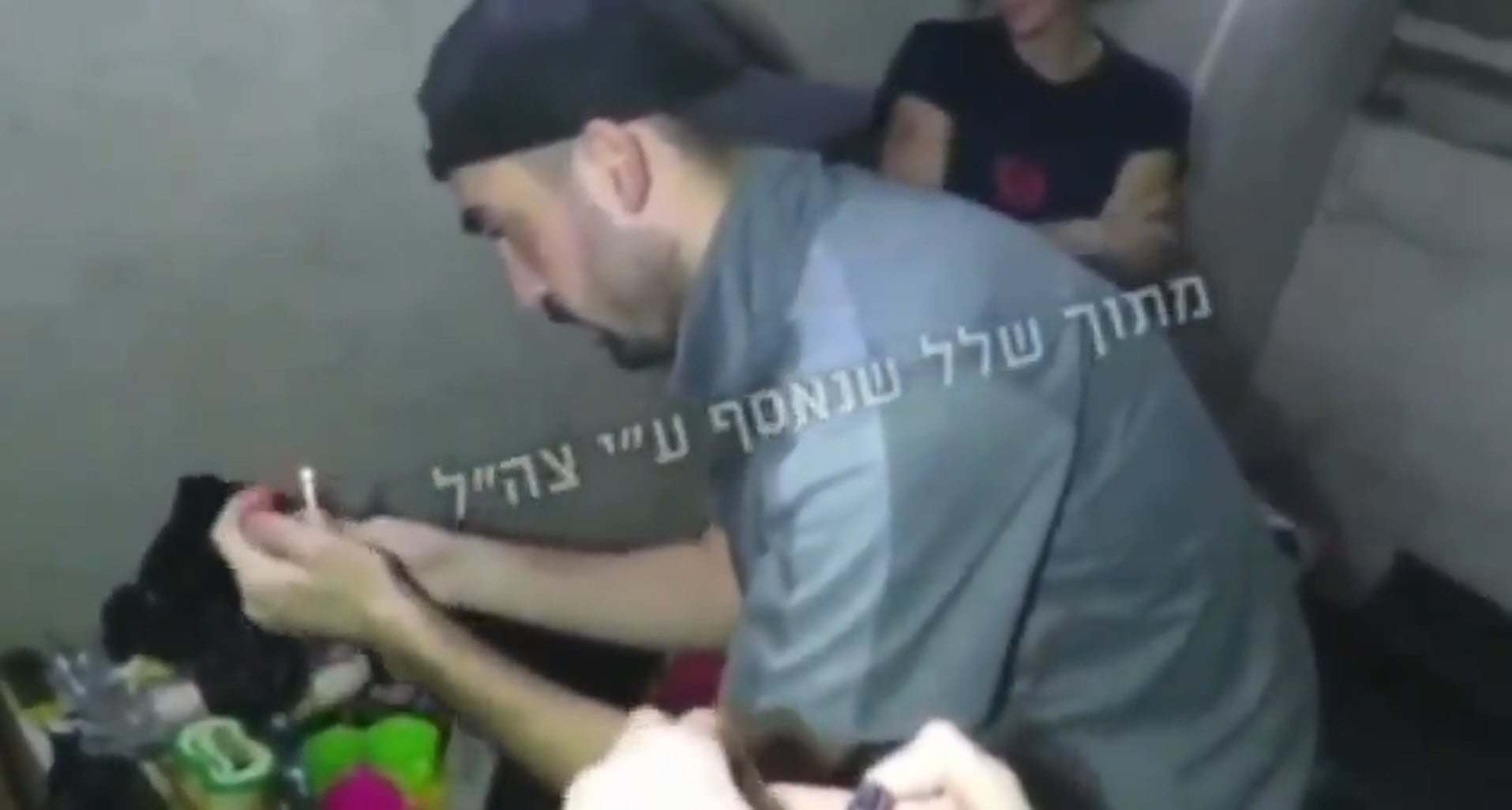
Six Israeli hostages celebrate the holiday of Chanukah in Hamas captivity, December 2023. Credit: IDF Document and Technical Collection Unit.
At least 27 tunes have been composed to this hymn of spiritual fortitude, attesting to its centrality in Jewish identity.
The first stanza expresses our trust in God as a savior and anchor in turbulent times. The second recalls the miracle of the Exodus; the third, the redemption of the Jewish people after 70 years of Babylonian exile; and the fourth recounts the Purim story. The fifth stanza is the only one centered on Hanukkah—detailing the threats and destruction wrought by Antiochus and the Greeks, and the miraculous Divine salvation of the weak from the strong, symbolized by the small jar of olive oil.
The meta-narrative running throughout the song is that the events of Hanukkah are but one example within a broader arc of crisis and redemption. Our unshaking commitment to God and the spiritual strength we maintain even in times of trouble form a larger Jewish story, symbolized by this holiday, but manifested across centuries and places.
The final stanza takes the form of a prayer for ultimate redemption, but its immediate focus is on the threat posed to the Jews in the Middle Ages by Christian rulers and societies. Some scholars have suggested that the adversary “Admon” mentioned at the song’s close might be a veiled reference to Frederick Barbarossa (i.e., Redbeard), the Roman Emperor around the time of the poem’s composition. The vision of the “seven shepherds” at the song’s conclusion is a reference to a prophecy of Micha (5:4), interpreted by the Talmud (Sukkah 52b) as describing the great leaders and progenitors of Jewish and human civilization throughout history who stood up for justice and holiness, even in the face of adversity and oppression.
The Jewish dynamic of spiritual resistance and faith-based resilience, of course, continued long after the Middle Ages.
Yaffa Eliach, a noted scholar of the Shoah, recounts in Hasidic Tales of the Holocaust of how Jews lit Chanukah “candles” in Bergen-Belsen using an inmate’s wooden clog as a menorah, strings pulled from a camp uniform for wicks and black shoe polish for oil. Even as countless Jews were being murdered every day, the concentration camps’ inmates—living skeletons—nevertheless assembled to perform the mitzvah. So many of them would crowd to witness the lighting that the Chassidic Bluzhever Rebbe made a point of reciting the celebratory third blessing: Shehecheyanu. When questioned how such a blessing could be recited in a concentration camp, he pointed to the spiritual resistance of the hundreds of Jews around him, choosing faith amid unimaginable darkness. (He survived, moved to Brooklyn, NY, and lived to 100.)
In the same vein, Ralph Melnick, in his article “Our Own Deeper Joy, Spiritual Resistance after the Holocaust,” testifies how thousands of women in Auschwitz defiantly sang “Maoz Tzur” during Hanukkah, affirming their faith that the Almighty, with His outstretched arm, would ultimately redeem his people and avenge their innocent blood. These stories and many, many others, including the hostages in Gaza who managed to sing and light candles, show how even thousands of years after the events of Chanukah, Jews engage in amazing acts of faith and spiritual fortitude, continuing to set their sights on redemption and salvation even at the lowest nadirs of human suffering.
We, in our own generation, continue the inspiring holiday tradition of channeling spiritual strength to overcome terrible challenges. In the wake of Oct. 7 and the war on multiple fronts that followed, we have held fast to our faith in God and the promise of a brighter tomorrow.
Communities facing antisemitism in the Diaspora continue to display their lights in public. Our soldiers have held their heads high while lighting candles and reciting “Maoz Tzur” among the ruins of Gaza, in the brush and mires of Lebanon, and at the top of the Hermon ridges overlooking a troubled Syria. Uncertainty and fear will remain part of our reality, but the light of our faith will not flicker or fail.
And with God’s help, we will continue to spread the light of Torah and the message of Hanukkah throughout a world that one day will be stronger, safer and better.
Want more news from Israel?
Click Here to sign up for our FREE daily email updates