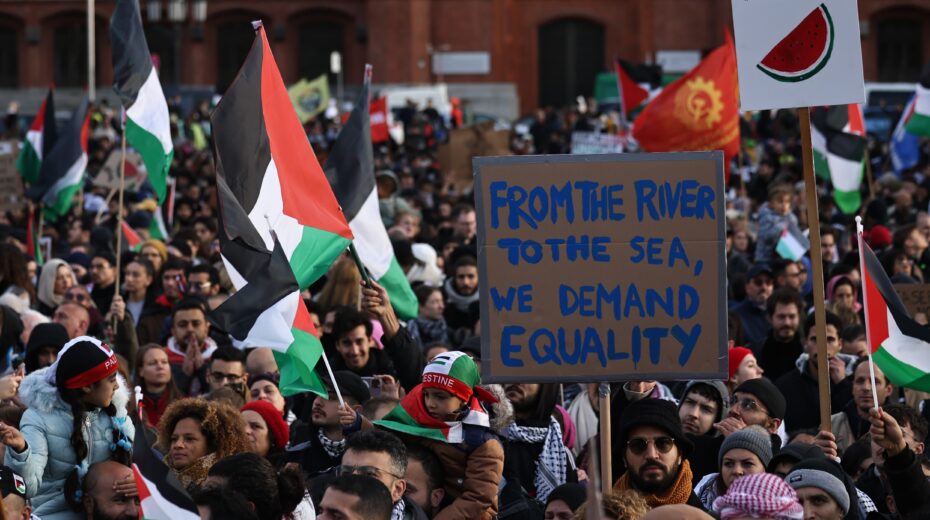

These are the kinds of signals that are watched closely in Israel. In Germany, a notable tightening of criminal law is currently taking shape. According to media reports, the German state of Hesse has submitted a draft law that would explicitly criminalize denial of Israel’s right to exist.
The draft provides for such statements to be punishable by up to five years in prison or a fine. This would take Germany into new legal territory — while also sending a clear political message.
Hesse’s Minister-President Boris Rhein put it unmistakably: “Anyone who denies Israel’s right to exist attacks Jewish life — and therefore also our free democratic basic order.” According to Rhein, the aim is not to suppress criticism of Israel, but to close a gap in criminal law.
That gap is real. Until now, denying Israel’s right to exist has not been clearly punishable in Germany. Existing laws against incitement to hatred apply in certain cases, but many statements have so far remained in a gray area. This is precisely where the political debate begins — a debate that has grown significantly sharper since October 7, 2023.
At the center of this discussion is also the well-known slogan “From the river to the sea, Palestine will be free.” For many in Israel, its meaning is clear: it does not describe a political program, but the vision of a space without Israel. In Germany, however, debate continues over whether and when its use is punishable.
The Hessian initiative would significantly reduce this uncertainty. Statements that deny Israel’s right to exist or imply its abolition could in future be clearly treated as criminal acts.
The background to this development is serious. Since October 7, the number of antisemitic incidents in Germany has risen sharply. Jewish life is once again under greater pressure in many places — a reality that can no longer be politically ignored.
At the same time, the planned legal change touches on a central question for Western democracies: where does freedom of expression end, and where does the line begin at which a state must protect its constitutional order? In Germany, the answer is becoming increasingly clear.
For many Israelis, this step is more than just domestic politics. It is understood as a sign that Germany is not merely emphasizing its historical responsibility rhetorically, but is prepared to draw concrete consequences from it.
Whether the law will actually be passed remains to be seen. But one thing is already clear: the debate marks a turning point — not only for Germany, but for Europe’s handling of antisemitism as a whole.
Want more news from Israel?
Click Here to sign up for our FREE daily email updates