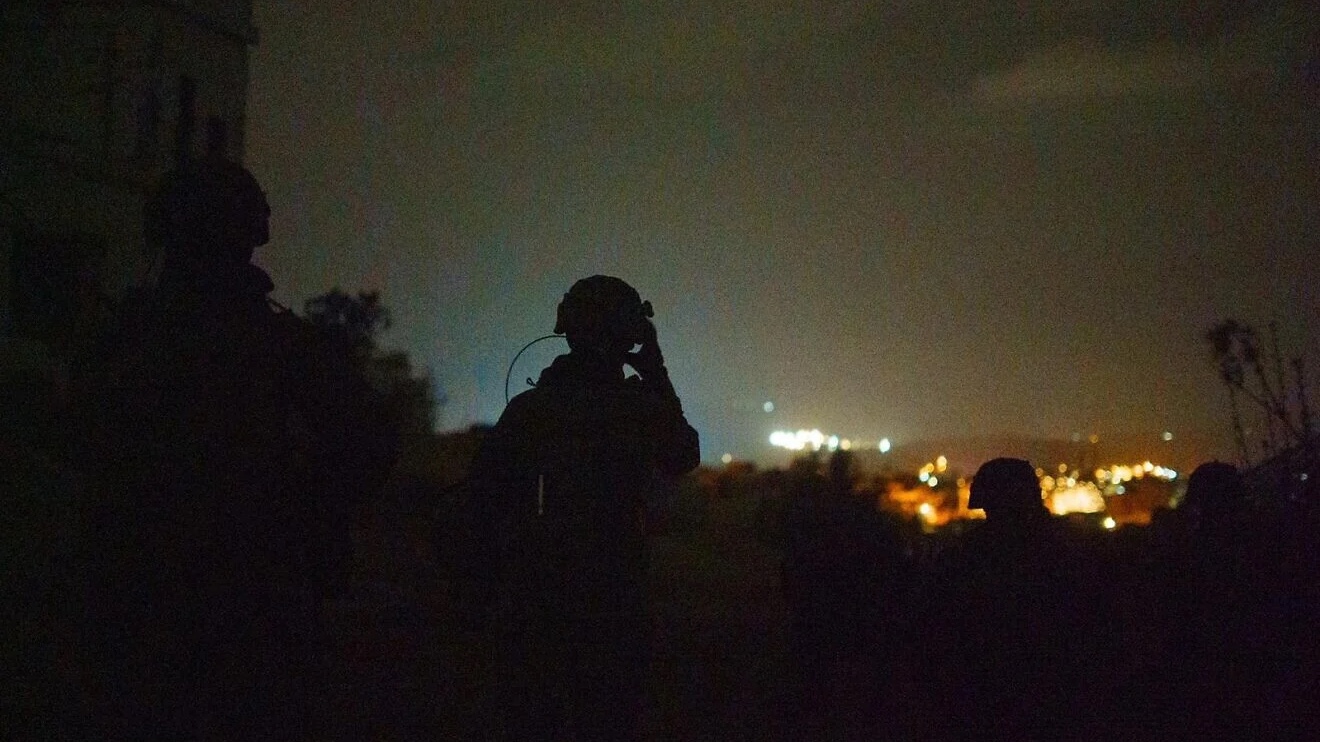
(JNS) The Israel Defense Forces has officially initiated ground operations in southern Lebanon, marking a major milestone in the campaign to push Hezbollah terror forces away from northern Israeli communities.
The Israeli military confirmed on Monday that in recent days, troops from the 91st Division began “limited and targeted ground operations against key Hezbollah strongholds in Southern Lebanon.”
The military stated that this activity is aimed at enhancing the forward defense area. These operations include the systematic dismantling of terrorist infrastructure and the elimination of terrorists operating in the area, aiming to remove threats and create “an additional layer of security for the residents of northern Israel,” the IDF stated.
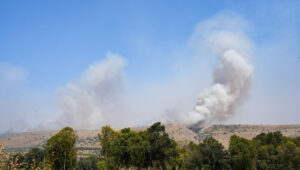
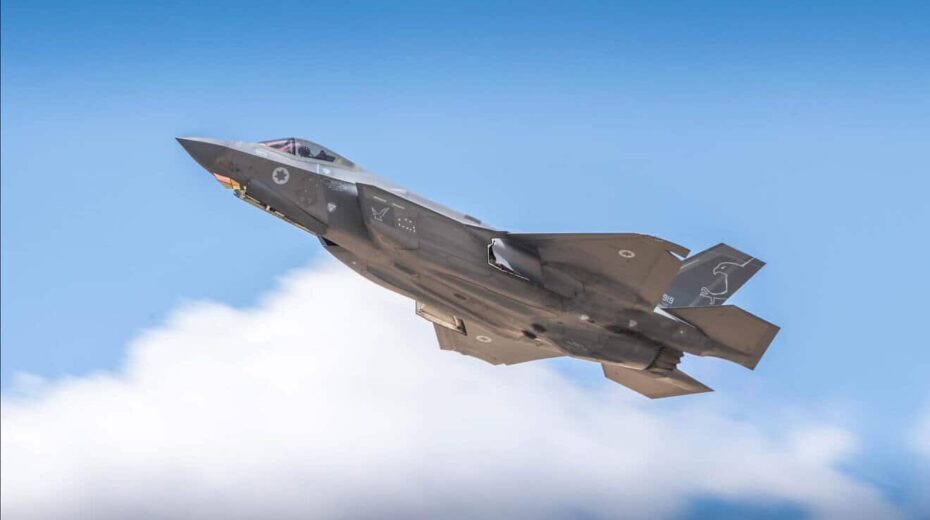
Prior to the troops entering the area, the IDF said it conducted strikes using both artillery and the Israeli Air Force against numerous terrorist targets to mitigate threats in the operational environment. Concurrently, IDF soldiers continue to carry out defensive missions to protect Israeli communities in the Galilee.
Defense Minister Israel Katz confirmed the intent of the ground incursion during a situational assessment held on Monday at the military headquarters in Tel Aviv, alongside the senior military brass, stating that the ground maneuver in Lebanon is aimed at removing threats and protecting the residents of the Galilee and the north.
The defense minister said hundreds of thousands of Shi’ite southern Lebanese residents have been evacuated from their homes and would “not return south of the Litani River until the security of [Israeli] northern residents is guaranteed.”
Referring to the slain leaders of Hezbollah and Iran, he added that if Hezbollah Secretary General Naim Qassem “misses Nasrallah and Khamanei so much, he can meet them soon in the depths of hell together with all those eliminated from the axis of evil.”
Earlier on Monday, IDF International Spokesperson Lt. Col. Nadav Shoshani, speaking to journalists on a conference call, stressed that Hezbollah made a deliberate decision to join the war alongside the Iranian regime over two weeks ago.
Shoshani explained that the military’s main mission is to prevent a situation in which Hezbollah will infiltrate or fire rockets, missiles, or anti-tank RPGs “directly toward Israeli homes.”
He noted that Hezbollah has been firing approximately 100 rockets a day, sometimes peaking higher, and has sent hundreds of Radwan Unit commando terrorists down south towards the Israeli border.
The 91st Division’s ground operation is “targeted and limited,” said Shoshani, stating they are aimed at removing threats by operating in areas from which threats are posed against civilians.
Changing defense concept
Lt. Col. (res.) Dr. Shaul Bartal, a senior research fellow at the Begin-Sadat Center for Strategic Studies at Bar-Ilan University who served extensively in various security capacities, told JNS on Sunday that Israel’s defense concept changed after Oct. 7, 2023, and the country is now in a situation where it cannot rely on “concepts of deterrence” against an attack.
“Our enemy can surprise us at any time, and therefore there is no feasibility of defending the northern communities without ground forces sitting inside Lebanese territory and defending the northern settlements from there,” said Bartal.
He recalled that the period of security prosperity for Israel’s northern communities was when the IDF actively controlled a security zone in Lebanon from 1985 to 2000.
However, Bartal noted that Israel has lost the ability to build a security zone based on local forces like the South Lebanon Army, many of whom were defined as traitors by Hezbollah following the sudden IDF withdrawal in 2000.
In such a situation, Bartal argued, the only option for a security zone is clearing the area and the villages, evacuating the population northwards, and establishing an Israeli security zone up to the Litani. From a military perspective, this is Israel’s best option, the former officer argued.
Bartal anticipated massive diplomatic efforts from the Lebanese government to prevent this outcome, potentially including declarations that the Lebanese army can handle Hezbollah or even the signing of a non-belligerency agreement with Israel.
“This diplomatic scenario is the only thing that could prevent the establishment of an Israeli military security zone up to the Litani River,” he said.
“We also must remember that part of the southern Lebanese villages are still ruined and have not begun rehabilitation. Hezbollah sustained heavy losses. Many of the southern [Lebanese] population have de facto evacuated north. The military scenario I describe of an Israeli control without almost any residents up to the Litani River is the reasonable military scenario.”
Creating a new buffer zone
Col. (ret.) Dr. Jacques Neriah told JNS that the goal of the current operations is to push Hezbollah out of the area and create the buffer zone that Israel wants to establish in a future arrangement with the Lebanese government.
Neriah heavily criticized the Lebanese Armed Forces and its commander, Joseph Aoun, for failing to disarm Hezbollah south of the Litani as previously promised.
He explained that LAF Commander, Gen. Rodolphe Haykal, and the LAF representative overseeing the ceasefire, Brig. Gen. Nicolas Tabet, who is in charge of the southern sector in Lebanon, are looking ahead to a civilian political career. Haykal wants to be the president of Lebanon just as the former LAF chief, Joseph Aoun, had done.
To achieve this, Neriah argued, Haykal “must cultivate his relationship with Hezbollah and avoid being antagonistic” toward the terror group.
This political calculus, Neriah added, is the reason the Lebanese army “has done nothing and why these commanders only blames Israel for violations of previous agreements while ignoring Hezbollah’s actions.
Analyzing the IDF’s likely intentions, Neriah assessed that the goal is to reach the third line of villages in southern Lebanon. This line may be north of the Litani River in the eastern sector and south of it in other areas, indicating that the intention is not to create a continuous line, “but rather to select strategic points.”
“This is a bargaining chip, which, in the context of negotiations over the security zone, or over the ceasefire with Lebanon,” said Neriah, enabling Jerusalem to demand a buffer zone under control and supervision of Israel and the United States.
Neriah also warned of the potential for a civil war in Lebanon if the Lebanese government were to actually order its army to act against Hezbollah.
He referenced threats from certain Lebanese officers, warning the army commander that the military would disintegrate if deployed against the terror group, an event that would shatter the fabric of the Lebanese state.
In addition to ground maneuvers, the IDF has been conducting extensive strikes against Hezbollah headquarters to dismantle the organization’s command structure.
Want more news from Israel?
Click Here to sign up for our FREE daily email updates