(JNS) Qatar’s decades-long project of bankrolling pro-Islamist, anti-Israel and anti-Western causes could be the first casualty of the collapse of a critical energy income stream, a former U.S. national security adviser told JNS in recent days.
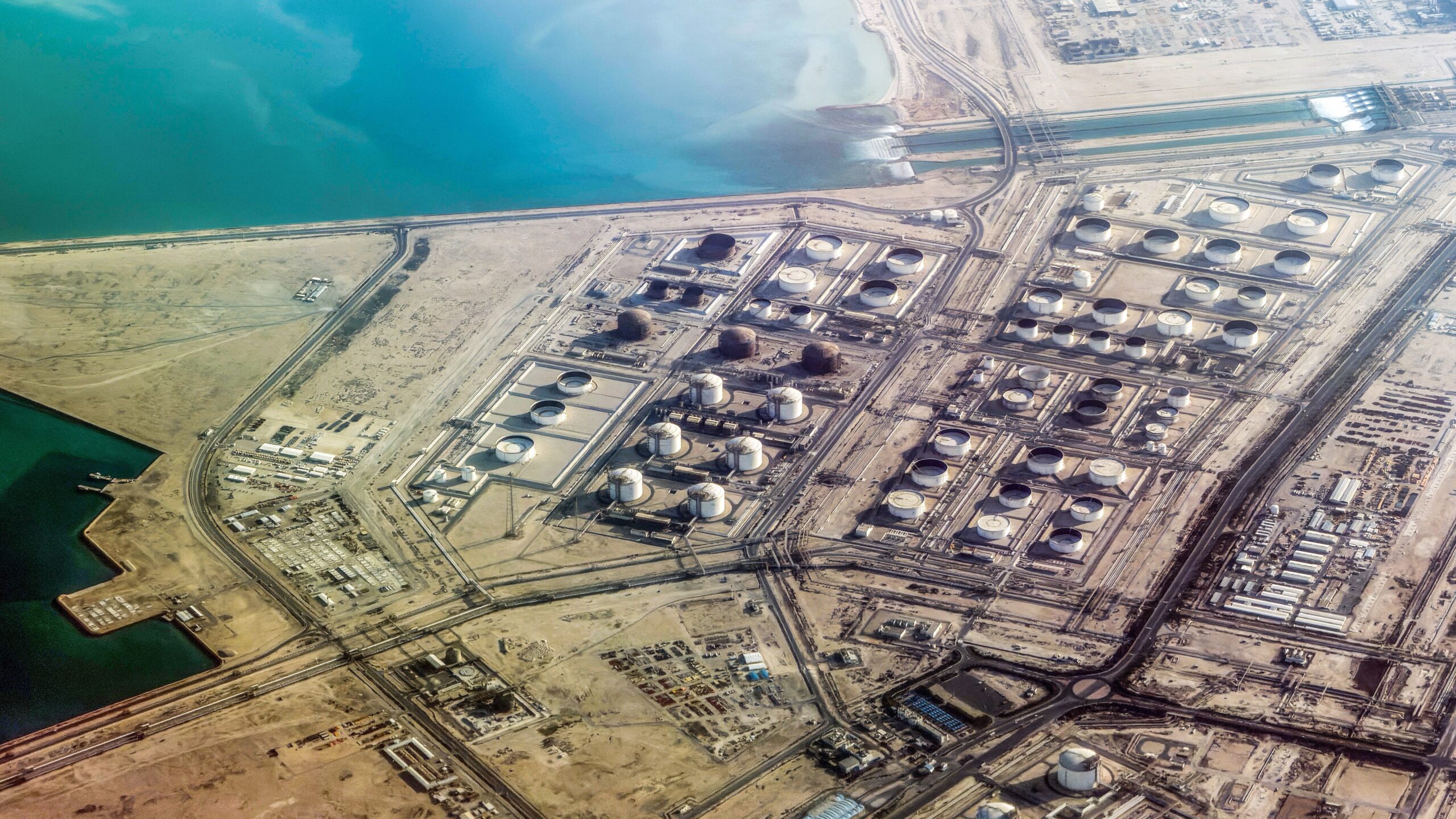
Qatar’s liquefied natural gas (LNG) exports plunged 96% amid the fallout from the war with Iran, according to a recent Reuters report, following heavy damage to the Qatari Ras Laffan LNG facility from Iranian drone and missile attacks.
Reuters reported the same day that QatarEnergy is now negotiating multiyear contracts with U.S. producers to secure LNG through 2031 to replace the lost capacity, with QatarEnergy Trading seeking 2 million to 3 million metric tons per year.
QatarEnergy CEO Saad al-Kaabi told Reuters on March 19 that Iranian strikes on Qatar had knocked out 17% of the country’s LNG export capacity, comprising two of the company’s 14 LNG production trains and one of its two gas-to-liquids facilities at the Ras Laffan complex, the world’s largest LNG-producing site.
Al-Kaabi said the damage, totaling 12.8 million tons per year of lost production, would take three to five years to repair and would cost Qatar an estimated $20 billion annually in lost revenue, with supplies to Europe and Asia affected for years. QatarEnergy subsequently declared force majeure on long-term LNG contracts with customers in Italy, Belgium, South Korea and China.
‘Hard choices’
John Hannah, a senior fellow at the Washington-based Jewish Institute for National Security of America and a former national security adviser to U.S. Vice President Dick Cheney, said the devastating loss of Qatar’s LNG revenues could force Doha to reconsider its international investments.
“Hopefully, Qatar’s decades-long project to advance pro-Islamist, anti-American, anti-Israel causes will be one of the first casualties of the devastating loss of its LNG revenues,” Hannah said.
Hannah said the collapse of Qatar’s gas export income has left the ruling royal family facing an unfamiliar set of constraints.
“For the first time in a long time, Qatar’s leaders have to make hard choices on how they are going to keep their domestic economy afloat, their Western partners happy, and the ruling family in power without the LNG golden goose providing endless mountains of cash for massive welfare benefits, payoffs and strategic foreign investments,” he said.
According to Hannah, the fiscal reckoning facing Doha should extend beyond domestic austerity and into a fundamental reassessment of Qatar’s international posture.
“They are being forced into a major belt-tightening and part of that reckoning should be a decisive turn away from the two-faced foreign policy that had them playing all sides of the Middle East’s divide between pro-Western pragmatic modernists and anti-Western extremist Islamists,” he said.
Hannah argued that Doha’s long-running strategy of simultaneously courting Washington and accommodating Islamist actors across the region has now visibly failed.
“That’s the strategy that came crashing down on their heads when the same Iranian regime they’d spent years seeking to accommodate and appease didn’t think twice to devastate Qatar’s LNG lifeline in retaliation for an Israeli strike on Iran’s South Pars gas field that Qatar had nothing to do with,” he said.
He added that Western governments now have an opening to press Doha toward a genuine policy shift.
“Ensuring that reckoning happens and gets reflected in Qatari policy should be a priority for the U.S. and its allies in their engagements with Doha going forward,” he said.
‘An attempt to calm the markets’
Qatar expert Dr. Ariel Admoni of Ariel University and the Jerusalem Institute for Strategy and Security told JNS that Doha may itself have helped release some of the information about its economic difficulties.
“First of all, it must be said carefully, Qatar helped leak out some of the data [regarding its economic troubles] in order to control the flow of information, to project credibility to investors, to ostensibly project responsibility that we are cutting,” he said.
“Perhaps suddenly we’ll see more talk about companies passing through, ‘private’ Qatari entities that step in ostensibly as a kind of substitute for the state,” Admoni added.
He assessed that the underlying motivations behind Qatar’s spending, including its campaigns against Israel, are unlikely to disappear even if headline budgets shrink.
“This is mainly an attempt to calm the markets, so even if we see certain cuts in soft-power policy, I do not foresee a complete turnaround. In the end, this sector also helped it both economically and geopolitically, and defaming Israel helped it as a kind of insurance certificate for the Islamist regimes that it needs the economic ties with there, for example business in Afghanistan built under the Taliban government, and Qatar needs to ‘prove’ that it is not pro-Israel,” Admoni said.
Turning to whether the LNG crisis represented a broader failure of Qatar’s hedging strategy between Iran and the United States, Admoni said the setback was real but should be seen in a Gulf-wide context.
“This is a Gulf-wide failure, that this whole approach of hedging did not work with Iran, but if we look at the percentage of hits and at the fact that despite what is happening with the Houthis and despite the extremely angry messages toward Iran—it’s true, there was the significant hit at Ras Laffan—but there is no additional hit, so relatively the hedging achieved the most that it could in navigating between the Revolutionary Guards and Trump,” said Admoni.
With both sides viewing Qatar positively, its approach, while damaged, has held up better than might have been expected given Doha’s direct exposure to the conflict.