(Israel Hayom) Nearly five decades after the Islamic Revolution that toppled Iran’s monarchy, the name Pahlavi still stirs strong emotions among millions of Iranians. For some, it represents an era of modernization and growth; for others, a complex chapter in the country’s history. But for supporters of the Iranian opposition, especially in diaspora communities, it also symbolizes hope.
At the center of this story today stands a younger member of the family: Princess Noor Pahlavi, the eldest daughter of Iranian Crown Prince Reza Pahlavi and the granddaughter of Iran’s last shah, Mohammad Reza Pahlavi.
Noor, 34, who was born and raised in the United States, has never set foot in Iran. Yet, she says, the country she has never seen with her own eyes has always been a central part of her identity.
“My family, my father and grandmother in particular, have kept Iran’s memory alive for us,” she said in an interview with Israel Hayom.
A family that became a symbol
The Pahlavi dynasty, which ruled Iran from 1925 to 1979, occupies a central place in the debate over the character of modern Iran. It was founded by Reza Khan, a military officer who rose through the ranks of the Persian Cossack Brigade and, in 1921, led a military coup in Tehran, becoming the dominant figure in the country. In 1925, the Majlis, Iran’s parliament, deposed the absent Qajar king. Reza Khan was crowned Reza Shah Pahlavi, establishing the new dynasty.
From the outset, the monarchy presented itself as a force determined to pull Iran out of backwardness, fragmentation and foreign dependence and transform it into a more secular and modern state. During Reza Shah’s rule, sweeping reforms were implemented to rebuild state institutions.
In 1941, amid the Anglo-Soviet invasion of Iran during World War II, Reza Shah was forced to abdicate. His son, Mohammad Reza Shah Pahlavi, ascended to the throne.
His long reign, which lasted until the Islamic Revolution in 1979, proved even more complex. In its early years, he ruled a country suffering from foreign occupation, inflation, political struggles and internal divisions, but he gradually consolidated his power.
In the 1960s, he launched the “White Revolution,” a sweeping reform program designed to accelerate Iran’s development. According to the Pahlavi family, this was a period during which Iran sought to present itself as a renewed regional power: more Western in character, with a developing economy, modern state institutions and relative openness to the world.
Yet these achievements also sparked fierce backlash. The shah’s reforms threatened traditional power centers, particularly the Shi’ite religious establishment, which saw many of the reforms, especially those concerning women’s status, secular education and the reduction of clerical influence, as a direct threat to the existing order.
At the same time, rapid economic growth and development did not erase criticism of the regime’s character, its repressive mechanisms and the gap between its vision of progress and the lack of genuine political openness. During the 1970s, protests expanded, and the struggle between the palace and its religious and political opponents intensified.
In 1978, the demonstrations turned into a nationwide wave. In January 1979, Pahlavi lost control of the country in the wake of the Islamic Revolution.
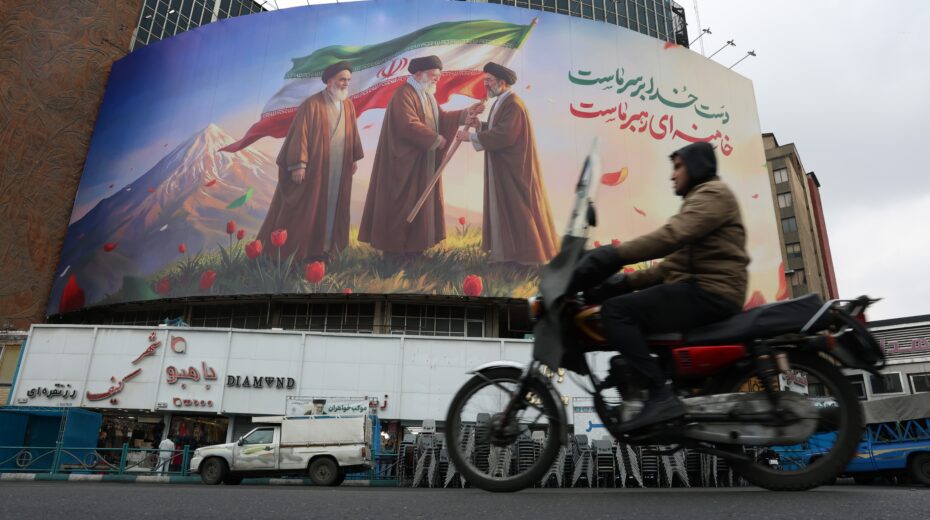
On the ruins of the monarchy, the Islamic Republic was established under Ayatollah Ruhollah Khomeini, a regime that has ruled Iran with an iron fist and continues to seek to export the Islamic Revolution to this day.
Since the revolution, the Pahlavi family has lived in exile, but its name has not disappeared from the Iranian arena. The shah’s son, Reza Pahlavi, was in the United States when his family fled Iran. At 18, he had been a cadet pilot training for the Iranian Air Force in Texas.
In 1980, shortly after his father’s death, he declared himself the crown prince of Iran. Over the years he has become one of the most recognizable figures in the Iranian opposition outside the country. He repeatedly stresses that his struggle is not meant “to restore the crown,” but to allow the Iranian people to choose for themselves, through free elections in a democratic framework, their future system of government.
In recent years, particularly following the protests after the death of Mahsa Amini in 2022 and the waves of demonstrations that followed, he has tried to present himself as a unifying figure for a broad camp of regime opponents.
According to Noor, Iran’s history before the revolution presents a very different picture from the one widely known today.
“Pre-1979 Iran had one of the fastest-growing economies in the world. Women gained the right to vote in 1963, before Switzerland. Literacy more than doubled in a generation. Tolerance of all lifestyles and religions was at an all-time high.”
She also refers to Iran’s relations with Israel and the Jewish community. During the shah’s era, Israel and Iran maintained quiet strategic cooperation that included security, intelligence and economic collaboration.
“Iran and Israel maintained a positive, collaborative relationship, with Iran containing the highest population of Jews in the Middle East outside of Israel at the time,” she said.
Asked to describe the Iran she dreams of visiting one day for the first time, Noor paints an almost utopian vision.
“I imagine an Iran where people are working together, respecting differences of opinion, and keeping their eyes on the success of their country and its democratic process.
“I imagine the Iran my father has spent his life fighting for. A nation at peace with its neighbors, in partnership with the world. I want to see an Iran where every citizen has a stake in the country’s progress, where we embrace each other’s differences and move forward as a team. That Iran is within reach.”
In recent years, and especially following the massive protest wave triggered by the death of Mahsa Amini in 2022, opposition figures as well as officials in the United States and Israel have argued that the Islamic Republic is facing unprecedented weakness. Pahlavi shares that view.
“This regime has lost the support of the people, it is isolated regionally, its proxies have been heavily weakened,” she said, referring to Iran’s terrorist proxies Hamas in Gaza, Hezbollah in Lebanon and the Houthis in Yemen, “and it is increasingly fragmented.”
According to Pahlavi, a major conference held in Munich in 2025 succeeded in bringing together a wide range of political factions. “At the 2025 Munich National Cooperation Conference that my father hosted, the democratic opposition, which included left and right, republican and monarchist, all ethnic groups, came together and agreed on a common agenda for action.”
War and fear of the regime
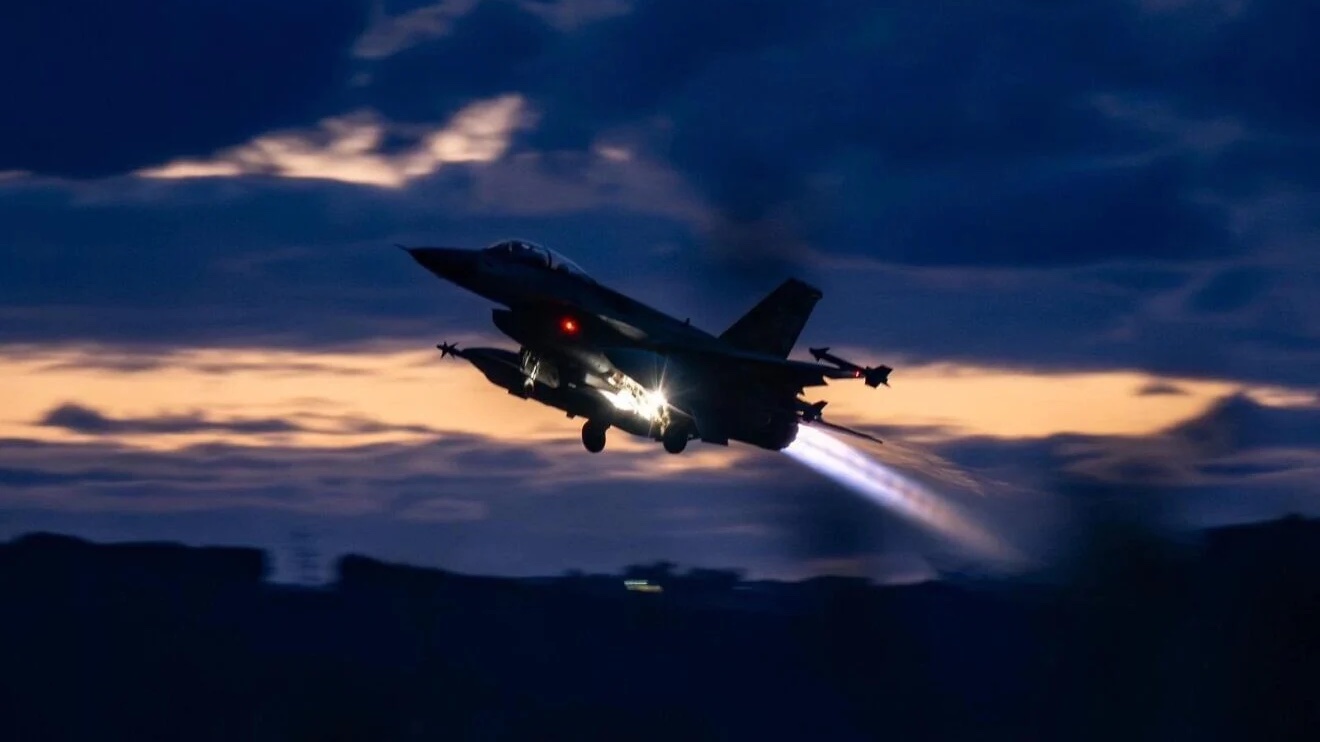
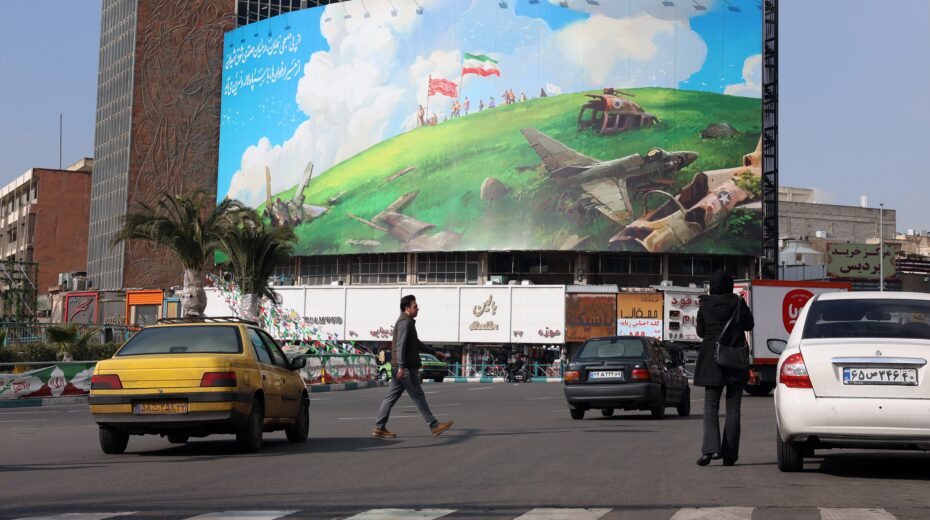
Against the backdrop of the current round of fighting involving the United States and Israel, I asked Pahlavi how Iranians themselves perceive the situation. According to her, many fear the regime more than the war.
“Every day, I am reminded to share that their greatest fear at the moment is the war ending with the regime and the [Islamic Revolutionary Guard Corps] staying in power. Iranians support targeted military action against the IRGC and its repressive apparatus. Videos coming from inside Iran show families celebrating the strikes, expressing a sense of justice for their loved ones.”
In recent years, Reza Pahlavi and his team have been working on a comprehensive plan to rebuild Iran after the fall of the regime.
The plan is called the Iran Prosperity Project and aims to present a roadmap for rebuilding the country after the Islamic Republic, from the days immediately following the regime’s collapse to the establishment of a democratically elected government.
According to Noor, the plan is meant to prevent chaos after the fall of an authoritarian regime.
Future ties with Israel
One of the most intriguing questions concerns relations between Israel and Iran.
Following the revolution, the Islamic Republic became one of the Jewish state’s most bitter enemies, openly calling for Israel’s destruction and attempting to create a “ring of fire” around it through its proxies.
Could that relationship change in the future? “Absolutely,” Pahlavi said without hesitation. “A democratic Iran would fundamentally change relationships across the entire Middle East, making peace between Iran, its Arab neighbors, Israel, and the United States not only possible but durable.”
“My father’s vision, and the work his team has already begun, includes what we call the ‘Cyrus Accords,’” she said, referring to the 6th-century BCE Persian king Cyrus the Great, who allowed Jews to return from Babylon to Jerusalem and rebuild the Temple.
“This is a future peace and cooperation agreement between Israel and a free, democratic Iran, and other countries in the region,” she explained.
“A delegation of economists and environmental experts has already met with Israeli officials and scientists to address Iran’s water crisis, electricity shortages and economic collapse under the regime.”
A free Iran, she said, “will harbor constructive partnerships with its neighbors, not export terror to them. That future is within reach.”
At the end of the interview, Pahlavi stressed that such a future is not only an Iranian interest and called for global support.
“Support the transition plan, and stand with Iranians as they reclaim their place in the free world. Supporting a free Iran is not a favor to Iranians, but a strategic investment in global security and stability,” she said.
“The day after the regime falls, we all become active participants in building this start-up nation,” she continued. “And we are ready.”
Originally published by Israel Hayom.