
all

all

Silent on Iran, obsessed with Gaza: The UN’s human rights double standard exposed

As Tehran kills thousands in weeks, UN experts who issued endless statements on Gaza suddenly lose their voices

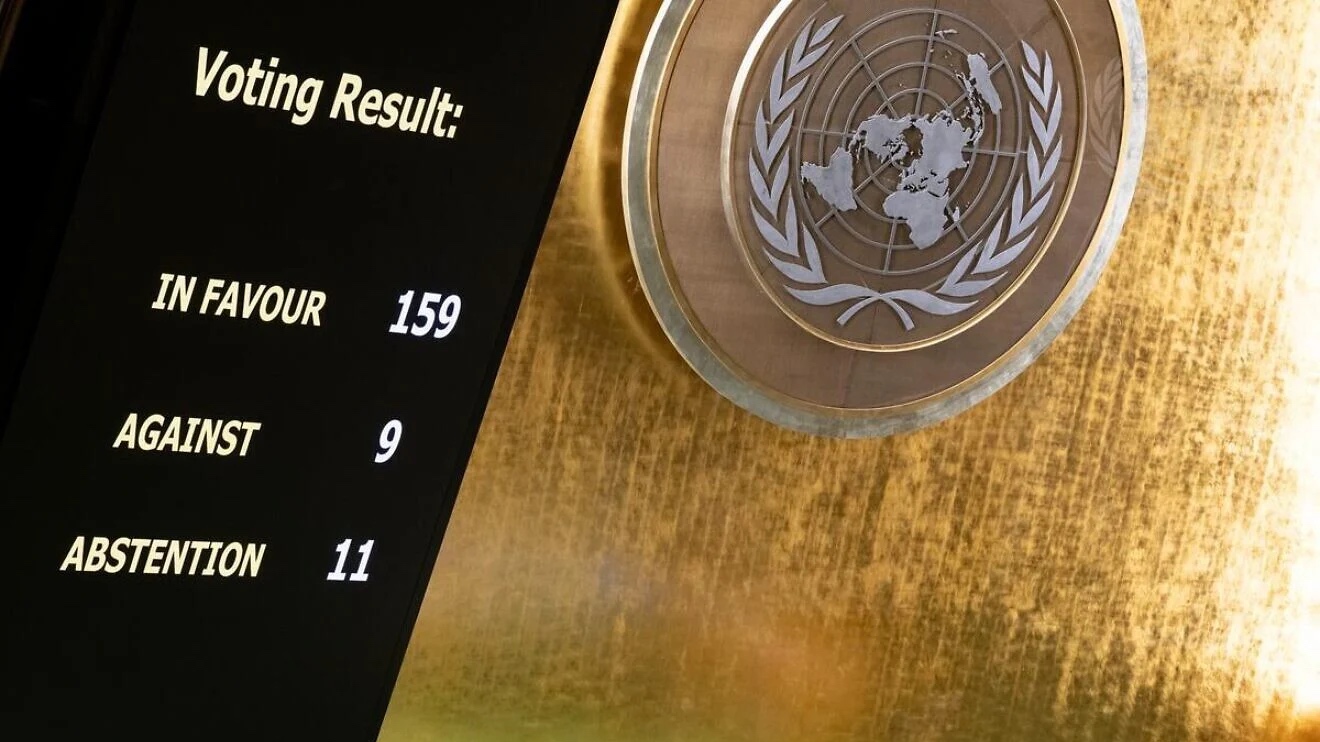
The UN General Assembly adopts a resolution on “Support for the mandate of the United Nations Relief and Works Agency for Palestine Refugees in the Near East (UNRWA)” during the resumed 10th Emergency Special Session of the General Assembly, Dec. 11, 2024. Credit: Manuel Elías/UN Photo.

The United Nations’ human rights experts have never struggled to find their voices when Israel is involved. Over the past two years, they have issued a steady stream of statements, condemnations, urgent appeals, and special reports on Gaza—often within hours of Israeli military actions, frequently before facts were established, and sometimes on the basis of claims later proven false.

But when the Islamic Republic of Iran unleashed a campaign of mass killing against its own people—one that in just two weeks produced a death toll rivaling or exceeding two years of war in Gaza—those same UN experts largely fell silent.

The contrast is not subtle. It is damning.

According to a detailed analysis by UN Watch, of the 87 UN-appointed “Special Procedures” human rights experts, only five signed onto a joint statement condemning Iran’s crackdown on nationwide protests. That statement came weeks after security forces opened fire on civilians, imposed a near-total internet blackout, and carried out mass arrests across all 31 provinces of the country.

For an institution that cannot resist issuing statements about Israel, the silence on Iran speaks volumes.

Mass killing, minimal outrage

The protests that erupted in late December were sparked by economic collapse: a crashing currency, runaway inflation, chronic shortages of electricity and water, and the broader implosion of public trust in the regime. What began as economic unrest quickly turned into a full-scale political revolt, spreading from Tehran to Isfahan, Mashhad, Kurdistan, Baluchistan, and Ahwaz.

The regime responded as it always does—with bullets.

Live fire was used against demonstrators. Thousands were arrested. Families searched hospitals and morgues for missing relatives. Human rights organizations estimate that between several thousand and tens of thousands may have been killed, including women and children.

And yet, the UN’s human rights machinery—so hyperactive when Gaza is involved—barely stirred.

Instead of emergency sessions, flood-of-statements diplomacy, or coordinated pressure campaigns, the response consisted of a single, late joint statement and a handful of muted social-media posts.

Gaza as obsession, Iran as inconvenience

This selective outrage becomes impossible to defend when placed alongside the UN’s record on Gaza.

Since October 2023, UN human rights experts have issued dozens of statements on Gaza—many of them accusatory, speculative, or framed in legally charged language. Some were released within hours of Israeli strikes. Others relied on casualty figures supplied by Hamas-run authorities without independent verification.

Israel has been accused of everything from “collective punishment” to “genocide”—claims repeated reflexively, even as Hamas embedded itself in civilian infrastructure, used human shields, and openly declared its intent to destroy the Jewish state.

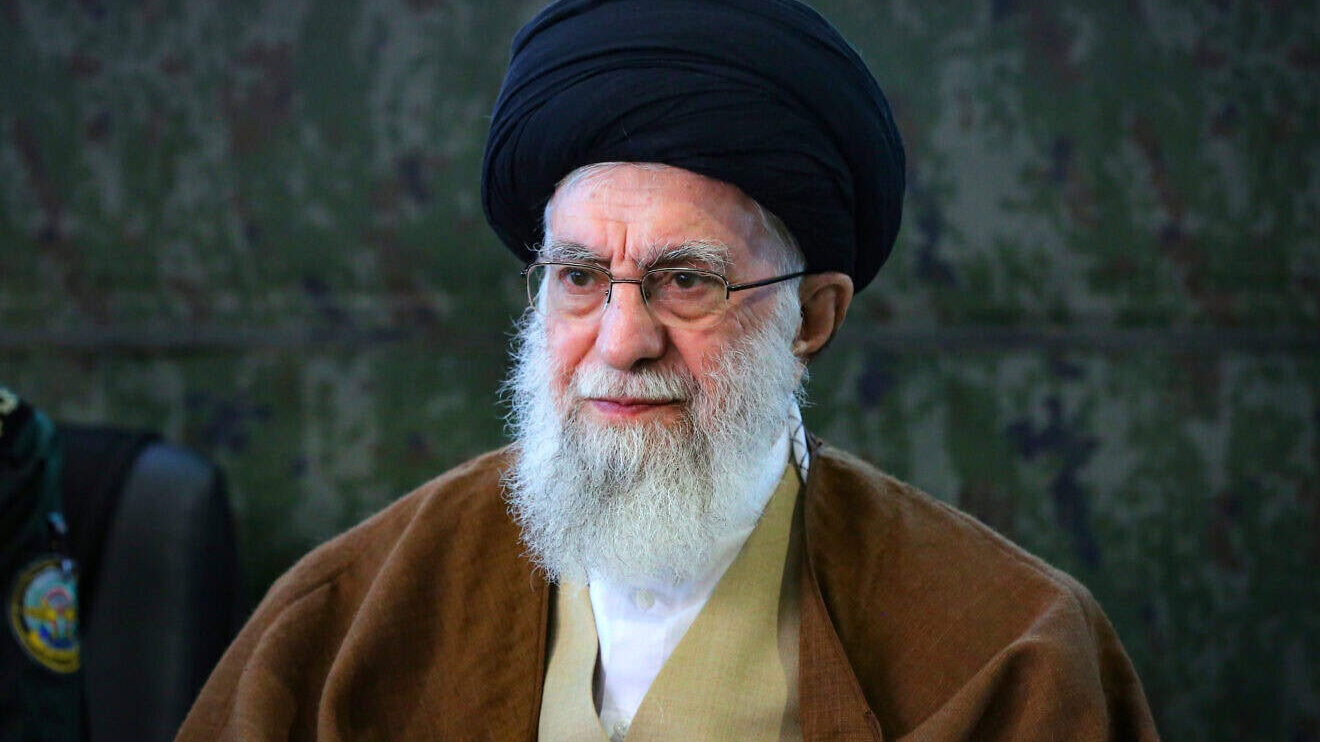
By contrast, Iran’s regime—an unelected theocracy that shoots protesters, executes dissidents, funds terrorist proxies across the region, and openly calls for Israel’s annihilation—was met with hesitation, delay, and procedural timidity.

This is not an oversight. It is a pattern.

A credibility crisis of the UN’s own making

UN Watch’s conclusion is blunt: the response to Iran exposes a politicized and selective human rights system, one that applies intense scrutiny to democracies—especially Israel—while extending indulgence or silence to authoritarian regimes aligned with fashionable ideological causes.

This is not the first time the imbalance has appeared. UN experts mobilized en masse after the death of George Floyd in the United States. They have issued repeated condemnations of Israeli counterterror operations. They routinely weigh in on Western immigration policy, policing, and climate regulation.

But when faced with an Islamist regime massacring its own citizens in real time, the urgency evaporates.

Such selectivity does more than discredit the UN’s human rights apparatus—it actively harms victims. By refusing to speak with clarity and force about Iran, the UN signals to the regime that the cost of repression is manageable, while signaling to protesters that they should not expect meaningful international backing.

Moral clarity is not optional

The Iranian people do not need symbolic statements or carefully hedged language. They need the kind of sustained international pressure that the UN has shown itself capable of deploying—when it chooses to.

Human rights are not advanced by obsessing over Israel while ignoring mass slaughter elsewhere. They are not protected by pretending that silence is neutrality. And they are certainly not defended by an institution that treats Islamist regimes with kid gloves while reserving maximal outrage for the Jewish state.

The UN’s human rights experts have made their priorities clear. And in doing so, they have revealed not only a double standard—but a profound moral failure.

If the United Nations wishes to retain any credibility as a defender of human rights, it must begin by explaining why thousands of Iranians gunned down in weeks elicit less outrage than Israel defending itself over years.

So far, there has been no answer. Only silence.

Want more news from Israel?
Click Here to sign up for our FREE daily email updates

About the author

Patrick Callahan

This is an example of author bio/description. Beard fashion axe trust fund, post-ironic listicle scenester. Uniquely mesh maintainable users rather than plug-and-play testing procedures.

Leave a Reply

Login

Privacy Overview

This website uses cookies so that we can provide you with the best user experience possible. Cookie information is stored in your browser and performs functions such as recognising you when you return to our website and helping our team to understand which sections of the website you find most interesting and useful.