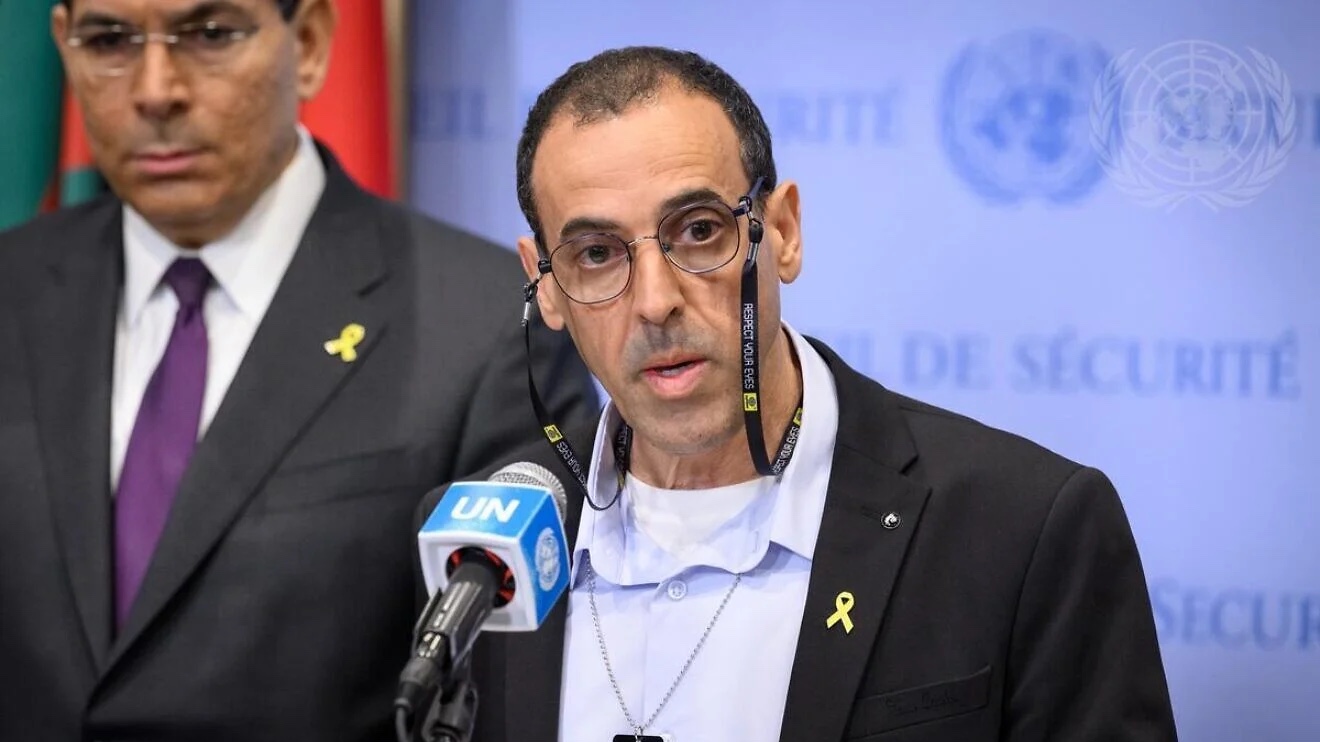
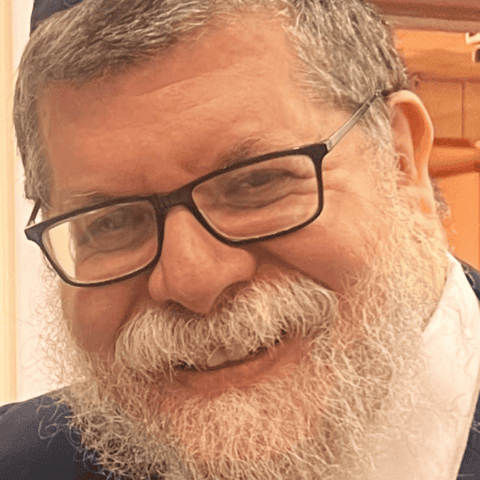
(JNS) On Feb. 9, 2024, one of the bleakest days of winter, an Israeli man named Sharon Sharabi visited the Ohel in Queens, NY, the resting place of the Lubavitcher Rebbe, Rabbi Menachem Mendel Schneerson. This site was a literal world away from the place Sharon called home. While he was there, he prayed with such fervor that all who beheld him were moved to take note.
What might he be praying for, they wondered? Who is this man? How does he pour out his heart and soul in a manner that stirs everyone who sees him?
A young man, a Chassid, approached Sharabi as he was leaving the Ohel after 40 minutes of communing deeply. He said, “I don’t know what you asked of God, but I do know that your prayers will be answered within the year.”
Sharon was praying for the release of his older brother, Eli, from Hamas captivity in Gaza after being taken hostage on Oct. 7, 2023.
One day short of a year, Eli Sharabi was released. The date was Feb. 8. In less than a year, he wrote a gripping account of his captivity titled, Hostage, which has become an overnight bestseller. Since it was published this fall, the 53-year-old has been on a book tour, visiting communities the world over to share this story.
Two days ago, on Dec. 9, Chabad Columbus in Ohio was privileged to host Sharabi for a community event.
Over the course of 34 years, the Jewish center has hosted innumerable programs featuring authors, Jewish leaders and even celebrities. But this program was a standalone, once-in-a-lifetime experience.
The impact of witnessing this strong yet gentle kibbutznik recount his ordeal as the audience sat, tearful and breathless, has changed people forever—it has changed me forever. I simply cannot stop thinking about his story, which is not only about surviving under the most adverse and impossible conditions, but also about his faith against all odds.
In this way, he is not only a survivor; he is a witness. And the world must listen.
A kibbutz dweller with a blessed life, Sharabi had everything taken from him on Oct. 7, when Hamas terrorists and Palestinian civilians alike stormed the paradise of his Be’eri community, dragging him into captivity, and murdered his wife and two daughters, though he did not know that at the time. He endured 491 days of torture, starvation, psychological terror and the deprivation of every basic human necessity in the subterranean hell of Gaza.
Against all odds, he emerged alive.
As Jews have done throughout their long and bloodstained history, Eli Sharabi made the decision not only to survive but to thrive—to embrace the gift of life.
“I love life,” he has been quoted as saying to explain his survival and decision to go on. The most inexplicable detail for many has been that his incentive was being reunited with his wife and daughters. One might have expected him to lose the will to live after learning of their murders, but Sharabi did what can only be seen as counterintuitive.
The story of Eli Sharabi is spreading throughout the Jewish community and the portion of the world that is still not poisoned by venal hatred of Jews, masquerading now as a faux political movement.
The utter lack of humanity, compassion and empathy for what Israel endured on that Black Shabbat has been displayed on American college campuses, on social media, at the United Nations, and in the streets of great cities in the United States and across the world.
The campaign of canards against Israel has kindled the kind of antisemitism not seen since the Holocaust.
As we note this death cult and the embrace of incivility, we need to take a page from Eli Sharabi and choose life. Choose to survive. Choose to dream of a better world. Choose to fight for what is important.
And maybe, just maybe, in the spirit of Hanukkah we need something else: a miracle.
Our tradition tells us that we cannot rely on miracles, ain somchim al ha-nes. But in the same breath, we know that we are commanded to celebrate them—to have an eight-day festival during the coldest, darkest time of winter, and to recount a tiny cruse of oil illuminating our Holy Temple, despite all odds, at a terrible and hopeless time for the Jewish people.
In the spirit of Hanukkah, may we be fighters like the Maccabees. May we always choose life.
Want more news from Israel?
Click Here to sign up for our FREE daily email updates