


(JNS) The Palestinian Authority is playing a slow game of attrition that it hopes will eventually leave it in charge of the Gaza Strip. For its leaders, the real endgame is the day after the day after.
The corrupt, authoritarian entity governing parts of Judea and Samaria has not abandoned its ambition to rule Gaza again. It is merely biding its time.
Much Western analysis rests on the convenient falsehood that Hamas has sidelined the PA in Gaza by outpolling it, defeating it militarily and reducing it to a diplomatic fossil in Judea and Samaria, where it watches events unfold from the manicured safety of Ramallah villas. This is wrong.
Its strategy is one of patience, which is not to be mistaken for passivity. The PA retains its goal of wanting to reclaim the Strip as part of a unified Palestinian polity under its control, but without inheriting the economic, political, military or moral wreckage that governing the coastal enclave would entail today.
The road to that outcome runs neither through resistance nor reform, but through attrition: waiting for Hamas to exhaust itself or for Israel to destroy it, and, ideally, for the international community to anoint the PA as the only “responsible” option left standing. This is not a peace strategy but a succession one.
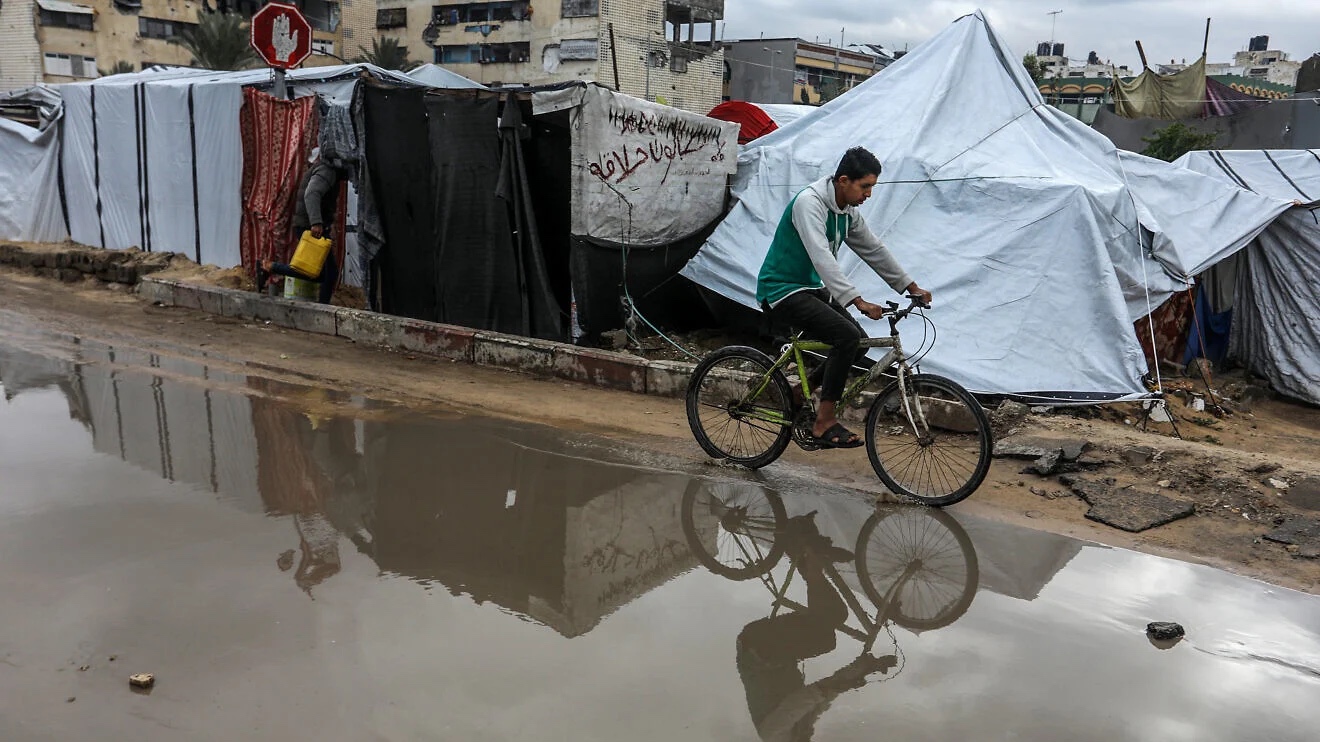
The PA does not see Gaza as lost; it sees it as frozen, like a distressed asset whose liabilities are too toxic to put on the balance sheet now. Hamas administers the daily catastrophe—electricity shortages, tunnels, militias, repression and perpetual war with Israel—while the PA preserves its diplomatic credentials and moral alibis.
Its leaders understand what Western diplomats refuse to acknowledge, which is that whoever governs the coastal enclave next will inherit failure—2 million traumatized civilians, a ruined economy, shattered infrastructure, armed factions loyal only to themselves and expectations that cannot be met, alongside rage that must be absorbed.
So the PA waits. It doesn’t challenge Hamas militarily because Israel is already doing the hard work of dismantling it. It does not reconcile politically (beyond hollow gestures) because reconciliation would require legitimacy it no longer possesses in Gaza. Instead, it cultivates a third posture: inevitability.
In Middle Eastern politics, where democracy is rarer than a good mood, inevitability is the functional equivalent of consent. The PA wants to be the only option left when whoever takes over Gaza next fails.
This cynical strategy divides labor. Hamas creates the physical devastation; the PA provides the narrative, speaks the language of international law, multilateralism and ritualized “moderation.” It files complaints, issues condemnations and reassures donors that it stands ready to govern—just not yet.
This arrangement allows it to preserve its claim to Gaza while assuming none of the responsibility for repairing it. When Hamas fires rockets, the PA condemns Israel’s response. When Hamas steals food, the PA blames the imaginary blockade. When civilians suffer, the PA presents itself as their representative—without being their governor.
For years, Hamas’s strength was the PA’s central dilemma. Now that halting international efforts of sorts are underway to remove the terror group based in Gaza, time itself has become the PA’s chief challenge.
Hamas must be weakened enough to be removed, but not so completely that Gaza descends into chaos. The Strip must be devastated enough to justify worldwide intervention, but not so out of control that governance becomes impossible. Israel must neutralize Hamas militarily, yet also be blamed politically, ensuring that any postwar arrangement excludes an Israeli administration and requires a Palestinian one.
This balancing act explains the PA’s behavior.
It cannot openly call for the destruction of Hamas. The terror group based in Gaza remains popular among Palestinians as a symbol of “resistance,” and many Palestinians share its warped jihadist worldview. So the PA waits for others to do the dirty work.
Western officials speak endlessly about “the day after” in Gaza, as if it were a technical planning exercise rather than a brutal political struggle. For the PA, the real endgame is the day after the day after.
It seeks to return to Gaza not as one faction among many, but as an internationally installed authority—armed with donor funding, security guarantees and insulation from blame for the war that preceded its return.
This is why it has invested so heavily in cultivating diplomatic respectability while doing almost nothing to improve Palestinian lives anywhere outside the patronage networks of its dictator, Mahmoud Abbas, now 90 years old. It assumes that any multinational transitional authority will either fail or depart—and that the final choice will be between the PA and anarchy.
The PA is positioning itself accordingly, maneuvering to be included in any transitional governance framework, even if it is just a small role, so that it can gradually assume more control until inevitably it has the job. Long-term thinking is an Islamist strength the West struggles to match.
Gaza’s civilians bear the cost. Hamas sacrifices them on the altar of resistance; the PA on the altar of legitimacy. Palestinian suffering in Gaza is not incidental to the PA’s strategy; it is instrumental. Each war, each humanitarian collapse, each funeral deepens a claim that only its rule can restore order and international standing. The message is simple: “You may not like us, but look at the alternative.”
This logic has worked for decades. Israel alone has consistently challenged this cynical and destructive formula.
When the PA finally moves to reclaim Gaza, it will insist that Hamas and Israel are gone, and that responsibility for the devastation lies elsewhere—with Israel, the global community or history’s arch itself.
What it doesn’t want is continuity. It wants a reset without reckoning. The PA doesn’t want to govern Gaza as it is, but Gaza as a symbol: liberated, suffering and returned at last to “legitimate” Palestinian hands.
This type of strategy is not confusion or incompetence; it is patience, weaponized. It is the belief that international guilt will eventually converge to restore its power without demanding reform, compromise or courage.
Until this strategy is named honestly and confronted openly, Gaza’s future will remain bleak. It will continue to be ruled by those willing to destroy it—and claimed by those waiting to inherit the ruins.
Want more news from Israel?
Click Here to sign up for our FREE daily email updates











This is why, the failed Hamas of Gaza needs to be seen to have been a Palestinian failure, by large scale settling of about 50% of Gaza by Israelis.